Turning Data and AI Into Better Business Outcomes
In This Episode
How can life sciences organizations turn digital, data, and AI strategies into measurable business outcomes? In this episode of the Life Sciences DNA Podcast, Matt Lasmanis, Senior Vice President and Chief Digital Officer at Jazz Pharmaceuticals, joins Nagaraja Srivatsan to discuss building enterprise capabilities that connect technology investments with strategic priorities. From creating a clear roadmap and measuring value to enabling responsible experimentation and driving adoption, Matt shares practical perspectives on making AI a business capability—not just a technology initiative.
Aligning Digital and AI With Business Strategy
Discover how to begin with corporate ambition, assess existing capabilities, and build a roadmap that connects digital, data, and AI investments to organizational priorities. The focus is on choosing the right strategic levers rather than trying to address everything at once.
Moving Beyond Efficiency to Precision
Explore how AI can deliver value beyond routine productivity improvements. Matt discusses the opportunity to combine data sources and contextual insights to support greater precision across research, clinical development, and commercialization.
Measuring Value Beyond Traditional ROI
Learn why AI value should be evaluated through both quantitative outcomes—such as cost reduction and shorter cycle times—and enablement benefits, including faster decisions and greater organizational agility.
Making Governance an Enabler of Innovation
Discover how effective AI governance can establish clear guardrails for data privacy, intellectual property, regulatory compliance, and explainability while allowing teams to experiment and innovate responsibly.
Building an Agile, AI-Ready Digital Organization
Explore how embedded workflows, human-in-the-loop design, cross-functional collaboration, and ecosystem partnerships can help organizations translate emerging technologies into practical business solutions.
Transcript
Featuring Matt Lasmanis, ChiefDigital Officer at Jazz Pharmaceuticals, in conversation with NagarajaSrivatsan, Life Sciences DNA, Agilisium, this episodetitled “Turning Data and AI Into Better Business Outcomes”
The Life Sciences DNA Podcast issponsored by Agilisium Labs, a collaborative space where Agilisium works withits clients to co-develop and incubate POCs, products, and solutions. To learnhow Agilisium Labs can use the power of its generative AI for life sciencesanalytics, visit them at labs.agilisium.com.
Daniel Levine: Sri, we've got Matt Lasmanis on the show today. Who is Matt?
Nagaraja Srivatsan: Daniel, Matt is the Senior Vice President and Chief Digital Officer atJazz Pharmaceuticals, where he leads digital strategy and capabilities for theglobal biopharmaceutical company. He brings an extensive experience at theintersection of technology, data, AI, and life sciences, including priorleadership roles as Chief Technology and Innovation Officer at SageTherapeutics and a long tenure at GSK.
Daniel Levine: And for listeners not familiar with Jazz, what is it?
Nagaraja Srivatsan: Jazz Pharmaceuticals is a global biopharmaceutical company thatdevelops and commercializes medicines for serious diseases with substantialunmet need. It's focused on treatments for sleep disorders like narcolepsy,rare epilepsies, and oncology.
Daniel Levine: And what are you hoping to learn from Matt today?
Nagaraja Srivatsan: Daniel, Matt is a really a strategic person. He thinks about digital,data, and AI from a strategic concept, and really look to building enterprisecapability which can, not alone scale, but to achieve organizational goals andoutcomes. So I'm really looking forward to a good, engaging conversation aroundhow do you take broad swaths of strategy and then get them intoimplementational chunks.
Daniel Levine: Well, before we begin, I want to remind our audience that they can stayup on the latest episodes of Life Sciences DNA by hitting the subscribe button.If you enjoy the content, be sure to hit the like button and let us know yourthoughts in the comments section. And don't forget to listen to us on the go bydownloading our audio-only version of the show from your preferred podcastplatform. With that, let's welcome Matt to the show.
Nagaraja Srivatsan: Matt, wonderful to have you on the show. Really excited. Matt, whydidn't you tell us a little bit—you've been in this digital and AI journey fora long time, so give us a little bit of your background and your journey.
Matt Lasmanis: Sure, yeah. No, I feel like, first of all, thanks for having me, Sri.It's always great to talk to you. It's been quite a journey, I'd say, you know?I've had the opportunity to work at different, you know, levels in the lifesciences sector. I've done very large companies—I was at GSK for a long time,120,000 people at the time. I then went to join a biotech startup called SageTherapeutics for a while, about four years or so, and a really exciting spaceto work in neuroscience, and really think about that area for a while. Sage wasquite a small company when I joined, scaled that. And then here now I'm at JazzPharmaceuticals, which is which is somewhere somewhere in the middle. And Ithink, you know, irregardless of what size your company is, or where you are inthe overall life sciences sector, I think really understanding your digitalstrategy, where you're going with your data analytics and artificialintelligence, overall critical to what you're trying to do from an overallcorporate initiative standpoint, irrespective of the size of the company. Buteach company has their own dynamics and the things are trying to achieve, andinevitably, as you know, digital, data, AI strategy always critical to whatyou're trying to accomplish, so...
Nagaraja Srivatsan: That's a good setup. And, you know, maybe we can pick up on both. Youcame into two different organizations, and you had to start to put a strategytogether. Let's talk about Jazz here, where you just came in. AI is starting toget that hype cycle to actually implementation and scale. As you said, it's amid-sized pharma. Walk us through what does it look like: you're coming in, howdoes the landscape look like, and then how do you go about making sense out ofthe landscape to put a road map together?
Matt Lasmanis: Yeah, and I'd say that's probably my favorite part of all the variousroles I've ever had, you know? And I think it's, while it's straightforward,it's not always easy, you know? And I think the first thing to start out with,which is what I would try to do, is really think about where are we trying togo strategically as a company, right? And that's different for Jazz as it isfor, you know, any one of our peers necessarily. What are we trying to achieve?What's our corporate ambition? And how do digital, AI, tech, cyber capabilitieshelp support acceleration of that ambition? That's kind of like step one.
And then when you figure that out, steptwo is, well, where are we today, right? What are our current capabilities?Where are we on the journey? What's our talent profile? You know, what's ourposture relative to both the strategic things as well as our operationalcapacity? And, you know, what are the things we need to uplift, augment, andinvest in to really accelerate where we're trying to go as a company? Those arethe key things.
And so, you know, that's kind of thefirst step, I'd say. And then the second one is, how do you actually make thatreal? You know, how do you execute against that, you know, and how do you makesure you're paving the right road map, depending on the company you're in? Andthat can be very different from, you know, startup all the way to a large lifesciences company. And then, of course, along the way, staying agile and, youknow, adjusting as new information comes in and new priorities come up.
It's a relatively straightforward kindof, you know, process and method I try to use, but there are some things—themost straightforward things aren't always the easiest things to do, as you allknow. But I think it's The strategy part of it is what I find the most fun, so.
Nagaraja Srivatsan: No, and that's spot on, right? So, you're coming in, and as you said,first finding out what the goals for the company are, but then you're doingthis assessment of people, process, talent, capabilities. Walk me through that.What are some guidelines you're looking for? Are you looking for what they didin the past, but we're in a new world? Are there particular things you'relooking for as you start to build this road map forward?
Matt Lasmanis: Yeah, and I think you've touched on something really critical there,Sri, as usual. It's not—you know, a lot of people focus on the tech part. Thetech part is absolutely critical. I wouldn't, you know, sit here as a CDO andtell you it's not; it is, but it's the other things around it that tend to makeit effective. So the people, the process, the technology, increasingly thepartners that you have access to, you know? And all of those things cometogether to help you create strategic outcomes, you know?
And in fact, in some way, the outcomesyou create are like a combination of those three to four things, you know, ifyou will. And so that's kind of Those are the pieces that that I really try tothink about as, you know, we're focused on moving the company forward anddriving the the corporate strategy.
I would say, though, if you're reallythinking about it from a macro perspective, you could really simplify that intotwo basic things, right? Like, how good am I at operations? And what I mean bythat is, like, the things I have to do every day: keep the lights on, keep thetrain moving down the track. You know, how fast can I go? How much does thatcost? Do I always get to the right destination? The basic operational blockingand tackling, right? That's like That's one piece.
The second part is, am I advancingstrategically, right? And what falls into the strategy bucket versus theoperational bucket, again, that could be different depending on the company,but largely I'd say in your strategic bucket, it's almost always about a couplethemes around my digital capacity, digital engagement, my ability to handledata, and my ability to extract insight from analytics and artificialintelligence. Like, that's typically what's in your more strategic, kind ofgrowth aspect.
And then in your operational bucket isusually the larger systems that you have, the workflows that you have. Youknow, that's much more about efficiency, usually, than than kind of growth. Itend to think about it as a capability kind of mindset, as I said, but usuallythings fall into one or two categories depending on, you know, what you'retrying to do strategically as a company, I'd say, so.
Nagaraja Srivatsan: You've hit upon a couple of points. One is outcomes, and then to morphthese components—people, process, technology, partners—towards those outcomes.Tell me, is that a one—you came in as a CDO, is that one area like, "Hey,I need to improve R&D efficiency, and so outcomes on productivity, that'swhere I should focus? No, my manufacturing capacity has to be extended, orcommercialization?"
Because you have multiple stakeholdersand multiple priorities, so walk me through that, you know? How do you go aboutprioritizing across this continuum of choices?
Matt Lasmanis: Right, exactly. Exactly. And so, and again, that can change and morphdepending on the company that you're in, the company that you're working at,right? So some life sciences companies, they're very heavy research-focused,early research-focused, and the KPIs and outcomes and metrics around that andyour INDs, etc., it could look very different than a very, you know, late-stageclinical or commercially focused company where the outcomes could could be, youknow, more on the later stage of the pipeline or more around thecommercialization.
The key thing of all of that, I wouldsay, is you know, your strategy kind of doesn't matter if you can't measureprogress, you know what I mean? You know, that's the easiest way I can kind ofput it. And the critical, critical aspect is you can't focus on everything,right? So you have to focus on your key strategic levers to move the companykind of forward, you know? And those measurements, the KPIs, the outcomes,they're really all going to be tied to, one way, shape, or form, you know,where a company is in the maturity cycle of life sciences, but also what thestrategic focus of it is.
And so that it could take differentshapes, but you know, the main thing I would say is think about the strategy,think about the outcomes, and then you can think about, okay, what are theprocess-type measures, process-type KPIs, activity KPIs that can get me tothose outcomes, if that makes sense.
Nagaraja Srivatsan: It's a good framework, right? Hey, think about strategy, think aboutoutcomes, think about what you can measure. Think about what you need to dobefore you do the "how," because the "how" can happen indifferent ways. So, Matt, you came in, as you said, you worked for a very smallbiotech, you came into this particular role, there must have been things whichhave been progressing much better than what you've seen, some things which arenot as good. So if you look at the landscape, what are some risk factors you'reassessing? Like, "Hey, my data is great, but I don't have too much ofanalytics." I'm just making it up. "Or my outcomes are well-definedin clinical, but all the workflow is not connected, so it doesn't matter whatit is, you know, my commercialization effort?" And again, I'mhypothesizing to say, what are some—where do you start? Because usually this issuch a broad landscape that you've got to start somewhere, make an impact, makeprogress. So how do you go about doing this stuff?
Matt Lasmanis: The first step, as I said, is specifically in the the digital space,however you define that in your company—if it's IT, if it's your digitalorganization, however you think about that—is your operational platform solidand sustainable, you know what I mean? Like, that, I think, has to be yourfirst kind of grounding sort of principle, because, in essence, if you don'thave that, you don't really have a platform to stand on for any of the othertypes of things.
And so I think that has to be kind ofyour your critical first step. And if you have that in a kind of solid, um, youknow, space from a platform perspective, then you're thinking about, okay, Ican build on that to drive the kind of strategic outcomes that, you know, I'vebeen talking about.
And I think the kind of strategicoutcome space, like I said, it could be different depending on the company thatyou're in, but I think there's a there's sort of a spectrum of activity you cankind of think about. And so, if you take digital, data, and AI, like, what arethose things good at, right? And of course, they're good at a billion differentthings, which is part of the problem. But what they're really kind of good atis driving at precision.
And what I mean by that is, if youthink about, on one end of the spectrum in the life sciences industry, you havekind of high-touch, high-tech medicine and molecules, your specialtypharmaceuticals, oncologies, rare diseases, those kinds of things. The commonthread through a lot of them is precision, right? Like precision in the R&Dprocess, precision in the customer journey and/or related to them. And so whatare the things that these kinds of tools are really good at is understandingdata and being really precise about the insights and the action that you canthat you can drive, and the opportunities there in, you know?
So I would say, on the one end of thespectrum, you have, you know, a really significant opportunity for leveragingthese tools for kind of precision, both in the science, the commercialization,etc. And then on the other end of the spectrum, you have the utilization ofthese things for what I would call like efficiency, you know?
And I think, you know, part of thedynamic and the conversation across not just our sector, but the industry morebroadly, is I think people get confused between the two aspects, right? Yes,there's broad efficiency in these kinds of digital, data, AI kind of tools, andthat's that's good, but really, it's these strategic areas around precisionthat can really help accelerate the life sciences process for us, you know?
And so that's kind of: build yourplatform, understand your ops, but understand where you are on that spectrum,and are you really driving to the strategic kind of capacity and outcomes thatthese things can get and drive value for organizations.
Nagaraja Srivatsan: Yeah. And and that you you kind of laid out, right? Hey, let me get myoperating platforms together, whether it's a clinical system or a commercialsystem. That's your basic. Let me get my data together. But as you're startingto go towards that last part, AI, we're seeing a lot of difference betweenstructured information and unstructured information, and actually the value isin combining or understanding that stuff and making that precision work, right?Because today precision on the data side is clean, or you know, I can putmetadata, data transformation, whatever, data pipelines, and we've been doingthis for 15, 20 years, right? Yeah, can it get much better? Sure.
But where the imprecision happens inthat precision framework is humans, and humans read documents, and they makedecisions, and the unstructured nature of the the workflow impacts thatprecision. So, give me your thoughts. Is that a fair way to think about it, orlike you, like let me get my pipeline of data and structured information thereand then somebody else thinks about it? How do you bring these things together?
Matt Lasmanis: I mean, I'll give you my thoughts, Sri, and obviously, you know,everyone has their own their own thoughts their own thoughts on this. I wouldsay data at large, if you will, I mean that's the lifeblood of what we do,right? Like that is our industry, in effect, you know? And whether it's highlystructured data, semi-structured, unstructured, whether it's documents,whether, you know, it's more structured data sources, the the interesting thingI think about getting to precision in them, utilizing some of these, you know,more emergent tool sets, is that they can provide more context than we mightwell have been able to do that previously. Does that make sense?
And so, and contextual understandingcomes from the integration of these sources and the ability to kind of analyzethem in more real time. So I think the real leverage point, the realopportunity in some of this stuff is really making sure that we understand likethe contextual awareness around what this data is trying to tell us versusseeing it only within its unidimensional kind of silos, if that makes sort ofsense, you know? So it's, to me, it's less about is it structured, is itunstructured? I mean, it's all relevant, it's just these new tools allow us tointegrate it more for a contextual understanding kind of process, so.
Nagaraja Srivatsan: Yeah. Now, you hit hit upon a very important thing, right? And as westart to migrate towards the new norm, contextualization is what's going todifferentiate the average from the, you know, extraordinary. With that said,when you come into it, you one of the key components you did was talentassessment. What is the type of talent assessment you're doing for the newworld? You know, before, it was about execution rigor, doing this stuff,understanding. Right now it's a I I think it's a different skillset, but I I'dhappy to welcome what are you seeing as today's skills and tomorrow's skills?How are you doing that assessment, because it's pretty critical to make yourrole successful as you move on? Without the talent, you can't get to besuccessful, right?
Matt Lasmanis: It's it is such a great question. I was having the same conversationthe other day. Obviously, technical skills always always important, like wecan't sit here and say they're not. Obviously always important. I would say,though, and maybe this is just my perspective, but moving into the future,developing your skills around your strategic mindset, strategy development,external learning, curiosity, agility, things that might not be as,quote-unquote, "tangible" as your technical skillset. I actuallythink, given AI, given some of these developments, aspects of that side of ourtalent toolkit moving forward, actually I think those are going to become thelarger value levers in the talent conversation, you know?
Nagaraja Srivatsan: No, I mean you hit upon a couple of things which is a thematic: thisability to experiment, agility, you know, ability to be open to change. Theseare all, you know, very critical. So let let me go down that path: if you needan organization which is agile and experimentation-focused and trying it, howdo you create that culture? Because many times people are actually very fearfulbecause their goals are not aligned with this notion. The goal is: do this ontime, on budget, on this thing, this is what you're measured on. And hereyou're saying experiment, try, be agile, learn. So how do you balance this, oris there no need to balance, it's kind of natural that these things cometogether?
Matt Lasmanis: I don't see them as mutually exclusive, kind of if you will, you know?I think if you if you kind of zoom out and think macro perspective, like what'sthe, quote-unquote, "tech organization" of of the future look like,you know? I think my point of view would be that they're morecapabilities-focused, you know? And what do I mean by that? I mean that,similar to our conversation a couple minutes ago, it's not just about theability to, you know, execute and bring in new technologies, right? That isstill important, but that's kind of table stakes, right? Is how do you thinkabout the strategic capabilities we need as an organization, and how do youbring together the people, the process, the technology, the partners in orderto arrive at those arrive at those outcomes, if that makes sense?
And so, there still is that technical,you know, aspect of it that needs to be introduced into organizations that willkind of always be there, I think, but making sure that you have, you know, theright skill sets to think about the integration of those three to fourdimensions to create those outcomes, that to me is the is the kind of criticalthing.
And so, if you look at my last feworganizations, you'll you'll probably notice they're not called IT, they're notcalled tech, right? They're called Digital Enterprise Capabilities. Thatframing is very intentional to say that, what are we trying to do? We're tryingto deliver enterprise capabilities for the company that can really move usahead in our strategic journey towards towards our ambition, you know? Sothat's sort of I think moving forward, that's more or less how we'll thinkabout, you know, quote-unquote, "tech organizations" of the future.
Nagaraja Srivatsan: That's a great framing. And so let's pick a use case of a digitalenterprise capability. Walk me through an example of what was the before andafter of what you saw and what capabilities you're building or in process ofbuilding?
Matt Lasmanis: Maybe a good example, let's pick on data and AI just it's it's prettytopical, you know? And so, we can use kind of a current example from my currentorganization. So one of the first things we did, we thought about strategicallywhere are we going with data and AI, how critical is that to our overallcorporate objective? And so we kind of we did some work to kind of lay out thestrategy for that, the prioritization around that.
The second piece was, well, how do weget there? Right, what's the road map towards getting there? And one of thefirst things we did is we actually put together a digital enterprise capabilityaround data and AI, right? We brought together the people that were, you know,working on those use cases across my organization. They're they're all in one,you know, function within within digital enterprise capabilities under me.
We then thought about, okay, we've gotall the we've got the right, you know, functional capacity to do that. Well,what are the processes we need to work on? We need to work on intake, we needto work on governance, we need to work on, you know, value assessment, we needto work on strategic execution, right? So those are the kind of ways of ways ofworking, right?
And then the last piece is, how do we think about bringing on board, you know, new technology, new emerging tech intothe organization, right? So whether that's, you know, our data lake architecture, our agentic frameworks, you know, conversational AI, etc., hohow do we get good at those integrations and sort of and sort of deployments, right?
But again, it all features around that's important for us, might not be as important for somebody else, but thefirst step is always like, how critical is that to execution of our corporate strategy? If it's important, then it's worth spending the time to kind of bring those capabilities together and say, this is something we can build on for thefuture of our company kind of kind of moving forward. So that's been like one use case. We're also working on a similar one in our customer engagement spacein the commercial area, sort of a very similar very similar kind of journey so.
Nagaraja Srivatsan: So you give me some really good meaty points, right? So the key part people start with is two parts to what you said: governance and ROI, or value levers, right? Walk me through. These are two separate, so let's start with the value creation. What is the value creation when you brought the data and AI together? What does How do you justify an ROI, or is that a big ROI project you're taking, or is it much more behavioural? Walk me through that, and then, of course, the second part is the defense, which is how do you govern all of this stuff as you start doing it?
Matt Lasmanis: Yeah, and I think that’s right. When you look at value creation,especially when you bring data and AI together, the mistake people make islooking for one massive, single ROI silver bullet. Instead, you have to look atit through two distinct lenses: quantitative value and enablement/velocityvalue.
On the quantitative side, you have the direct levers—cost takeout, cycle time reduction in clinical trials, ortargeted uplift in commercial reach. But on the velocity and enablement side, it's about decision speed. How fast can a commercial team adjust a launch plan?How quickly can R&D triage a dataset? That second bucket is behavioural, butit often drives far more enterprise value over time than simple unit-cost savings.
Now, regarding defense andgovernance—you cannot treat governance as an afterthought or a bureaucratic tollbooth. If governance is just a group that says "no," people will route around it with shadow IT and unvetted AI tools. Effective governance has to be an enabling framework: clear guardrails around data privacy, IP protection, regulatory compliance, and model explainability, but designed so that compliant experimentation can happen rapidly within those boundaries.
Nagaraja Srivatsan: That’s a critical distinction—governance as an accelerator with guardrails rather than a roadblock. When you look at implementing these agentic frameworks and conversational tools across Jazz, how are you handling the change management? Because technology is often the easiest part; getting teams to trust AI recommendations and alter their daily workflows is where transformations often stall.
Matt Lasmanis: Change management is probably 70% of the entire equation. You have to meet people where they work. If you build a separate portal or a disconnected tool and expect busy scientists, clinical managers, or field reps to completely disrupt their day to go use it, adoption will fail.
We focus heavily on embedded workflows and "human-in-the-loop" design. We don’t position AI as a replacement for human judgment, but as an augmentative co-pilot that removes tedious friction—synthesizing medical literature, drafting responses, surfacing anomalies in datasets. When people see that the tool frees them up to focus on higher-level strategic analysis, fear turns into advocacy. You start creating pull from the business rather than pushing technology onto them.
Nagaraja Srivatsan: Looking ahead over the next three to five years, how do you see the role of the Chief Digital Officer and the digital organization evolving in biopharma? As AI becomes commoditized and ubiquitous, what separates leading organisations from the rest?
Matt Lasmanis: The traditional view of digital as a standalone support function or internal service provider is obsolete. The digital organization of the future is an integral partner in business strategy.
What will differentiate winners is not who has access to the most sophisticated foundation model—because models are rapidly becoming table stakes. The differentiation will come from three core pillars:
1. Proprietary Data Quality & Context: How well curated, connected, and contextually aware your enterprise data assets are.
2. Organizational Agility: How quickly your cross-functional teams can translate emerging techcapabilities into deployed business solutions.
3. Ecosystem Partnerships: How effectively you leverage external collaborators, nimble biotechpartners, and niche tech innovators to co-develop capabilities rather thantrying to build everything in-house.
If you have those three pillars aligned with your corporate ambition, digital becomes a true multiplier for patient outcomes and business growth.
Nagaraja Srivatsan: Matt, this has been an incredibly insightful discussion. Taking these high-level AI concepts and grounding them into actionable frameworks—focusing on precision, operational stability, and contextual data—is exactly what the industry needs right now. Thank you so much for joining us on Life SciencesD'n'A.
Matt Lasmanis: Thank you, Sri. It was an absolute pleasure being here.
Daniel Levine: That was Matt Lasmanis, Senior Vice President and Chief Digital Officer at Jazz Pharmaceuticals.
Thanks to our listeners for tuning into this episode of Life Sciences D'n'A. Remember to subscribe, share this episode with your colleagues, and visit labs.agilisium.com to explore how data and generative AI are transforming life sciences analytics. Until next time, take care.
Our Host
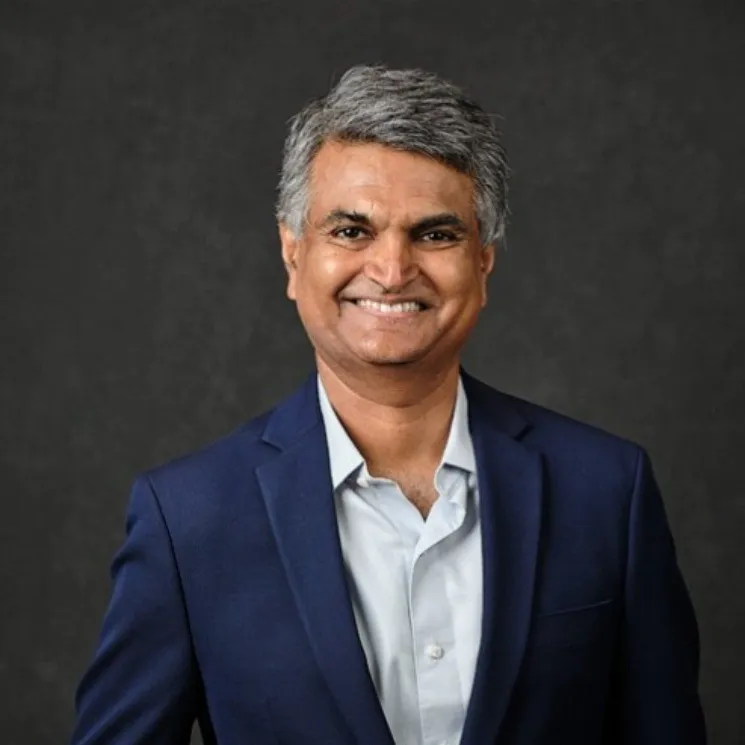
Nagaraja Srivatsan
Senior executive with over 30 years of experience driving digital transformation, AI, and analytics across global life sciences and healthcare. As CEO of endpoint Clinical, and former SVP & Chief Digital Officer at IQVIA R&D Solutions, Nagaraja champions data-driven modernization and eClinical innovation. He hosts the Life Sciences DNA podcast—exploring real-world AI applications in pharma—and previously launched strategic growth initiatives at EXL, Cognizant, and IQVIA. Recognized twice by PharmaVOICE as one of the “Top 100 Most Inspiring People” in life sciences
Our Speaker
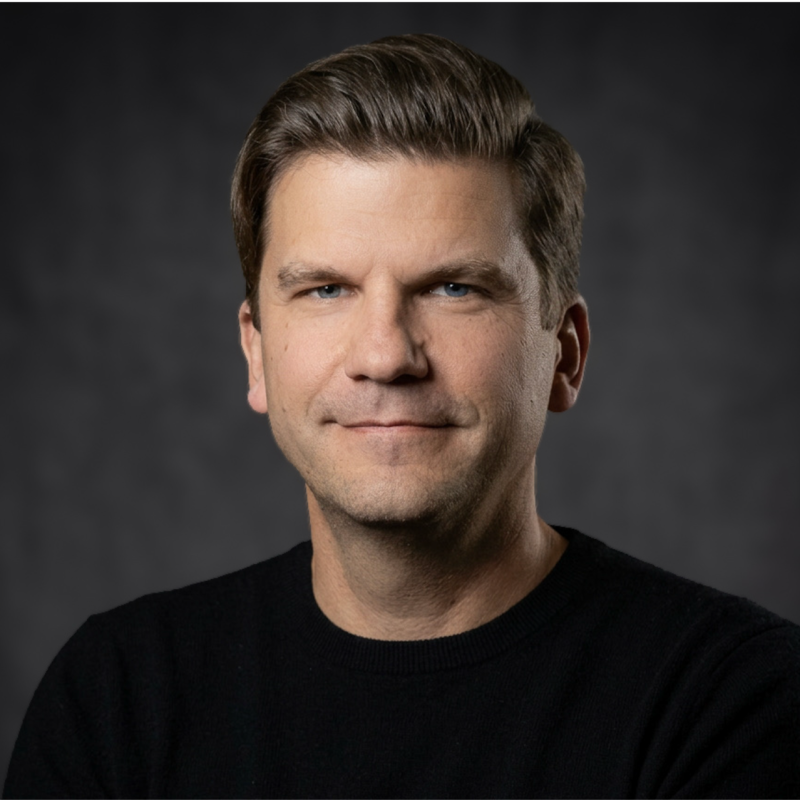
Matt Lasmanis
Matt Lasmanis is the Senior Vice President and Chief Digital Officer at Jazz Pharmaceuticals, where he leads digital strategy and capabilities. His experience spans large pharmaceutical organizations and biotechnology, including leadership roles at GSK and Sage Therapeutics. He focuses on aligning digital, data, and AI capabilities with business strategy and measurable organizational outcomes.
Recent Episodes
.jpg)