Scaling AI Adoption Through People, Process, and Pragmatism
In This Episode
In this episode of the Life Sciences DNA Podcast, Vikram Nair, Senior Vice President of Digital and Data Analytics at Amneal Pharmaceuticals, joins Nagaraja Srivatsan to discuss how organizations can successfully scale AI adoption through practical leadership, workforce enablement, and strong governance. Drawing from Amneal's transformation journey, Vikram shares actionable strategies for driving enterprise-wide AI adoption while balancing innovation, cost, and business value.
The 5E Framework for AI Transformation
Vikram shares his practical approach to AI adoption through the 5Es—Educate, Explore, Experiment, Evaluate, and Expand. This framework helps organizations move from curiosity to scalable business impact.
Democratizing AI Across the Enterprise
Learn how hands-on training, AI champions, and real-world use cases helped Amneal grow AI adoption from thousands to hundreds of thousands of interactions in less than a year.
Balancing Innovation with Governance
Discover how the AI WISE framework enables responsible AI usage through clear guardrails around approvals, intellectual property, security, transparency, and accountability.
From Asking to Adapting
Vikram explains the evolution of AI from simple question answering to assisting knowledge workers and ultimately helping organizations adapt and reimagine how business gets done.
Building Sustainable AI at Scale
The conversation explores why successful AI transformation requires strong operating models, centralized governance, role-based access, and repeatable ways of working that can scale across the enterprise.
Transcript
Daniel Levine (00:00):
The Life Sciences DNA podcast is sponsored by AgilisiumLabs, a collaborative space where Agilesium works with its clients toco-develop and incubate POCs, products, and solutions. To learn how AgilisiumLabs can use the power of its generative AI for life sciences analytics, visitthem at labs.agilisium.com. Sri, we've got Vikram Nair on the show today. Forlisteners who may not be familiar with Vikram, who is he?
Srivatsan Nagaraja (00:33):
Vikram is senior vice president of digital and dataanalytics at Amneal Pharmaceuticals. He's been leading their digital strategy,integrating artificial intelligence, automation, and predictive analytics intoeverything from manufacturing to R&D operations. He's one of those leaderswho bridges technical depth with strategic vision, helping a company modernizewithout losing focus on patient access and affordability.
Daniel Levine (00:56):
And for people not familiar with Amneal, what is it?
Srivatsan Nagaraja (00:59):
Amneal is a US-based pharmaceutical company best known forits genetics business, but it's also been expanding into specialty medicinesand biosimilars. They've got a strong focus on operational excellence andquality manufacturing, and now they're bringing digital transformation intothat mix. What's especially interesting is how they're applying data scienceand automation to streamline development and regulatory process, and the areathat is traditionally moved slowly in Big Pharma.
Daniel Levine (01:26):
And what are you hoping to learn from Vikram today?
Srivatsan Nagaraja (01:29):
Danny, I'm really curious to hear how Amneal is actuallyimplementing AI, but more so - Vikram is a thought leader on drivingtransformations in a very practical and pragmatic manner. I'd really like toget his insights around how you approach a big transformation like AI, how doyou bring change into organizations, and how do you bring the organizationsalong through the change journey to make sure that AI adoption is happening atscale?
Daniel Levine (01:55):
Well, before we begin, I want to remind our audience thatthey can stay up on the latest episodes of Life Sciences DNA by hitting thesubscribe button. If you enjoy the content, be sure to hit the like button andlet us know your thoughts in the comments section. And don't forget to listento us on the go by downloading an audio only version of the show from yourpreferred podcast platform. With that, let's welcome Vikram to the show.
Srivatsan Nagaraja (02:23):
Vikram, welcome to Life Sciences DNA. It's wonderful tohave you here. Vikram, you've gone through several different transformations.Maybe it'd be great to give the audience a little perspective on some of thejourney before you got to your current role at Amneal.
Vikram Nair (02:38):
Absolutely. First of all, thank you for having me. It's apleasure to be here and talk to you. We met back when I was at Pfizer and maybeit's just me, but every engagement I've had seems to have this transformationalaspect to it. We're always trying to do something that's first of a kind thathas not been done before. And I'm really thankful for those experiences becauseI've learned a lot. I've learned a lot about change and how to drive change,how to correct change that's not going in the right direction. So the variouselements of this that I can think about is first at Pfizer. I was probably oneof the team that was bringing in the first time electronic data collection forclinical trials was being done.
(03:29):
Everybody knew the idea and the concept, but nobody knewwhat we needed to do to actually make it happen. Another time that I can recallthat was very, very memorable for me was at Carnival Cruise Lines, where wewere introducing a guest experience platform that would transform the customerexperience on a cruise ship. Again, something that had never, never beenthought about, but if you think about the Disney magic band on a ship, that'sreally what it was. And it had so many different components that had to cometogether to make a medallion and a mobile app work, to find your way around theship, to order food and have it delivered, to having social media contact. Itwas just incredible. And just the opportunity to have been part of that teamand have some role in bringing it was one of the most memorable experiencesI've had.
(04:25):
And I'm probably forgetting a few, but those two stood outas kind of the beginning and probably the last big one.
Srivatsan Nagaraja (04:32):
Absolutely. And as you came into Amneal, the world ischanging in terms of what's going on in life sciences. As IT leader, AI istheir board level discussion. So walk me through, how was it when you came inwith all of these questions around what's going on in the market, what's goingon with AI? How did you break it down as a global CIO to saying, "Okay,this is kind of how you should go down this transformation journey."
Vikram Nair (05:01):
I think maybe one of the things that's very unique aboutbeing a CIO or in IT in particular is you're the only function that reallytouches every other part of the business in such a deep way that you have todeal with the world the way it is, not the way you wish it was, and you cannever predict or anticipate how it's going to be. So when I came into Amneal,as just as an example, we had had a merger, we had three different, I'll callit, legacy IT organizations that were trying to work together and most of themkind of didn't think the other one was right, that they were right. And myfirst mission was nothing technical. It was very human in that I had to getpeople to understand. And the phrase I used at that point is, "It's notabout me, it's about we."
(05:57):
And I just kind of made that up on the spot. And then Irealized, actually, the only difference between them is you've got to turn theM upside down and the me becomes a we, and it looks easier visually than it is,but that was the first job. And then I think once you're a we, getting a sharedmission is the next thing. And then you let people do their thing.
Srivatsan Nagaraja (06:27):
As you can imagine with 2023 and ChatGPT coming in, AI hasbeen a board level discussion. I'm sure you're being asked about what are wedoing about AI and stuff. So walk me through, how was that journey in 2023where it was all coming and you were asked lots of questions, and walk methrough to 2026 where you have a program and you have the constructs of how youshould be doing AI at scale.
Vikram Nair (06:57):
Actually, 23, January 23 is when I first had my textmessage exchange with our CEO and he said, "What are we doing aboutAI?" And I had no idea what we were doing about AI. And so again, I haveno problem telling the truth. So my answer was, "I don't know, but we'regoing to figure it out." And I think the first thing I realized for myselfwas I didn't know a lot about AI. And the second thing I realized was nobodyelse knew a lot about AI either. So starting by educating ourselves was thefirst step that seemed to make sense and you educate yourself by exploring. Sowe started talking to a lot of people, understanding what they thought AI was,what they were doing, what they could offer, vendors, software providers. Andso educate and explore became part of our methodology.
(07:52):
And when we did that, we said, "Ah, there's some nicethings here that we should try." So we said experiment had to be the nextstep. So all the things that we tried, and I would say 80% of them were hokey.We took those few and we said, "Let's experiment and see what works orwhat doesn't work." And so we did a few experiments and some didn't workand some did work. And so I explained this to someone and thought it was silly,but now in retrospect, it doesn't seem that silly. I called it the Triple Estrategy: educate, explore, evaluate. And now we've added another E to that,which is expand, because once you evaluate and something works, you betterexpand it as fast as you can.
(08:46):
So I'll pause there for a second and if you have anyfollow up -
Srivatsan Nagaraja (08:49):
No, no. I'm a triple E major, but it's electricalengineering from India. So I saw all the Es. I was making that acronym that Iwas going to hit triple E. Now you have 5Es and it has all the constructs. Butlet's get to the scale play because that's where people want to see. And asyou've been through this journey, what were two or three things you said, okay,these are ready to scale and give me concrete examples. Is it commercial betterthan clinical or did you pick manufacturing or did you do a particularhorizontal data for stuff so that it'd be good for people to know, "How doyou boil the ocean, but how do you then get concrete next steps to buildupon?"
Vikram Nair (09:30):
I think the very first thing we did was say we needsomeone in the business to partner with. And so we appointed champions for AIin each function, in each geography, some willingly, some unwillingly, and someunwittingly. And so that gave us a point of engagement with the business tounderstand what they knew and how they were thinking about it. Because somecases, no matter how good the opportunity is, if the horse isn't ready to drinkwater, you can't make a drink. And so just knowing that was information. Havingthose people and then educating them was the next big step. So we didn't go inand start dreaming about what we could do with clinical development orregulatory or manufacturing or IT or finance. I have never been a shiny tooltype of person, so I wasn't going out there looking for tools to do somethingwith.
(10:30):
I always know you have to understand the business, whatconstitutes value. And so our hypotheses at that point were just a simple LLMwould be a ton of value for everybody and even everybody couldn't use that LLMand probably still can't three years later to effective advantage. So westarted training people, we tried some things and we got some trainers and theyweren't very good trainers. So we threw them out and we got other trainers. Andso again, through that process for exploration, we found people who were reallygood teachers and we made it hands-on. So people talk about hackathons, peopletalk about promptathons. We didn't call it a promptathon, but essentially whatwe did, and we did it in small groups of people, 20, and we would take a bit ofrisk and say, "Hey, what's your work?" And I'd say, "Well, I'min R&D and I do tech transfer to manufacturing." "Okay,wonderful.
(11:34):
What's the problem you're dealing with right now?"They'd be like, "Well, we got this new FDA guidance on how we need to makeour inhaled inhaler product. It needs some additional studies and we need tofactor that into the manufacturing process." "Okay, upload yourguidance from FDA and ask it, what analytical studies do we need to do to meetthis new FDA guidance?" And wow, I mean, the light bulb was like the eyeswent wide open and because there were 19, 20 other people watching, they werelike, "Wow, what can I do?" And then everybody opens up and they talkabout whether they're analyzing batch records or whether they're writing a jobdescription or an SOW or an SOP or a BCP. They all started thinking about,"Ah, I can do this." And we didn't anticipate this happening, but ithappened. The people who knew this new thing, they wanted to show off.
(12:29):
So they went off and showed it off to their colleagues,and I think it went viral. The result of that was in May of 2025, actually,when we started doing this style of training, we had 10,000 approximatelyinteractions per month with AI.
(12:51):
In February of this year, we had over half a million.
Srivatsan Nagaraja (12:57):
Wow.
Vikram Nair (12:59):
10,000 to half a million in nine months. That's 45 times,45X growth.
Srivatsan Nagaraja (13:04):
No, that's fantastic. And immediately the CFO in me says,"Oh my God, your token costs are going through the roof and what are yougoing to do to manage it out?" And we should handle the ROI and the costpart of it, but that's fantastic adoption because the more people ...
Vikram Nair (13:20):
Yeah - Sorry, finish your thought.
Srivatsan Nagaraja (13:23):
No, go ahead. It's a good place to explore. Go ahead,please.
Vikram Nair (13:26):
So this was a conscious thought from the beginning -- ROI.When I worked at the big companies with the big bucks, people fought inmillions before they actually asked for approval, right? We're an affordablemedicines manufacturer. It was a whole mindset shift I had to go through when Icame here six years ago. So we think about money from the start and my defaultposition is I don't want to spend any money because you know what? Who's goingto make your $5 medicine happen if I go out and keep spending money like adrunken sailor? So we actually looked at ChatGPT Enterprise, but we didn't buyit because it's too expensive. And we said, "For the moment, we'll justuse ChatGPT+, I think it's called, right?" And we will turn off datacontrol so there's no training. And for the number of people who could use it,came through us, they got the training, they got the caveats and they wentahead and used it and we still said, "Don't put anything really secure inthere.
(14:29):
Whatever works for cybersecurity works here too. Don't putany PII, don't put any confidential information, don't put any -- respectcopyrights." And so we didn't spend really anything except on the trainingand the POCs we did were free because even the people who were doing the POCswith us weren't sure they would work. They were just selling something. Wereally didn't ... This explosion, why it happened in May of 2025 is because atthe beginning of that year, Microsoft made Copilot free. Actually, I shouldn'tsay that. They made Copilot good enough and it was free. And I'm not talkingabout N365 Copilot. This used to be called BingChat Enterprise. It wasterrible. They molded it in Copilot, still confused between consumer Copilotand enterprise Copilot, but it was free. So we actually exposed that toeverybody and that at zero cost went like this. And there were some snobs whosaid, "Oh, it's not as good as ChatGPT." And they were right, but thevast majority of people at that point weren't using it for something verysophisticated.
(15:42):
They were just learning how to use the tool. So why spendmoney on a tool that they're starting to learn to use?
Srivatsan Nagaraja (15:47):
Learn to use.
Vikram Nair (15:48):
So it was free pretty much. Even now, I think our LLMcosts are negligible compared to others because A: we don't give it toeverybody unless they show us that they know how to use it and they're going touse it to good effect. We're a little bit more free now because we think peopleare using it to good effect. B: we have our own platform so that we're notpaying per user per month prices, we're paying on a token basis. And frankly,even with that, it's negligible, right? We are not exploding. I probably usemore tokens on a daily basis using the front end than most of our processes. Iprobably use 200,000 tokens a day.
Srivatsan Nagaraja (16:40):
What you've done is a kind of a groundswell way of gettingadoption, which is fantastic. That's key part of change management, right?Teach somebody how to fish and they start to really make a good meal, right?But from an enterprise standpoint, you want to have some big areas in which youwant to make a big improvement. I remember when I met you a long time back, youhad put the core infrastructure systems, the SAP and the guardrails of how torun the business, but now you have these transactional systems. Are there somebig programs you're looking at to apply AI so that you can get not just theincremental ROI of them using it, but transformational ROI for...
Vikram Nair (17:21):
Yeah. Yeah. So that was one of those conversations I washaving right before here, which is why I thought that the DNA name was curiousbecause similar DNA thinks very differently about the same thing. What istransformational to one person is not to another, and it goes on forever. I'lltell you in my book, what becomes transformational, transformational is definedby the degree of benefit you get, right? Not how sexy the idea is, but thebenefit you get. So if we can cut our, I'll call it formulation to filing timeby 50%, that's great. And have we done that? I can't tell you measurably thatwe can, but I know that just using simple research tools, scientific researchtools, our scientists tell us that some things they can cut 90% off the time,some places they cut 30% off, but they come and thank me.
(18:18):
By the way, Copilot training, after we delivered it, it'sthe first time in my career, which is 30 plus years, that people would stop mein the hallway and say, thank you.
(18:29):
So R&D is, by the way, I think the biggest opportunityfor life sciences companies, that's not secret to anyone, but we knew thatright from the start and that's why we engaged the R&D people and becauseit was touchable, it was within their reach and they knew how to use it.Regulatory, same thing. Next step in the process, but assembling an ANDA. Idon't like the word automate because you can automate bad stuff, but you canmake that process more intelligent, you can make that more fast. And soregulatory is another place where I think it's not transformation in thescientific sense, but in terms of cycle time acceleration, it is. Another areathat sales and marketing we think is a huge opportunity and our people therehave done some amazing things with connected TV in terms of extending our reachto healthcare professionals and meet them where they are.
(19:26):
So for Crexont, which is our most innovative product andUS product out there for Parkinson's, we've extended the reach in tremendousways that we could not imagine before. And then again, we've used the basictools to bring a lot of the agency work in- house and save money at the sametime and also produce a better product because our marketing team usedPerplexityAI to provide now personalized newsletters that incorporatehealthcare professionals, key opinion leaders and regional data and get it outthere in an automated way. So if I went on transformational for every function,it means something different. For IT, as an example, you can look for all thesophisticated things in the world and again, people for automation, automation,automation. The biggest thing is making our brains much more productive byusing AI. And so SDLC, system development lifecycle, I can show you placeswhere we have spent probably $50,000 where a good prompter can do all of thatin 20 minutes while making breakfast.
Srivatsan Nagaraja (20:45):
And you're touching upon a theme, which actually I had acouple of white papers written about it, which is, the first part you reallylooked at, after democratizing the teaching person how to fish, is using it forcontent creation. And all the use cases initially you hit upon where, hey,whenever you're generating content or you're doing research, use this. It's alow hanging fruit. Then you went after the second one, which is, I call itautomating anything you're doing with coding, because coding is absolutely ripefor transformation. And why do you need to write SQL when you can have cloud orChatGPT write it for you in a much more better and structured manner? And soreally looking at all aspects of coding, coding, testing, and then bringingthat portion along. Where are you seeing that journey evolve? What is the thirduse case after content creation and coding?
(21:41):
Is it data and workflow or where are you seeing thisjourney progress?
Vikram Nair (21:46):
In a very abstract way, again, I'll pick on the wordautomate for a little bit, right? What we're doing with coding is, again, notautomation, it's generation. So the journey, and there's some frameworks outthere and we're arguing about - not arguing - we're just building on eachother's ideas actually. I would say the first stage is asking. That's what weare doing, but differently than we used to ask Google, right? We're asking itto do something for us. That's fairly easy to do, but it does it faster andbetter. The next is what I call assist, right? Assist means I need to dosomething. It's not that simple. For example, let's say I'm matching my ITstaffing with my project portfolio. It's a mind bending problem when you havehundreds of resources, you have hundreds of projects and you have to match themso that you don't over-allocate people to something.
(22:43):
Now it's assisting me in doing that, right? So it's 'ask'then 'assist'. And I think the next step you can say is 'automate', but I don'tlike that word for the following reason that A, people think when you canautomate, you can get rid of humans or eliminate humans. And you can, right?You can, but it's not a one dimensional thing. You may be elevating humans, noteliminating humans to do something better and more value added than somethingrepetitive. So I don't use automate. I use the word adapt. Adapt is when youare rethinking, re-imagining your business, business processes, either becauseyou're going to change the way your current business is done, or you're goingto think of new businesses you never thought about before because they weren'tpossible, but you're thinking about adjacencies, you're thinking about how youcan leverage your core competencies in new ways.
(23:40):
So you're really adapting your way of business to the newworld enabled by AI.
Srivatsan Nagaraja (23:46):
Yeah. No, those are really good ways in which people can,like a crawl, walk, run. But I think it all starts with the first part, whichyou said, which is to democratize the access to the tool and getting people onboard with it, because without that, it becomes a resistance and adoption. Walkme through, I know for sure all of this is not a bed of roses. You would havehad some reticent people who were like, "Oh my God, this is not going tohappen on my watch, or I'm better than AI." So walk me through somenaysayers and how did you make them convert?
Vikram Nair (24:17):
I'll have to disguise this example, but this examplesticks in my head because it's such a big missed opportunity. I'll call itopportunity X with machine learning. Somebody had been doing this action usingtools, using data for years, and they were X percent accurate. And we said,"Can we improve that accuracy with machine learning?" And so we gaveour machine learning partner three years worth of data from the past. We said,"We know what the actuals are. Why don't you take this and build amodel?" And they trained their model on two and a half years worth of dataand then they had to predict the next six months and let's see how close youcome to the actual versus what we had forecast and they did it and they werepretty close. They were closer than we were. And yet the person who looked atthat, who had been doing this for a living said, "Eh, it's just about asgood as my thing, so why do I need this?"
(25:31):
And in reality, what they didn't realize was the effortthat went into doing that machine learning model was negligible compared to theeffort that they went into doing it by human, so we didn't do it. We did not doit. Three years later, we came back because somebody else said, "Why arewe using this for this? And why are we using AI for this?" And we went inand said, "Okay, let's look at it again." And three years later, Idiscovered that the metric for accuracy they were using was so flawed. Theywould consider themselves 100% accurate if they were between plus or minus 25%of the actual. So they give themselves a 50% range to be right.
Srivatsan Nagaraja (26:18):
Right. Wow. That's almost like a flip of the coin.
Vikram Nair (26:22):
Yeah. So he said, no, let's look at ... I don't evenremember what the acronym stands for, but SMAP, mean absolute error percentageor something like that. And when you look at that, the machine learning modelwas about 10% better. Guess what? The same person is now looking at it closely.So it's sometimes like the old saying of you can take a horse to water, you canmake them drink. It's true. And people are going to realize this or adopt thisin their own time. People misunderstand it, but adopt it to do the wrongthings. It's a matter of that's human evolution. Again, DNA, right?
Daniel Levine (27:07):
Yeah.
Vikram Nair (27:08):
We all evolve at different ranks.
Srivatsan Nagaraja (27:11):
So let's explore that DNA part because we all evolve indifferent places and it's different strokes for different people. But as a CIO,you're asked to put governance in play, so you got to fit the governance. Sowhat are the guardrails you're trying to put from a governance standpoint? Andthen how do you let the different DNAs play within it? Because if you're toopedantic, then nobody adopts it. If you're too loose, then everybody's a wildwest. So walk me through that thinking on how are you putting the guardrailswhile adopting this life sciences DNA?
Vikram Nair (27:45):
So there're technical guardrails and then there'reeducational guardrails and then there're monitoring control guardrails. We werenot of the lock it down mentality. We said, let people experiment as long as wecan see what they're doing and not what they're doing, but if they're doinganything dangerous or not, we're fine. And we came up with a policy, which wasvery thorough. And if you read it, you would think that basically it couldn'tdo anything. On the other hand, when you really read it and understood it, itwas pointing out a few basic principles. So I don't know why, but I used AI todo this. I came up with an acronym so people could understand it. Theguardrails. So we said, our policy in a memorable form is AI WISE, two words.AI WISE means use AI wisely, right? But each letter stood for something.
(28:44):
The first A stood for approval. You can't use any toolswithout our approval. The second I stood for intellectual property. You have torespect that and you can't just steal people's intellectual property. The Wstood for Watermark. When you produce something, use AI, you have to disclosethat you used AI producing it. The second I was for information security. Don'tput anything confidential into an AI tool without really understanding whatyou're doing. The W was ... Sorry, the S, the S was the most important one,stood for scrutinize. At the end of the day, the human is responsible for theend product, no matter how they produced it. So we said, "You have toscrutinize the output that comes from an AI tool, you're responsible for it." The last E was for anything that goes external to the company needs tobe pre-reviewed by the appropriate body, whether it was promotional materialsor anything else.
Srivatsan Nagaraja (29:52):
No, this is fantastic. AI WISE, definitely it's verymemorable because you had to wisely use AI, but each of them have some verystrict guidelines. And then these are very appropriate guidelines. It's notsomething which you should do it if you're an employee of any company, you gotto protect the best interest of the organization. And when you shared it with aformal training office or was it a policy paper or did you call those businesschampions and ask them to be the super user to take it to their community? Howdid you make this thing?
Vikram Nair (30:35):
Multiple ways. The first thing was we included it in thattraining that I referred to earlier. It started with a general understandingof, hey, what is AI and what is not? What is AI good for? What it's not? And Ithink one of the nice phrases that came out of those trainings were, you use AIto assist you in what you're doing, not to abdicate responsibility. And that AIWISE kind of got embedded in there. Then we have global leaders meetings and wewould always, probably, not always, for the past three years, we've had AIsessions. Where are we? What should we do? What should we not do? What are wedoing? And rolling out AI WISE there was, again, it was easy to remember,people remembered it. And then periodically we just do broadcasts internallyjust reminding people, "Hey, you should be using this. It's veryinteresting." One day our chief security officer came to us and said,"Vicram, we have NFRIs to use in blah, blah, blah location.
(31:34):
Somebody's accessing NA10." And frankly, at thatpoint, I had no idea what NA10 was. And he says, "It's some Germanplace." And I said, "Okay, let's go look at it." So they trackeddown the user and asked them. It's one of these low-code, no-code processautomation tools. It's actually, it's a pretty good one, but we didn't know atthe time. And so we shut it down at the time and just taught that guy a lessonbecause when you have to speak to the chief enterprise security officer, it'susually not a pleasant experience. So that kind of thing helps.
Srivatsan Nagaraja (32:10):
No, but it's a push and push that over time you would thenevaluate NAT10 to see if that's something you want to adopt into your stack ornot and then bring it up. But without permission or without detection, thenit's a wild west going on. So Vikram, as you build these things out, one of thethings which you really told was this model, as an IT leader, to go from thisneed to "me to wow." Why don't you tell me a little bit about whatthat is and how that is embodying and helping you in this AI transformationjourney?
Vikram Nair (32:42):
It's actually nothing that came because of AI. It camebecause we are scaling as an organization to be larger. And one of the tacticsto manage scale is that you can't be everywhere at once, so you have to figureout some other way for it to happen, for things to go right without your beingthere. And it made me think about how to communicate this to my leaders.Everybody typically gets ahead because they have some such subject matterexpertise and they're good at something. So that's the me stage. And indeed,that's what you get hired out of school to do something because you have a goodbrain and you know how to do something that's a hard skill. And if you'rereally good at it, then they assume you must be good enough for management orleadership, so they give you a team. But we all know that not everybody's agood team leader, nor does everybody like leading a team.
(33:43):
And so as I've been thinking about the progressionthroughout my career, the we part is also fairly easy because if you're afairly affable person and you understand and care for other people, evenwithout any formal training, you can actually build a team that's united,focused on mission, motivated, and go get it. If they've got the subject matterexpertise and you work well as a team, you go and do it. The next stage isharder because now subject matter expertise actually doesn't matter at all.Yes, you need it to evaluate what people are doing, just like you need toevaluate what comes out of AI, but what you need to succeed is somethingtotally different, which is you need to create ways of working that arerepeatable, reliable, predictable, and don't depend on you. And I honestly justhappened upon that as I was talking to someone and I say, "You need to setup a way of working." Because I like acronyms and if you talk to anyone,they will make fun of me for it.
(34:55):
So, well, if you do that, it's going to feel like, wow. Soit became an acronym that was a way of remembering that at a certain level, youneed to create ways of working that don't depend on you. And if you do, you doget wow, but it is harder than you think because again, self-awareness issomething you're taught all along the way. Be self-aware. Some people are neverself-aware, but it's important. To get to this point, that self-awareness goesto like a triple level, right? Because you have to remember, you're not therefor subject matter expertise. You are there to make sure that there are ways ofworking that get you to the right answer, lower the risk, get it done timely.And so that's how the me, we, wow, progression of career, I'll call it expansionand evolution works.
Srivatsan Nagaraja (35:53):
Yeah. So Vikram, the reason I brought it up is as you lookat the future, there's going to be a mixed workforce of AI teammates and humansworking together. As you said, adapting. Now it's not replacing, but adapting.And so how do you see this thing play as leaders? What is the 'wow' in that newworld where your workforce is not 10 human beings, but it's seven amplified byanother 70 agents which are making the seven Supermen or Superman orsupervisor?
Vikram Nair (36:25):
Honestly, I don't think it's that different than it istoday. I'll give you an example of Sarbanes-Oxley compliance, SOX compliance.People are supposed to be doing what they're supposed to be doing, but somebodycomes in and audits that they're doing it. That's called a control, right? Andbefore the external control is an internal control. So whether your worker ishuman or AI, you have to realize both of them make mistakes. And so you need tohave controls in place, maybe different controls, maybe sometimes moreautomated, sometimes not, but I don't think it matters. You need automatedcontrols preferably in either case, whether your workers are human or not. Soagain, the concept of creating a way of working, a way of working will includecontrols. It's process, it's a swimming diagram of who does what, when, what'sthe input, what's the output, what's the control.
(37:21):
So I don't think it actually changes that need, thatimperative, or have a way of working even when you've got a mixed workforce.
Srivatsan Nagaraja (37:31):
Yeah. But I think you hit upon a good play, which is, andI've worked in consulting in the SOX area. So you're the first line, secondline, and third line, which means you have to build organizations similarly.The first line, you do the controls yourself, the second line is quality andsomebody comes and tells you, the third line is audit, the fourth is theexternal. And so as you start to go and build this thing out, in addition tothe AI governance of being AI wise, you need to build a control infrastructureand to monitor that control infrastructure, as you said, the process to monitorAI would be different from the human, but it is to bring that infrastructure inplay, which I don't think people have started to think about it. They'vethought about AI governance separately, people governance separately. But Ithink you brought a good concept here where you bring in a control framework,but implement it to a joint workforce.
Vikram Nair (38:29):
I'm not sure if this is what you're really thinking about,Srivatsan, but I think this is, as you said, a very sophisticated thing that Ithink few people are thinking about. I think about it very, very simply. So wedon't want to just have a thousand tools blooming out there, right? So how doyou control that? And the control for that is very human. It's engagement withthe business to make sure that people aren't doing things because they'reunsupported or they don't know who to go to. So your operating model, being outthere is very important. But let's say you do all of that, and you've got ahundred beautiful tools across the business, and these are AI things. We havethought about it this way. Number one, we want to have a single point of accessbecause we can't control multiple points of access efficiently, right?
(39:23):
Imagine just even a plot of land, right? If you've gotfive gates, you got five times the number of security guards. You got one gate,one security guard. So we are going to route all access, whether it's CoPilot,whether it's to ChatGPT, whether it's just some custom tool, through a singleplatform. So user access control tied into HR systems and IAM systems works.And that's regardless of whether it's AI or not. It's just with AI, the numbertools, explosions, crazy. So you really have to ... This force multiplier, thisis a force multiplier manager.
(40:02):
The second point is you have to restrict who can accesswhat. And a lot of people, I don't think, understand or explain this, and maybeI'm oversimplifying it, you'll tell me I am, but AI is nothing but a predictor.It's a prediction tool, whether it's language or whether it's numbers, it's aprediction based tool. Predictions only work if you have patterns of data andpatterns of data only exist if people are very careful about the taxonomy thatthey use to call different things, label different things in their dataenvironment. So we have come up with a ... Role-based access control is a veryold concept, but I think we have taken a leap forward in educating people abouthow role-based access control works and that why business domains and businessdata domains need to be explicitly named because without that, AI cannotpredict what it can or cannot access.
(41:11):
Not that you would leave it to that, but people changeover time. When you get your next person in to manage your AI infrastructureenvironment, how are they going to understand anything if there isn't a namingconvention, a taxonomy for how data spaces are named, how agent spaces arenamed, and so on and so forth. So tying it back to your question, it's notreally 'me - wow', but the notion of different layers of control, technicalcontrols, human controls, quality controls and audit controls, they're stillgoing to be required. They're just going to each use different tools, hopefullybetter and more efficient tools to do their job. Every step in that process isgoing to be difficult, whether you're using tools or humans, if you're notfollowing repeatable patterns of everything, process, people, nomenclature.
Srivatsan Nagaraja (42:15):
The thing which you said, which again resonated with me isif you treat a control infrastructure as a framework and then you start to putcontrol infrastructure for the AI, then you have to define what roles AI has toplay, what data it can access, what kind of inference it can do, and it fitsthat pattern. And that's why I was just trying to say that using a controlframework and then exploring that from an AI governance standpoint seems likevery practical to -
Vikram Nair (42:46):
One of the things that I've found people, most people arenot abstract thinkers, so they don't understand frameworks, but they understandpatterns. Naturally, people understand patterns and frameworks are based onpatterns. So if you can show them a framework and then show a pattern that theframework applies to, they tend to get it pretty easily. And so that's,frankly, we have a lot more to do there in terms of educating our businesspartners. I call it data literacy, but there's probably a better word for it. Itry to leave the word strategy and framework out of everything I say.
Srivatsan Nagaraja (43:20):
So we could continue to talk for a long time. So one finalquestion, you've seen the pace of change happen. And if we are here, before Iused to ask my guest three years from now, the world is changing so fast. Solet's say I have you here back again in a year's time. Where do you see all ofthis going? What is going to be the impact? How's the world going to look like?
Vikram Nair (43:43):
Let me see. Where are we? In April 2026, April 2027. Ithink we'll know whether Claude won or OpenAI won because I think we're at thatplace where Microsoft or Apple, Android or iPhone iOS, maybe they'll bothsurvive like Android and iOS have. Maybe they'll both survive, but I thinkeverything else will just be an also ran. I think we will all have learned thatas much as things have changed and gotten faster, things will actually not bethat different than they are today. So the fact that you're seeing a newrelease from Anthropic every day, it's great that they're turning it out, butthe ability of humans to absorb that kind of change in a way that meaningfullyimpacts their life with every little release is not going to happen. Right now,things are being released at the rate if I were to go back 20 years, MicrosoftWord, Excel, they have so many features in them that people never use, right?
(45:10):
But back then, they were probably saying, "Hey, didyou know you can bold with Word? You can draw a table in Word now. You can doitalics, et cetera, et cetera." You can embed an object. People take itfor granted now. I think people will take this kind of thing for granted in ayear. And I do hope that it leads to some transformational things in terms ofthe speed with which goodness gets delivered to the world, right? At a moreaffordable price, my message to software vendors and many vendors to whom AI appliesis, I expect a 30% discount in price, but you really think about that. Numberone, what will that do to the GDP of the world if that were true? The secondthing I wonder about, which I don't have an answer to, but maybe one of yourfuture guests can answer it is, if we keep innovating like this to the pointwhere humans are replaced, then what will humans do and will that be good forthe world?
Srivatsan Nagaraja (46:13):
Those are big, broad questions. And then maybe I'd like tohave your final thought for the kids who are just graduating today and gettinginto this world, what would your advice be and what should they be learning,what should they be doing so that they can really get ready for this new world?
Vikram Nair (46:32):
My advice would never be on the technical, Srivatsan. Myadvice would be the same as it would've been advising somebody coming out ofschool 20 years ago, 30 years or 50 years ago. Be curious, take chances, notrisks. Take chances as in you don't have to overthink everything. Just go outand do as many things as you can until you figure out what you love doing. Andonce you find it, which I was lucky to do, I really found it out of financialnecessity, going paying my way through college. I trained as an engineer andnever worked as an engineer. I worked in a very adjacent space and... you'll befine. Be curious, care about other people, and you'll be fine as long as you dothat.
Srivatsan Nagaraja (47:21):
No, that's wonderful. Vikram, thank you so much. Reallyenjoyed the conversation and so many frameworks, the 5Es, the AI WISE, and manymore, but I think I learned a lot, so really appreciate it - was a lot of funto have you with us.
Vikram Nair (47:36):
Thank you for setting this up. Cheers.
Daniel Levine (47:42):
Well, I'm not going to get all of Vikram's Es probablylined up, but it was interesting to hear how a company explored, evaluated, andexpanded its use of AI. What did you think?
Srivatsan Nagaraja (47:55):
Vikram is a very practical and pragmatic leader, and he isbringing a very thoughtful and fair approach to how do you go about doing it.His five Es is first, you educate the community, then allow them to explore,then make them sure that they're experimenting. And when they experiment, youcan evaluate whether the use cases are resulting in good outcomes, and then youthen expand that for other opportunities. And so such a really nice way ofthinking about how you could bring AI adoption to people. So I call it the 5Esand it's really very, very pertinent to anybody who's going down the AI scalejourney.
Daniel Levine (48:40):
And you talked about something on the order of going from10,000 to 500,000 K uses in nine months. What did you think about the way hewent about exposing staff to various AI tools?
Srivatsan Nagaraja (48:55):
What I really liked about his approach was he reallyhelped teach people how to fish rather than give them a fish a day. And I thinkthat's a really, really pragmatic way of how you approach AI transformationbecause if you can give people the tools, but also teach them how to use them,then the sky's the limit on what kind of adoption they're going to havepersonally, but the multiplication factor around all the different use casesthey can do and how they can collaborate. I really like this notion of the promptathon,which he led, where they're really bringing small groups of people anddiscussing what would go on in their day-to-day jobs, and then literally usingthe copilots to help them figure out what they should be doing. And this justnot alone democratizes how you're going to be using it, but then immediatelyeverybody else is thinking about the same use case, but from their perspective.
(49:50):
So I really like this practical and pragmatic approach ofgiving somebody how to fish rather than giving them a fish a day.
Daniel Levine (49:59):
And there was a very practical sense to how you had toapproach things given ... Here's a guy with big pharma background who now is inan organization that doesn't have the luxury of those budget lines that are amillion dollars. How did you think about the way he went about controlling costand ensuring an ROI?
Srivatsan Nagaraja (50:20):
Again, really looking at ROI from the get-go, he saidthat. You're not looking at financials later on, but he also thought about,okay, if I'm going to give this to everybody, what is the right model to give?How do I then manage that model usage? And really, he was measuring andmonitoring that in a controlled infrastructure. So it was a very practical wayof giving people the tools, but making sure that he had the right governanceand control to ensure that he was not busting any budgets as he was trying todo that.
Daniel Levine (50:56):
That stood out to me - the way he talked about ways ofworking and putting different controls into place. He talked about that kind ofcentral access point as being one of the important controls there. What did youmake of that?
Srivatsan Nagaraja (51:10):
What happens when you have empowerment is everybody thenstarts to do pilots and everybody has like a wild west of their own version ofwhat they think good looks like. And lo and behold, you look at across theboard and you're now dealing with so many variations and deviations. And sowhat he said is they set up a very good AI governance. So you have to, ofcourse, ask permission before you can use it, and you have a controlled way inwhich you're bringing things together. And the access to these tools goesthrough his single access control, as well as the HR system. So what he's doingis to make sure that there's only one firm door. You all can come in, but yougot to take your step, and he knows who's coming in and out, which is abrilliant strategy versus saying, "Okay, you guys can do whatever youwant.
(51:59):
And then I'll then come and start to put a fence that'snever going to happen." So what he did was he built a control framework,told what the door was, and then allowed everybody to come in. Now, as theyexperiment, they're still within the boundaries of the walls of what he's puttogether.
Daniel Levine (52:15):
Well, I thought it was a great session and really givinginsights to how a company that's rolling out AI really thinks about making ituseful and practical. But Sri, thanks as always.
Srivatsan Nagaraja (52:28):
Thank you.
Daniel Levine (52:32):
Thanks again to our sponsor, Agilisium Labs. Life Sciences DNA is a bimonthly podcast produced by the Levine Media Group with production support from FullView Media. Be sure to follow us on your preferred podcast platform. Music for this podcast is provided courtesy of the Jonah Levine Collective. We'd love to hear from you. Pop us a note atdanny@levinemediagroup.com. For life sciences DNA, I'm Daniel Levine. Thanks for joining us.
Our Host
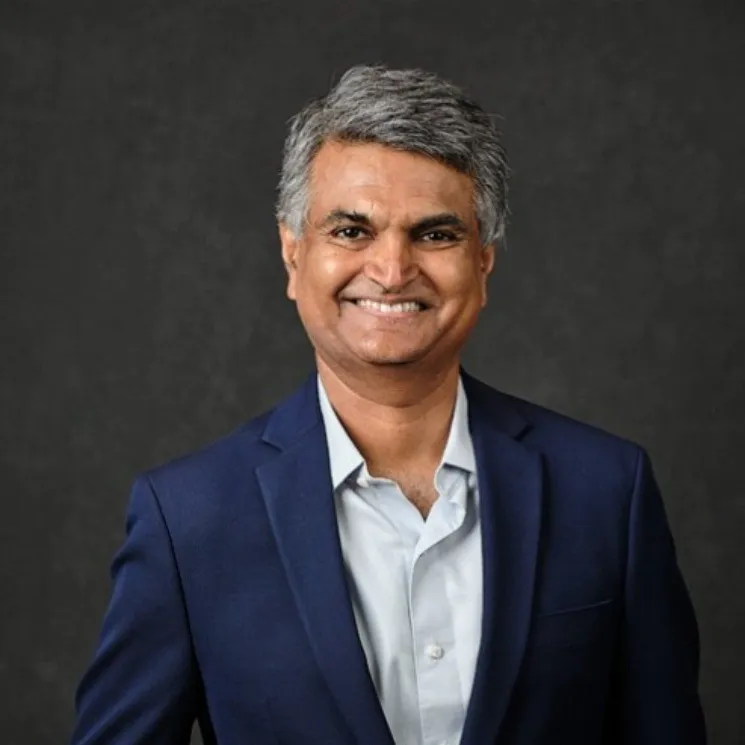
Nagaraja Srivatsan
Senior executive with over 30 years of experience driving digital transformation, AI, and analytics across global life sciences and healthcare. As CEO of endpoint Clinical, and former SVP & Chief Digital Officer at IQVIA R&D Solutions, Nagaraja champions data-driven modernization and eClinical innovation. He hosts the Life Sciences DNA podcast—exploring real-world AI applications in pharma—and previously launched strategic growth initiatives at EXL, Cognizant, and IQVIA. Recognized twice by PharmaVOICE as one of the “Top 100 Most Inspiring People” in life sciences
Our Speaker
.webp)
Vikram Nair
Vikram Nair is the Senior Vice President of Digital and Data Analytics at Amneal Pharmaceuticals. He leads the company's digital transformation initiatives, integrating artificial intelligence, automation, and predictive analytics across manufacturing, R&D, regulatory, and commercial operations. With extensive leadership experience spanning healthcare, pharmaceuticals, and technology, Vikram is recognized for his pragmatic approach to driving large-scale organizational change and innovation.
Recent Episodes
.jpg)