How AI Agents, Data Strategy, and Organizational Change Are Reshaping the Future of Life Sciences
In This Episode
In this episode of the Life Sciences DNA Podcast, Shweta Maniar, Global Strategy and Market Leader for Life Sciences at Google Cloud, joins Nagaraja Srivatsan to discuss how AI agents, connected data ecosystems, and organizational transformation are reshaping the future of life sciences. The conversation explores why successful AI adoption requires more than advanced models — it demands strong data foundations, workflow redesign, and enterprise-wide alignment. Shweta also shares insights on scaling AI beyond pilot programs, the growing role of AI agents in scientific operations, and how biopharma organizations can unlock long-term value through responsible AI transformation.
Building the Foundation Before Scaling AI
Many organizations rush into AI experimentation without addressing fragmented data ecosystems and operational silos. Shweta discusses why scalable AI transformation begins with modernizing data architecture, governance, and organisational alignment.
Why AI Is More Than an Efficiency Tool
The discussion reframes AI as a strategic capability that can de-risk science, accelerate decision-making, and improve collaboration across R&D, clinical, and commercial functions rather than simply automating repetitive tasks.
The Rise of AI Agents in Scientific Workflows
AI agents are emerging as collaborators capable of orchestrating complex scientific and operational tasks. The episode explores how multi-agent systems could transform knowledge work across life sciences organizations.
Organizational Change Is the Hardest Problem
Technology is rarely the biggest blocker. Cultural resistance, workflow redesign, trust, and data readiness remain the primary challenges preventing organizations from realising meaningful AI impact.
Moving Beyond Pilot Fatigue
Many enterprises remain stuck in endless proof-of-concept cycles. Shweta sharespractical perspectives on prioritizing high-value use cases, aligning leadership, and creating repeatable AI adoption frameworks that scale.
The Future of AI-Driven Biopharma
From discovery through patient access, the conversation explores how AI-enable decosystems may compress timelines, enhance scientific productivity, and redefine the future operating model for life sciences companies.
Transcript
Daniel Levine (00:00):
The Life Sciences DNA podcast is sponsored by AgilisiumLabs, a collaborative space where Agilisium works with its clients toco-develop and incubate POCs, products, and solutions. To learn how AgilisiumLabs can use the power of its generative AI for life sciences analytics, visitthem at labs.agilisium.com. Sri, we've got Sweta Maniar on the show today. Whois she?
Nagaraja Srivatsan (00:30):
Schweta Maniar is a global strategy and market leader forlife sciences at Google Cloud, where she helps pharmaceutical, biotech,medtech, and diagnostic companies transform how they discover, develop, anddeliver therapies using cloud, AI, and data-driven tools. A long timecommercial executive across digital health, pharma, medical devices, andbiotech, she previously led technology, enabled market growth and personalizedhealthcare initiatives at Genentech. Her work contributed to major partnershipsas well as the Flatiron Health acquisition. She also serves on boards ofOrthofix and RXL.
Daniel Levine (01:08):
And I'm sure people know the name Google Cloud, but wheredoes it fit in, in the world of life sciences?
Nagaraja Srivatsan (01:14):
Google Cloud has become a strategic infrastructure and anAI partner for the life sciences industry. It helps organizations move fromsiloed legacy systems to more modern data-driven platforms that can help speeddiscovery and improve patient impact. In practical terms, that means securecompliant cloud environments and specialized tools so that pharma, biotech,medtech, and diagnostic companies can integrate massive amount of multimodaldatasets, run large scale computational workloads, and apply advanced analyticsand generative AI across R&D, clinical development and commercialoperations. Google Cloud collaborates across several ecosystems, includingregulators, health systems, and partners to ensure that AI-enabled solutionsare trustworthy, explainable, and aligned with real-world clinical and businessneeds life sciences.
Daniel Levine (02:07):
And what are you hoping to hear from her today?
Nagaraja Srivatsan (02:09):
I'm really hoping to get her perspective around how AI ischanging the landscape in life sciences. It's not just theory, but how do youreally implement practical AI use cases, but also to get good ROI and returnfrom each of those use cases. And I think that she, with her wide experience asboth a practitioner and somebody who's a technologist, can really talk aboutthe journey of how you bring AI and AI use cases to several of the customersegments we're talking about here.
Daniel Levine (02:39):
Well, before we begin, I want to remind our audience thatthey can stay up on the latest episodes of Life Sciences DNA by hitting thesubscribe button. If you enjoy the content, be sure to hit the like button andlet us know your thoughts in the comments section. And don't forget to listento us on the go by downloading an audio only version of the show from yourpreferred podcast platform. With that, let's welcome Schweta into the show.
Nagaraja Srivatsan (03:07):
Hi, Shwita. Welcome to the show. It's wonderful to haveyou at LifeSciences DNA Podcast. Shitha, you have a wonderful journey andbackground and your passion for life sciences. It'll be great to hear yourjourney before you join Google and your role at Google. That'd be great.
Shweta Maniar (03:25):
Wonderful. Sri, thank you so much for having me heretoday. As you shared, I'm Shweta Maniar. I've been here at Google for aboutcoming onto eight years, and I lead the life sciences practice and strategyhere at Google Cloud. And my career has been defined by a single mission, whichhas really been around how do we connect the dots with the healthcare and lifesciences industry, particularly around how do we focus on the breakthroughsthat we see in the scientific industry, research, et cetera, and how do webring transformational technology to the industry and bridging that--I wasgoing to say gap, but there's no longer a gap because I think it is now workingin partnership or we are now moving in that direction. And my backgroundactually before this has been coming from the healthcare and life sciencesindustry. I came from Roche and Genentech.
(04:22):
For those who have been ... If I'm talking to partners inthe US, I say Genentech, otherwise they say Roche, so depends on who I'mtalking to. I've also spent time in the healthcare systems at organizationslike the Cleveland Clinic and at Scripps Clinic, as well as in nonprofitbiotech. So really have spent the time on the other side of the table beingpitched to from various technology organizations in different parts ofdifferent roles and different business units in the healthcare ecosystem on howdoes technology play a role. And so it's been fantastic being here on theGoogle side, really thinking about how do we best apply AI? And so I'm veryunapologetically optimistic about AI, but a very methodical one. So the workthat I'm focused on here is how do we move our industry past experimentalfatigue into one of real world ROI, which I'm really looking forward to talkingto you about today.
Nagaraja Srivatsan (05:24):
No, that's a wonderful segue.That's a fascinating topicand conversation to be had. So let's start exploring it. As you know, withGoogle, you have different parts of what you do, including Alphabet, themothership, having a lot of good background in life sciences. So maybe it'd begreat to start with what is your mission for this year within Google Cloud andreally explore that. How do you take that and move from experimentation toscale? But it'd be good to kind of frame it from what's the mission within Googleright now.
Shweta Maniar (06:06):
Our mission is really how do we support the missions ofthe industry? And in this case, healthcare and life science organizations arenow looking at how do they best serve their customers, whether that is thein-patient, the healthcare provider, the researcher, and all of the above. Andso our focus is how do we take our technologies and our capabilities to supportthe organizations? And so in one of our most recent surveys that we focused onfor Google Cloud, 73% of healthcare and life science organizations are alreadyseeing return on investment for at least one of these AI use cases. So a lot ofthese, our mission is help the industry focus on productivity, on customerexperiences, on their business growth. And that's very broad, I understand, sowe can get into the specifics. But when I talk to the ecosystem, when I saycustomer experience, that can mean a variety of things depending on who you'retalking to.
(07:14):
When I'm talking to pharmaceutical organizations orscience organizations, customer experience is very different because customerexperience can actually mean how do your employees and your researchers andyour scientists work with and experience the technology tools and thecapabilities within their own organization. So when we're talking about ROI orthe return on investment of AI use cases, it's not necessarily just what'shappening from a pharma company to the external, it's really about how do we createproductivity and efficiency even within an organization. And so we're alreadyseeing this year, we're already seeing organizations that are moving beyondsimple gen AI assistance to really complex agentic workflows. And so it's veryexciting because now we're moving from traditional R&D to very much what Iwould call research and prediction. So our focus is, how do we help turn, ifwe're going to talk about the drug development part of the life scienceindustry, how do we turn a $2.3 billion high risk gamble industry for aparticular drug into what is more of a calculated forecast and how can wesupport that endeavor?
(08:34):
And I know that sounds like a very ambitious goal, butthere are pieces that we can help through that to really move the needle onthat.
Nagaraja Srivatsan (08:43):
And there are two parts to that 2.3 billion, right? One isthe target identification or the drug discovery side, and then the other partof it is the acceleration of the clinical development process. Maybe why don'twe pick a use case in either one and just why don't you share your experienceon what have you experienced in impacting that 2.3 billion? What was the beforecase and what was the after case and how was that journey? So why don't westart? You could pick either discovery or clinical development to start first.
Shweta Maniar (09:16):
Let me think of a couple of use cases, and I think thebest is to anchor it in something real. So we are seeing transformative usecases across the value chain. Maybe I'll give you something that I think I'mbeing approached about almost every day [which is] is regulatory. In regulatorycompliance, there is, and I think this is maybe a slightly more, I'm going tocall it adjacent, but still life sciences is a great example is Elenco, inwhich Elanco has developed actually a homegrown agent and Elanco.ai, and inwhich that they actually reduced, they reduced their task time by 70% and werealready able to demonstrate that they were able to save a little bit over $2million just last year and just even in a very homegrown agent, very smallscale to begin with. And this is just, I mean, this is for animal health, thiswas a small start for them and now it's continuing to grow.
(10:27):
So this is just a couple of use cases as we're starting tosee them.
Nagaraja Srivatsan (10:31):
And what was the process before and how were they able tosave 70% or $2 million?
Shweta Maniar (10:39):
Right. Let me move for what was before, the situationbefore. And I'm also going to move to a couple of other examples beyond Elanco,but historically we've seen drug discovery that's relying on mass screening.They're testing thousands of random compounds. And I'm going to say 'random' isloosely, because of course there is a decent bit of rigor that is going intothis, but we're still hoping for a hit with some sort of educated rigor that'sgoing into this, but it is to some degree a trial and error approach. We'relooking at, and it's taking lots of PhDs over a decade, billions of dollars. Weknow we'll have all of these stats, right? You have this information, I havethis information of all of the amount of resources that go into this. So we'reseeing that regulatory reviews have been similarly also archaic. So you ask meto give an example from a drug discovery side, also from a regulatory side.
(11:36):
This is what we've seen from before, manual, error prone,lots of human errors sifting through fragmented data sets. And we've seen a lotof our brightest minds, particularly in a lot of the examples that I'm going togive you where we've seen the challenges have been leaders are coming andsaying that we're seeing some of our brightest minds effectively acting as highlevel clerical workers because they're spending more time on datareconciliation than some of the high level scientific strategy for which theywere hired for. So with the use of some of these AI tools, now we're startingto see it's allowed some of these companies to replace, I would call it like atechnological mosaic with a little bit more of a predictive engine. So theexample coming back to Elanco, now I'm starting to see if we're going to talkabout lab notebooks, I'm starting to see scientists are now starting to spend,they're starting to spend 60% of their week, I've seen scientists spend 60% oftheir week harmonizing data between different lab notebooks.
(12:52):
It's really such a tragedy of like so much time that'sbeing spent. And now we're seeing various pharmaceutical companies, Modernabeing one of them where they have actually leveraged some of our capabilities,Looker [part of Google] being one of them, which just for some of the audience,Looker actually acts like a data storyteller for businesses. So it turns a lotof complex data into something that's a little bit more easy to read, a littlebit more of a dashboard. So we've seen organizations now use some of thesecapabilities, some of these AI tools to make it a little bit more, make thesedashboards and integrate these diverse data sets so that instead of hunting fordata, researchers or scientists are able to actually harmonize and look at thisinformation and analyze it rather than search for the information.
Nagaraja Srivatsan (13:48):
I mean, Shweta, this is a perfect use case, right? WhereAI takes away the mundane tasks and activities and then relieves the high skillworkers to do much more of thoughtful scientific work. So absolutely with youon that. But as you start to implement this thing over, walk me through it. Itmust not have been easy because there's a lot of change involved in it. Peoplewho are the doers really take pride in the work and so to give it out to someother tool must have been quite a challenge. So walk me through, how was thatjourney? You walked in and said, "Hey, this is 70% it's going tosave," but I don't think anybody came at it and said, "I'm going tosign up first." So walk me through the whole process. What happened? Whatwas some resistances, if there were any? And then how did that journey get to agood part to the end?
Shweta Maniar (14:48):
You're spot on because it is ... and if I'm making itsound rosy, it's not, right? It is certainly a journey that every organizationis going on and at various speeds. The biggest hurdle isn't actually theimplementation of these AI models. It has actually been the initial datafragmentation and the data foundations. So as I've mentioned, these lifescience organizations are historically, they're technologically mosaic, right?Their data is sitting in different silos and they're using LLM systems and theseelectronic notebooks and there's these clinical databases and all these guides.And so you know that from your background, right? There's data sitting ineverywhere. And so really the first stuff is you have this unified voicechallenge, which I think is first you have to figure out if you have 10,000pages of documentation, how do you first get everything to have a consistentnarrative and a consistent voice?
(15:55):
And that's the first part. And so to solve for that,before you even implement any of these gen AI or AI agents or any such, firstyou have to solve for the data fabric, which is, and again, at Google we offerthese tools to standardize all of these messy data into these single searchablesources. So I have said this many times, and I know I've been quoted on this,but I'll still say it again, you have to fix your foundation before you build askyscraper. You cannot make a skyscraper on a swamp. So before you try to pushforward to build, implement any of these AI tools, you have to have your datafoundation set. And I often actually point to a really very great example iswe've worked with Servier in France, and they're a great example of a model ofhow they've overcame this.
(16:56):
They actually identified not one, not two, but Sri, theyidentified 60 generative AI use cases in their R&D cycle that they wantedto address.
(17:09):
And if you can believe it, they didn't pick one silo, theyactually looked at their entire pipeline. And so their initial project wasn't,how do we implement all of these AI tools? It was, here's all of the use casesthat we want to apply, now here's all of our data, here are all of our silos.First, let's figure out all of our silos and fix that before we can get to theunified voice and then apply all of your tools. And that was the first approachthat they took. So to answer your question around what were some of thechallenges, it's first having for companies to first identify that it's notjust buying some technology and pushing it into their company, it's settingyour data foundation appropriately. And first acknowledging in some cases, Ithink that there's an acknowledgement problem, and then actually addressing theactual data fragmentation aspect of it.
Nagaraja Srivatsan (18:10):
Shweta, you talked about bringing the data and datastandardization is a very critical part. I absolutely agree with you. As youknow, organizations have been trying to bring the data together for timeimmemorial within the life sciences. It's a problem well understood, but you'vebeen having some successes on accelerating that journey. So walk me throughthat journey. Where do we start in that data standardization? How do you bringthese troops together? How do you create that one voice or one standardization,which you talked about because that's so critical. As you said, without a goodfoundation, you don't have a good skyscraper, so we don't want to have theswamp. How do we drain the swamp?
Shweta Maniar (18:52):
Adoption is first built on our trust and transparency,right? Adoption. This is not a technology challenge. First, it is about peopleand the people that work in our organization, people that are working with you.So first, it is adoption of any new tools is about trust and transparency. Sowe can't ask our world-class researcher to suddenly use a tool that they don'ttrust, or the data privacy of, or the outputs of, and say, just here's a newtool and take it and run with it. So we tackle this by providing, and dependson what the tool is and what part we're talking about, we provide HIPAAcompliance, a HIPAA compliant fully governed platform. And we have what is notthe black box approach, but what we call the glass box approach. So our agenticgen AI generates fully sided approaches. So what that actually means that ifthere's anything that is coming out of any of our agents, you can actuallytrace it back to its source.
(20:01):
And if you see or you hear anybody from Google talking, wewon't ever say, right, myself included, this is just 100%, now just let theagents and the AI run everything. Human is always in the loop. And so we wantthe scientists to be in the loop, but we are moving away from this mentality ofwe want these highly skilled workers, as we were talking about earlier in theregulatory context, to be the authors, to shifting their mindsets to be thereviewers. So if we're talking about now scientists, you want the scientiststo, because of the glass box, you want them to be able to see the receipts.This now helps people move away from skepticism to partnerships. And so this iswhy I'm saying for adoption, you have to have that trust and transparency. So Iwouldn't be Google if I didn't say, right, we do that in two ways, secureinfrastructure.
(21:04):
So we're not just handling over a model. So before any ofthat AI magic happens, we use a data fabric, we unify the data, everything thatwe talked about earlier, right? Because if your data isn't clean and secure,your AI is not going to be able to be adopted or scale. The other part is wehave to think about that glass box approach. So not only just the sidedresponses, but not only when you have these scientists or these highly skilledworkers seeing the receipts and being able to follow the trail, we want thescientists to be able to see the trail, but you also want future people to alsosee what could that scientist do? How can I be able to trust what has been doneso I can replicate it? So the community can build trust in these new toolsbecause they want to adopt what they can replicate.
Nagaraja Srivatsan (21:59):
So you talked about the journey, which is trust and thenhuman in the loop, get them comfortable, create the data and data foundation.And as you start to go down this journey, you mentioned ROI a few times andROI, it depends on the process. If you go too small, then the ROI isproductivity, small chunk. If you take much bigger, ROI is much more aboutoutcome and output. Walk me through a journey or use case. How do you approachthat ROI for your customers? What kind of journey do you walk them through to getto an ROI? Because it's something every one of my listeners are looking at, howdo you justify that ROI to either senior management or to themselves to makesure that they're getting the right implementation funding?
Shweta Maniar (22:52):
So Sri, we work with life science organizations that aresmall, medium, and large, and that we work with pharmaceutical, biotech,diagnostics, labs, medical manufacturers, devices, et cetera. We have torealize that realizing real ROI is in de-risking science, right? It's not aboutreducing people or shifting people here to there. So when you're talking abouta large organization, like a large pharma that has data, but they're strugglingwith silos, that's what they're thinking about. They're thinking about the datasilos. And so ROI is going to be coming from how do we harmonize theinformation and be able to elicit insights from the data that we have. I thinkgone are the days of, I need to buy more data, I need to get more information.In fact, it's now these large organizations are, how can I make sense of theinformation that I have, elicit patterns that are sitting within the walls ofmy organization?
(24:06):
Meanwhile, I'm seeing, for example, early stage biotechsthat are already digital first, they're actually, their ROI is actually comingfrom needing more secure compliant foundations. I think I wouldn't call this anearly stage organization, but Recursion Pharmaceuticals is a really, reallyfantastic AI first company where they're processing 20 terabytes of data aweek. They don't need fewer people, but they need their people to see thepatterns in the petabytes of data faster, faster than humanly possible. So thelesson is, I will say that AI is a strategic upgrade, right? And so that iswhat I've seen as part of the ROI is the type of organization and what stage oforganization that you're in, what stage of your development that you're in.
Nagaraja Srivatsan (25:00):
Sure. It's very important, right? You said human in themiddle and looking at patterns, but when you have 20 petabytes of data and AIis using it, how do you really trust and verify what is going on? Is AIhallucinating? It's giving me a pattern. I can go back and verify 20 petabytesof data and information. So walk me through, this is a classic problem that nowAI is so superior in its pattern recognition that the human has two choices,accept it or question it, but then they don't have the tools to saying why it'sright or wrong. So this is a great use case for you to walk through. How doesone build that trust of that inference and insight which is coming on whenyou're really looking at large volumes of data?
Shweta Maniar (25:49):
So I'm going to give a more, this is in a response that'seven beyond our industry, right? This is how Google looks at data beyond thelife science industry, which is the responsibility that technology companieshave or Google has is we have shifted towards this dynamic monitoring with AIspecific transparency. So we don't just have to blindly trust the privacypolicy. We use specific tools to verify how this is being used. And so it'saround AI data grounding.This is about how do we look at the transparencyreports. So I think a lot of this is also based on being able to understandwhat is under the hood. And I think that's what you're getting at. And did Iunderstand the question correctly, right? So I think that's a big piece of it.But again, I want to come back to this point that you are making, Sri, it's notjust about the technology piece.
(27:04):
There are cultural shifts that are happening insideorganizations today. I have the ability, or I have the privilege I'm going tosay, I talk to people, the scientists, I talk to the C-suite, and I also oftenget to talk to the boards who are trying to understand how to shift and movetheir companies. And it is really, I can't emphasize enough, but it's not aboutthe technology. The biggest shift is how do we shift the culture of theorganization because it's no longer that, oh, the IT people are the technologypeople of your company. I say we are now all technology people now. And I thinkthat has been the biggest shift.
Nagaraja Srivatsan (27:51):
No, I can't agree with you more, but that cultural shiftis difficult, right? It is each individual is now having to think that theycould be a coder, they could be somebody who could be a strategist who couldbrainstorm with the bot and figure out what needs to be done, can formulategood emails in a much better way than they did before, but it's upon each andevery one of them. So walk me through, how do you start to do this culturalshift? Everybody knows that. It's a big cultural shift because you're goingaway from innovation being in a silo or an IT department to innovation beingubiquitous with everybody and everybody is empowered to doing what they need todo, but it's not easy. And again, I want to know, are there some best practiceson how you start doing this stuff, maybe some guidelines to walk people throughthis journey?
Shweta Maniar (28:48):
If we're going to move away from being a clerical mindsetto more of a strategic mindset, that means if we're talking about a lifescience organization, we are moving away from mass screening towards rationaldesign. So if we're talking about a scientist, let's talk about it veryspecifically. If we're talking about somebody sitting in a lab, we want thosepeople, those highly skilled people who have devoted their careers in scienceto move away from thinking that they need to do the manual labor to the peoplewho direct the technology, to still do that same science. How do we shift that?So organizations have to stop seeing AI as a way to, as an efficiency measureand really look at this as a tool to de- risk the clients itself so that youcan allow the talent to focus on solving some of the world's most difficultproblems that they've originally been hired in your company to do.
(29:53):
And I think that is, it is a mindset. It is a differencein how you think about your mind and about your teams. But again, it comes backthat somebody who is a scientist, somebody who is a medical writer sitting inyour organization, every single person, if you think about them as a technologyperson, that suddenly shifts the way you think about how you use these toolsand what your role becomes. If I'm somebody who's writing a clinical trialprotocol, now suddenly I'm not just the person who's copying and pasting. NowI'm reviewing the first draft that had been collated for me by these AI toolsand making sure and ensuring that these are the right protocols and editingthat version. But now I reduce so much time because now I'm not making errorsfrom all the copying and pasting in different documents. So I think we need tosee at larger level organizations to stop seeing this, stop seeing AI as justan efficiency tool, but rather a strategic upgrade for de- risking the scienceand how we see this as part of the workflow overall.
(31:07):
When I was working in the healthcare industry, we used tosee technology and innovation as your side project, meaning if there was everany budget cuts, that was one of the first places that you would cut because itwasn't part of the core budget. Now I think we see technology as part of, thatis part of the core of how we're moving forward in the industry.
Nagaraja Srivatsan (31:31):
Yeah. And you said it right, it's a mindset shift. Doesthat happen on a team level, a company level, an individual level? You workwith many style organizations. Is that a kind of a playbook which you can adoptto get these humans to shift to this new mindset?
Shweta Maniar (31:53):
It has to happen at all levels. And as we were talkingabout earlier, these things don't happen from bottoms up and top down only. Ithas to happen from both ways. You need to see your leadership supporting theuse of these technologies. You need to see those who are the doers alsoexperimenting with these technologies. And at a business unit level, right, asa department level, you have to be shifting. I also talk a lot about, it's notjust about the technology, but it's also how teams are ... And I know we talk,every organization talks about celebrate fail fast, fail forward. But if I wereto challenge how do you in your own organization, when you test out a newtechnology and it doesn't work, is that team member being dinged on theirannual reviews or are you somehow rewarding them because they tried somethingdifferent?
(32:58):
It is a cultural way that you have to think in yourbusiness, that are you incentivizing people to try something different or totry a pilot, to try to scale something. And so this is what I mean by it's atindividual level. It is at a department or business unit level. And of course,there's nothing like it if you can see your CEO and your C-suite using thesetools, which I am starting to see in large, particularly in largepharmaceutical organizations, I'm starting to see where I'm hearing, oh, our CEOis using X, Y, Z tools already in their Ex-comm meetings, which I love to hearabout. And they're getting very savvy on using these different toolsthemselves, which is always a great, great way that inspires their ownemployees, right?
Nagaraja Srivatsan (33:45):
No, absolutely. It's a change in a change of mindset, butlet's come back to a little bit of a technology piece. We didn't touch too muchabout the evolution of agentic architecture. We always talked about human inthe middle, making that scientist better, but now with agentic architectures,you're empowering decision making to now agents in the workflow. Walk methrough what's going on with that journey. Is that being viewed skeptically oris it being adopted because now you're having AI more empowered than before?
Shweta Maniar (34:23):
I think we are moving and we're entering an era of agentsmoving into a digital assembly line. So for this year, we are expecting amassive explosion of multi-agent systems. And I think some of the biggest ROI,as evidenced by our survey that we published, it's going to be indocumentation, real-time documentation, low hanging fruit, collatinginformation that exists in a much more organized manner. But what I see in thenext couple of years, rational design is going to be moving into the industrystandard, right? Shrinking regulatory response time, being able to predict whatare regulatory bodies going to be asking for.
(35:11):
Suddenly, if you have a question from a regulatory body,you don't have to ruin everybody's weekend to quickly respond within that 36hour, 48 hour time period. You predict, right? If you have this prediction,then you also have the capability to pull that information together on where toget that information in a much, much more coherent workflow manner. If we'retalking about 12, 24, 36 months, I think then we're going to be moving intowhere we are going to have a lot more of this to be a little bit moreautonomous in terms of compliance. We're looking at collapsed timeline wherewe're going to be able to, not entirely, but start directionally being able tosee that we are collapsing timelines from where we are from a discovery towhere we are to patient access. Again, it's still going to take a lot longer tobe able, to be able to point backwards and say, this is how this technology...,because we are not in an unregulated environment.
(36:15):
Fully acknowledge we are in a regulated industry. It willtake several years for us to be able to point back and say, these are how thesetools impacted, but I think directionally we will be able to show how theseagentic tools have been able to directionally collapse these timelines fromdiscovery to patient access. So fundamentally, I think these tools are going tobe changing how medical innovation is going to be done.
Nagaraja Srivatsan (36:40):
Yeah. And I know we're coming to the end of our session,but it'd be good to say we were here three years from now. What do you predictwould be the state of adoption of AI in life sciences? Paint me a picture ofthe future. What would it look like in terms of type of teams, type of agents,type of compliance related stuff?
Shweta Maniar (37:05):
There's so many ways that we can go in this in the future.Right now, first, I will say first right now, let me paint the picture forright now because then I can paint where we're going. If we're already seeingin such a short time in which we've seen this technology come out and thistechnology move so fast, in healthcare and life sciences, if we're alreadyseeing agents creating return on investments and product innovation and designby 28%, 26% increase in return on investment for automated document processing.For life sciences specifically, 19% of medical imaging recognition; andinventory tracking and production planning is 18%. That's all in ourpublication that we talked about before. If that's already happening in a very,very short amount of time, what is happening in the future is, I mean, it isincredible. We have a partner by the name of Castor--Castor in the lifesciences clinical trial space.
(38:13):
And I'm seeing already in the future where they arelooking at, how do you use AI to enable a digital assembly line for lifesciences to have a self-driving clinical trial to be the norm? So Castor isalready looking at high risk R&D clinical trials and how do you calculateand collapse those timelines? How do you collapse those clinical timelines withthe use of these self-driving clinical trials? Because they are looking at howdo you automate some of the more labor intensive error prone parts of clinicalresearch using AI? So Castor's goal is how do you reduce time and cost forbringing a new drug to market and they support different pharma companies. AndI'm thinking, Sri, if organizations like Castor are already doing that today,your ask of like, "What are we going to see in a couple of years fromnow?" I think the possibilities are going to be endless.
(39:20):
And so if in such a short time, we're seeing such greatROI, our hope from Google Cloud is that we continue to support organizationslike Castor and many of the organizations that I shared with you today becauseI think forget about two, three, five years from now, I think we're going tocontinue to see ROI and changes even every six months from now. So I lookforward to having this conversation again in one year or in six months, and I'msure we'll even have more to talk about.
Nagaraja Srivatsan (39:49):
No, this has been fantastic. I think we really exploredquite a number of activities, but I think my key takeaway is definitely try toget the right foundation before you can build the building. I think it's reallya good hard knock lesson to have there. And then it's about the people andchange and it's not about the technology. So Shweta, I really appreciate yourtime today. This was very insightful and thank you again for taking the time tobe with us.
Shweta Maniar (40:21):
Thank you so much for having me. It's been fun.
Daniel Levine (40:26):
Sri, that was a very interesting conversation. What didyou think?
Nagaraja Srivatsan (40:30):
It's really fascinating. As she said, one of the biggestpoints in AI success is the foundation and building a good, strong datafoundation was very critical to any AI implementation and success. And shetalked a lot about that, about the data fabric and how do you bring thattogether. I think the second component which was really interesting is it's notabout technology, it's about the humans and how do you have the humans adoptthis new technology? And she did hit upon the change management. What was interestingis change management had to come both from top and bottom, but really it had tobe intrinsic to every team out there. And it was really fascinating to hearthat journey of really fail fast. How do you build a culture of fail fast? Ifound that very fascinating because it's truly counter to performance-basedcultures, which we're all used to from a management standpoint.
(41:29):
How do you reward the experimentation mindset and theability to fail and learn? Those are new skills which need to be developed froman organization standpoint. So it was great to hear her perspectives aroundthat.
Daniel Levine (41:45):
She talked about this survey then we'll link it in theshow notes, but did it surprise you to hear that people are already seeing anROI on their investment in AI?
Nagaraja Srivatsan (41:56):
Where people are very demonstrative in terms of how theymake an impact on people's lives, how do they remove those mundane tasks, makethem do high value stuff, people are seeing ROI, but it's a change managementculture. People who haven't figured out how to make that change happen areseeing quite a bit of chasm between what the potential is and what they'reactually achieving. So I see a heavy dichotomy between the early adopters orit's like a skill. The people who have adopted the skill better are seeingreturn on investments. People who are taking time to adopt that skill take timeto realize the benefit and value.
Daniel Levine (42:36):
To that end, she talked about scientists spending 60% oftheir time harmonizing data between their different lab notes and spending moretime on data reconciliation than on analyzing it in the high level strategy. Isthat underappreciated? I think there may be a perception that we plug in AI andit's going to be a black box that spits out new drugs we couldn't have thoughtof. And instead, the real payoff, at least now, is coming from getting yourhigh value workers to do high value work.
Nagaraja Srivatsan (43:12):
People are redefining how work gets down. Previously workcame in, we did all of the work, and then it's 80% perspiration, 20%inspiration. You did all the hard work, and then the inspiring work got lessand less time. I think now with AI, we're able to flip that where hopefullywe're spending more time in that inspiration than in the perspiration side ofthe work efforts. But with that said, it's change management, right? Where doesthat inspiration and perspiration chasm exist? And how do you make people giveaway that task connectivity to a machine? And she talked about that. The wholeidea is how do you build that trust? Because you can't make that change happenif you don't have trust in the infrastructure. But again, to build trust, youhad to experiment, you had to learn and give feedback. And so it's a changemanagement journey, but she's spot on more and more as people think on how youcould do more high value work, the more benefit in ROI you're going to get fromAI, at least in the short term.
Daniel Levine (44:25):
We've talked a lot about the issue of change management,and she put it in terms of changing that clerical mindset to a strategicmindset, but how much of a mindset change do you think we need with thefinancial decision makers within biopharma appreciating that return oninvestment as opposed to it coming in the form of what she said, reducingheadcount?
Nagaraja Srivatsan (44:52):
Yeah. I think it's marrying top down ROI with actualimpact based ROI. I think one needs to really look not at a mini project andsaying, "Okay, I removed 30% of the task and therefore I've got to dosomething within that group," to really taking a look at the outcomesmeasure, which is what she said, "Can I do lesser clinical trials and canI get to this in a much better way so that I can impact better outcomes?"I think measuring what matters in the long term is what's going to get you thefundamental shift in the ROI versus just measuring what is in front of you,which is a small POC or a pilot or a task automation.
Daniel Levine (45:40):
And when you asked her about agentic tools and looking out10 years down the road, she talked about AI becoming more autonomous and reallyshrinking the time from development to patient access. How long do you thinkit'll take us to get there?
Nagaraja Srivatsan (45:58):
I mean, she said three years, but I think every six monthsthere's going to be a leapfrog change in terms of capabilities and trust whichcan be built within these tools. And so I think this momentum is acceleratingand I really think that we're in a good part of that journey to make this thinghappen.
Daniel Levine (46:17):
Well, Sri was a wonderful conversation. Thanks so much forall your time.
Nagaraja Srivatsan (46:23):
Thank you.
Daniel Levine (46:27):
Thanks again to our sponsor, Agilisium Labs. Life SciencesDNA is a bimonthly podcast produced by the Levine Media Group with productionsupport from FullView Media. Be sure to follow us on your preferred podcastplatform. Music for this podcast is provided courtesy of the Jonah LevineCollective. We'd love to hear from you. Pop us a note atdanny@levinemediagroup.com. For life sciences DNA, I'm Daniel Levine. Thanksfor joining us.
Our Host
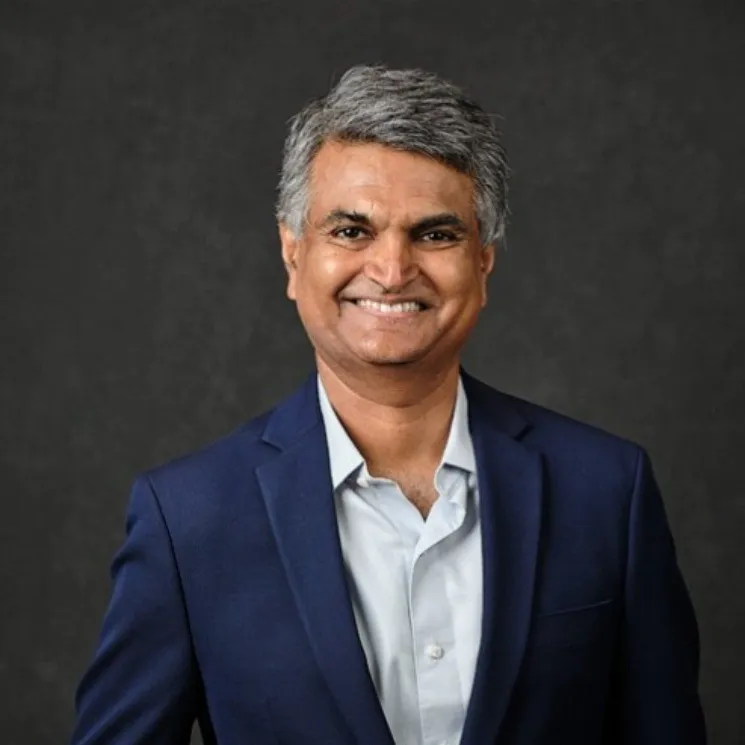
Nagaraja Srivatsan
Senior executive with over 30 years of experience driving digital transformation, AI, and analytics across global life sciences and healthcare. As CEO of endpoint Clinical, and former SVP & Chief Digital Officer at IQVIA R&D Solutions, Nagaraja champions data-driven modernization and eClinical innovation. He hosts the Life Sciences DNA podcast—exploring real-world AI applications in pharma—and previously launched strategic growth initiatives at EXL, Cognizant, and IQVIA. Recognized twice by PharmaVOICE as one of the “Top 100 Most Inspiring People” in life sciences
Our Speaker
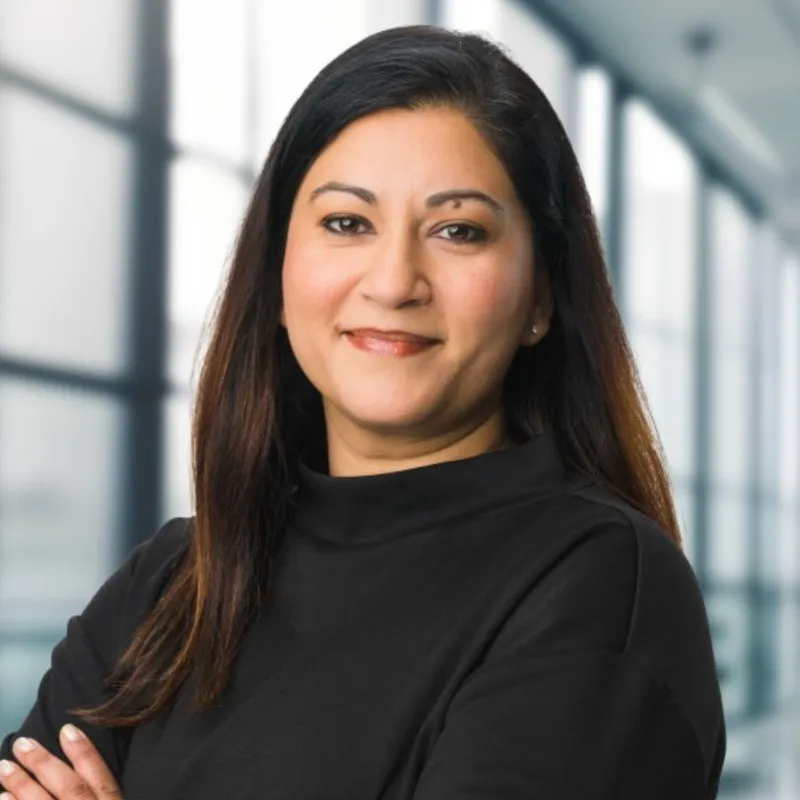
Shweta Maniar
Global Strategy and Market Leader for Life Sciences at Google Cloud, Shweta Maniar works with biopharma organizations to modernize data and AI strategies that enable scalable innovation across research, development, and commercial operations.
Recent Episodes
.jpg)