Operationalizing AI: Building an AI-First Biotech Enterprise
In This Episode
In this episode of the Life Sciences DNA Podcast, Chris Colucci, Vice President of Enterprise Applications and Emerging Technologies at Insmed, joins Nagaraja Srivatsan to discuss how biotech organizations can transition from AI experimentation to enterprise-wide transformation. Chris shares Insmed's AI journey, highlighting the importance of governance, leadership commitment, workforce enablement, and outcome-driven strategies to operationalize AI at scale.
From AI Pilots to Enterprise Transformation
Chris explains how Insmed evolved from grassroots AI experimentation to embedding AI into functional business strategies. By aligning AI with business outcomes, the organization is making AI a core part of how it operates.
Governance That Accelerates Innovation
Discover how a structured governance framework empowers business teams to propose AI initiatives while ensuring every project is evaluated for value, feasibility, and business impact before scaling.
Building a Secure Enterprise AI Platform
Learn how Insmed developed a proprietary GenAI assistant to protect intellectual property, connect enterprise knowledge, and improve employee productivity through secure AI-powered workflows and intelligent agents.
Driving AI Adoption Through People and Culture
Chris shares how AI education, internal learning programs, AI Day events, and continuous communication helped foster confidence, encourage adoption, and create a culture of innovation across the organization.
Measuring AI Success Through Business Value
Rather than focusing on technology alone, Insmed evaluates every AI initiative through measurable business outcomes, including productivity gains, operational efficiency, financial impact, and faster delivery of therapies to patients.
Transcript
Daniel Levine (00:00):
The Life Sciences DNA podcast is sponsored by AgilisiumLabs, a collaborative space where Agilisium works with its clients toco-develop and incubate POCs, products and solutions. To learn how AgilisiumLabs can use the power of its generative AI for life sciences analytics, visitthem at labs.agilicium.com. Sri, we've got Chris Colucci on the show. Who isChris?
Nagaraja Srivatsan (00:29):
Chris Colucci is at Insmed. He's been leading a lot ofcompanies' thinking around digital transformation, data strategy, and increasingly how AI fits into drug development and commercialisation. He's one of those leaders who sits right at the intersection of technology and biopharmacy strategy.
Daniel Levine (00:47):
And for people not familiar with Insmed, what exactly does it do?
Nagaraja Srivatsan (00:51):
Insmed is a biopharmaceutical company focused primarily on rare diseases, especially in pulmonary and inflammatory conditions. They'reprobably best known for their work in the rare infectious lung disease NTM, which is challenging and underserved area. What's interesting about Insmed isthat they've been building not just a pipeline, but also a sophisticatedinfrastructure around patient identification, clinical development, real worlddata, and they're really using AI from start to finish to make themselves an AIfirst biotechnology company.
Daniel Levine (01:26):
And what are you hoping to hear from Chris today?
Nagaraja Srivatsan (01:28):
I really want to know how Insmed went through theoperationalization of AI journey. Chris is not talking about how they startedwork, but how did they put the right infrastructure around the right type ofincentives for people to use, the right infrastructure in terms of governance,and then the ability to really identify the right use cases to successfullydeploy and develop.
Daniel Levine (01:55):
Before we begin, I want to remind our audience that theycan stay up on the latest episodes of Life Sciences DNA by hitting thesubscribe button. If you enjoy the content, be sure to hit the like button andlet us know your thoughts in the comments section. And don't forget to listento us on the go by downloading an audio-only version of the show from yourpreferred podcast platform. With that, let's welcome Chris to the show.
Nagaraja Srivatsan (02:21):
Chris, welcome to the show. Really appreciate it. It'sbeen a long time due. Chris, you've been through quite a bit of transformationjourneys across your career. Why don't you describe a little bit about your AIjourney to date and how that's progressed over multiple organizations?
Chris Colucci (02:43):
Thanks for the invite and being part of this discussion.So for background, I currently work at an emerging biotech and we're all aboutinnovation. And when I think about - our common goal is the patient is ourNorth Star. And when I look at AI and innovation, how fitting is that to reallylook at how we could apply technology for, again, for the greater good of whatwe're trying to achieve here. And in the end, it's trying to get products topatients a lot faster. And I think for us, we started this journey, we're inyear three. It's hard to believe how fast the technology has changed,innovation, and it's just constant change. And our journey really started witha lot of testing and learning and really seeing how this could apply tosupporting our business need back in 2024.
Nagaraja Srivatsan (03:50):
Wonderful. It would be good to get a little bit deeperinto that journey. In '24, what kind of use cases did you go after or whathappened? And now in '25 and '26, what has changed in identifying the right usecases and stuff like that? So actually you're going down the great path whereyour journey started and what kind of use cases where you're starting to pick.
Chris Colucci (04:16):
Well, it's interesting how we started this. And again,trying to understand how to really apply AI in our business, I think thatreally was the genesis. And interesting enough, we started by hiring a collegeintern to really kind of - testing the waters with the technology, seeing whatthe possibility is. And very early on, we went after some very, let's say, lowhanging fruit, quick-wins on summarization and a lot of it was on marketresearch data. And if you think about a pharmaceutical company, the amount ofresearch we do with, and the output is in PowerPoint, PDF, Excel, back then itwas like, well, can we distill that and help our market researchers to findinformation a lot easier? And it seems like a simple task, but again, I thinkit was a proving ground to really say, "This technology has got validityand it can help us." So fast forward, we decided let's expand that.
(05:27):
And we actually built an incubator team and the incubatorteam back in 2024 was a group of engineers that understood the technology andit really helped us to start to apply and really go after some other lowhanging fruit back then. That was in 2024. And that's when we came to realizewe need to start to put a strategy in place. We start to understand how can AIhelp across the entire value chain from as early as drug discovery, throughdrug development, commercialization, and of course our enabling functions. Andthat's where we started to think more holistically and really look to apply AIacross those areas. I think a lot of what helped was the ability to test andlearn early, fail fast, do pilots, and then start to really develop thatstrategy, which again has helped us now, fast forward two years later,deploying well over, I'd say 35 different applications across the value chain.
Nagaraja Srivatsan (06:40):
No, that's an amazing journey, but you hit upon some keynuggets, the whole idea of fail fast, build this testing and learning mindsetvalidity. It's not natural because IT is about perfection. We go and try andget it right. If we only roll out when everything is tested and done, this is alittle counterintuitive to getting this in the hands of the folks. So walk methrough that early journey because many people are struggling to, "Wheredo we start?" How do we bring the people along? How do we build this newmuscle of testing validation and experimentation, but fail fast? That's a newconcept. So how does all of that come together?
Chris Colucci (07:23):
One, I think it's the organization's support. I thinkhaving that behind as far as a leadership team, a chairman, CEO, as well asexecutive committee to allow us to test and learn. And in the end, yes, we wantto move forward, but if things don't work, it's okay. So I think that is havingthe culture helps support that because nobody wants to fail. So I think withthe culture and then just with new technology, we don't know. And I think thatis what really, "let's test the waters before we start to really start togo after some big initiatives." And again, it was just very simply tryingto generate first drafts for helping just summarize or write documents. It wasa proving ground to say, "Okay, can we take this further?" Back thenwhen we started to lay out, once we started to understand and lay out as far asour plan, we did go after some strategic initiatives that again started to gainthat muscle and confidence internally, which has helped us to develop, I think,more solutions over the past couple of years.
Nagaraja Srivatsan (08:50):
Chris, I know you've done about 35 use cases right now,but just again, hovering that 2024, '25 period, did you put IT tech teams likeyou had the intern who's very AI adept with the domain? How did you bring thesetwo together to experiment? Because a lot of the challenges is that if you doit from a tech and AI, then you have not invented your syndrome; you do it fromthe business side, but you don't know all the tech jobs and you're just doing aglorified search. So you must have done something great to bring these twostakeholders together and to help you scale. How did you do that?
Chris Colucci (09:26):
I'm going to probably jump around a little, but yes. So Ithink initially the first probably two years was a grassroots kind of bottomsup innovation. And at the end, we're trying to introduce new concepts to theorganization. And what we tried to do is create an intake process that first ofall, educating functions, employees on what the value of AI is. And the intakeprocess was opening up to ideas. So really creating that idea generation acrossthe organization to really engage and to hear what the art of the possible is.And the intake process I think was we were very successful with that and itgenerated a number of ideas, but it wasn't just, "Hey, take the idea,throw it over the fence." It was now that partnership between business, ITto really start to shape those ideas. Because again, what we were trying to dois have the business user articulate the use case.
(10:36):
What are you trying to solve for? And we're not asking youto understand AI, but what are you trying to solve for? And what is the valuecreation that if we do, what is it going to create for the function, thecorporation in the end? And when we started, we actually defined our projects,we looked through three lenses. We looked at, is it a game changer? So is thistruly transformative in how we operate and run our business? So high impact. Isit productivity improvement? So is what we're doing going to improveproductivity, free up a function individual to do more value added work or canwe truly automate something? So we kind of kept that as far as the focus, asfar as how we evaluate. And I think it wasn't just, "Hey, here's an idea.Let's run with it." It's now let's dig into that.
(11:35):
And I think we go through that process and evaluate andthen it goes through a governance process. So again, we're trying, and we'veevolved over the past three years, is good governance, responsible use of AI.So having cross-functional representation of compliance, legal, quality, IT,information, security, really assessing and saying, "Okay, does this makesense? Is there any watch outs?" And again, what's the investment andwhat's the value creation? So they're doing that first kind of look at it andif it kind of checks all the boxes, everything looks good, we then proceed andthen we start the build process. If it doesn't, it gets bumped up to a council,which is a group of senior leaders that will again, take it and dig into it abit further, either maybe need additional funding or maybe it's questionable onthe use. So again, it goes through that governance process.
(12:43):
That's helped us as far as getting traction and havingthat win-win for both business and technology to advance these. And that'sreally the genesis on how it started is going through that, doing the duediligence, getting the functions, getting individuals to buy in. And again,that helps us start to move these initiatives forward. I'll come back to it ina second, but there's been, I think, a dramatic shift at Insmed where now we'reseeing over the past, let's say nine months, leaders, functional leaders,senior leaders are now looking at AI and saying, "We need to build astrategy. We need our business strategy." It's not just I, we need tothink of this holistically. How do we embed AI into our operation? What shouldwe be thinking about as how we run our business and think about the use of AI,rather than saying, "Well, let's pick this project today and maybe threemonths we'll do another project." Now they're looking at this holisticallyand we've probably got A-plus either roadmaps have been completed or in theprocess of completed this year to really define the next one to two years onwhat we'll do and how we'll leverage AI.
Nagaraja Srivatsan (14:00):
It is a very spot on journey. You first started todemocratize the access to it and get innovation and thinking. You gave theempowered ownership to the business teams. You had a governance framework tojustify what works, what doesn't work and lead it through. And basically whatyou were doing through the process was building that muscle memory for thecompany because it's a new skill. Now you're taking a flip of it and saying topdown what needs to be done on a functional perspective, what does good look like?How does that impact? And this goes back to digital transformation. Digitaltransformation when it was done off a core strategy and transformation wasalways failure, but when you bring these things together, then you start tomake an impact. Chris, as you look at the eight or 10 areas, give me couple ofbig examples of things which you think will make an impact in the one or twoyears, which you guys are thinking of, whether it's in commercial or clinicalor discovery.
(14:59):
Maybe we can dive deep into one or two cases on where youthink strategically it made sense from an AI perspective to invest and howyou're going through those roadmaps and things.
Chris Colucci (15:12):
From a very, let's say, 50,000 foot level, I mean, I thinkif we look at drug discovery, again, we have four research sites across theglobe. Again, to keep it simple is just having a roadmap on where we go withdrug discovery, what are the areas from lead optimization to finding that nextmolecule? Where do we focus on? What are the things, the tactical, as far asopportunities that we would go after and start to really build that synergy? Wecan look at from a compliance aspect, what are the focus areas where again,come back to when we look at game-changing productivity and automation, whatare things that we can get more value in productivity out of that particularfunction?
(16:09):
Again, I think when we look at finance, again good area,looking at the mundane processes of month end, quarter end closes--you canimagine of the opportunity in there. So that's where we start to definespecific use cases in each of those areas, and not to go too deep and share,but that's what's driving this from a technical operations supply chain. Whatis it from an inventory management production, what we should be focusing on?And what that's allowing us to do is - it was critical to open it up from aground up and grassroots. I think that I think built the confidence and itdemonstrated the value. Now it's kind of like truly being embedded. And I thinkgo back to what you said about digital transformation, it's now part of how youoperate as a function rather than, well, let's go and build this specific thingfor a particular function.
(17:19):
And yeah, it's good, but now as a leader of a function,they're looking holistically and saying, "It's another tool in my toolbox.So as I build my strategy, it's important. I need to consider what thepossibility is by embedding AI."
Nagaraja Srivatsan (17:37):
No, I mean, that is exactly where many of the leadingorganizations are going, Chris, which is they initially started to democratizethe access and the implementation, but to make impacts, there's the famous MITreport, which says 95% of AI projects fail, but they failed because they weregoing ground up and very narrow where they were successful and this is acrossthe board is where you start strategically to a functional area, look at whatarea of outcome you're going to impact, like you said, you're not trying toautomate financial processing, but you're saying, "I want to get my monthend done in two days or three days," whatever that is, right? You'rebringing a very tangible outcome focused model and as you said, AI then is atool. So walk me through these functional leaders. They're embedding this intheir strategy. They're putting this as a part of their business plan, but isthat a hammer chasing a nail?
(18:36):
Is there coming to you and saying, "I want Claude andI want OpenAI and I want this," or they're giving the problem and then youguys are solutioning together. So walk us through how do you then take an idealike 'a month and close has to be better' or 'drug discovery, targetidentification better' and how do you make that into reality? So just what'sthe next step?
Chris Colucci (18:58):
Put aside specifics, it's more of once we get a leader onboard that says, "You know what I want -- help me build a strategy."And I think a lot of it goes to let's understand the business, let's understandwhether the pain points ... Again, put AI off to the side. It'stransformational. So let's look at processes, let's look at where the chokepoints are and again, start to evaluate and see opportunity. And again, I thinkit's more about transformation and trying to define what you're trying totransform, what is it that you're trying to achieve. Look, at the end of theday, come back to our overall, our vision is, look, the patient is our northstar. How do we get products to patients faster? Where are those choke points?And again, if you look at bringing a drug to market from finding the moleculeto getting it through clinical development, preparing it for filing andcommercializing, there's a lot of steps along the way that has huge, hugeopportunity to really squeeze or improve productivity and automation.
(20:16):
And I think that's some of the mindset - is that dependingon the function they're looking at it is how can we? If it's in the drugdevelopment space, how do we make our site selection, patient identificationaccelerate that? How can we get to database lock a lot sooner? And it'sthinking in business terms and then it's trying like, okay, let's start tobuild a plan around that. So I think a lot of it goes back to the functionalarea, not like we're not going, let's see what AI can do. It's like, let's understandwhat we're trying to achieve. And then we're trying to, again, start toarticulate how we could execute against this to, again, improve productivity,drive automation, or truly be high impact game changing.
Nagaraja Srivatsan (21:10):
So Chris, spot on, right? That's what good organizationshave to do. You come top down, write transformation within the process anddriving it. Tell me what has worked and there has been several things whichhaven't worked. So maybe you could talk about a journey where you triedsomething and it didn't yield the results and then you had to roll back. Sowould love to know what works and what doesn't work.
Chris Colucci (21:38):
I'm going to pick one that's more enterprise and this Ithink has really kind of I think evolved when we first introduced it. Now look,I mean, we know that with the use of Copilot, ChatGPT, OpenAI, everyone's usingit in their personal life and I think we decided probably 18 months ago. Wedidn't go down the path of leveraging a public LLM and given access to ChatGPT.We decided to basically build a proprietary custom our own GenAI assistant andwe did that for a couple of reasons. One is protect our data, keep it withinthe four walls of Insmed. The second thing is our prompts and everything, tryto secure as much as possible and really kind of embed that in theorganization. And early on we made a decision to leverage Claude and Claudebecomes our LLM that basically powers our internal GenAI assistant.
(22:57):
And when we first probably started, we probably had like600-700 employees, and now we're probably close to 1,700 that now are againusing our Gen AI assistant. Is it full 1,700? Maybe not yet, but early on ittook time to bring the organization along to use our internal GenAI assistant.And again, it was a lot of training and education and really trying to drivethe adoption. I'd say as of the end of May, we've probably I'd say went uptenfold as far as the number of users, but also the number of inquiries that gothrough our own internal GenAI assistant. And I think that is, I think, kind ofthe cornerstone of how we operate is our own gen AI assistant leveraging allour internal data sources. So again, indexing across not just your SharePointsand your 365, but it's all of the third party solutions cloud as far as whatwe're using really index that and contain that within our environment.
(24:14):
And I think the point here is that it took time becausethere wasn't kind of an understanding. I think this isn't really giving me whatI need. I'd rather go out and use ChatGPT. And I think it was just bringing theorganization along and education training and starting to build confidence inthe output. And I think that is kind of a cornerstone of how we operate today.We've since built a number of agents on top of that. We've built our meetingsummarization that integrates with Teams, that has nice workflow embedded in itso that as meetings are concluded, it gets summarized, gets sent to theiremail. And again, it allows that back and forth with the meeting host to go andtailor it and then send it out. And again, it's used in not all meetings, butagain, there's guardrails in place to allow that.
(25:16):
We've taken our GenAI assistant and we've built an agentto help write development plans. So again, and that's an interesting use casebecause that was an HR team saying, "How can we improve getting morerobust development plans?" And they actually sponsored it and they gotbehind it and it's quite successful now that has the ability to have an agentbasically help you and prompt you to write a development plan. So things likethat is a building ground for us and we feel from a security standpoint thatagain, we're containing it and also controlling it.
Nagaraja Srivatsan (26:03):
So three parts to it, right? You brought, and custom isthe wrong word, but proprietary LLM protected your IP, then let it lose in yourenvironment with all of the different data and indexed so that it has context.And then you started to build workflow and agents on top of that for each ofthe different use cases. Some of that in the later part of the journey, are youbuilding a lot of Claude skills which are being institutionalized within thecompany so that the next time somebody comes, they can just pull out the rightskills and then start from there versus agent training from the beginningbecause you have a good rich repository of things to do?
Chris Colucci (26:42):
We, I'd say, are probably in the middle right now. I thinkwe have a good foundation. We've got a number of skills that are beingdeveloped starting to shift to more persona. Again, we're trying to, again, usesome of the good feature of what Claude offers. And again, I think that againis really, I think the focus in 2026 and beyond is going to be leveraging thatmore for workflows and automation. I'd say we're scratching the surface now,but the possibility is endless right now where we can go with this.
Nagaraja Srivatsan (27:22):
So Chris, I know this is a question which is top of themind from last week, so I'm just going to ask that question. Uber finished offthat AI budget in four months, token usage in Microsoft went over. Sotokenization and cost is a critical component to it. And you've been alwaysmaking sure you're measuring cloud and other infrastructure costs. So A, tellme a little bit about what is your cost and financial control in the era of AIand are there some best practices you're putting in place to at least give yousome guardrails against spending all of the tokens early on?
Chris Colucci (28:02):
In my career, this is probably truly uncharted waters.It's great this technology is evolving, but I think there's the, I don't wantto say hidden expense, but it's that the meter is running and it's all good.It's a cost that it's hard to kind of ... We can try to forecast, but it's anunknown right now. What I will say is maybe not what from a budget standpointis come back to the value creation and that's why the past, I'd say year and ahalf, our focus has been making sure we have robust business cases, making surewe have key metrics as far as how do we measure success?
(29:00):
Is there cost avoidance, cost savings? And this year, Ithink we're going to be paying very close attention and if we don't see theusage and the value, we need to shut it down. And it may be a great idea, butif the adoption's not there, because again, everyone ran out and bought agenerator after Sandy and fortunately you don't have to use it, but you thinkabout the cost of running a generator for several days and it's the meter isrunning. This is the same thing, the consumption cost is ... So we need to bevery watchful on that. I think try to strengthen our business cases with keymetrics and really defining the value. I think that's the thing is if somethingis proving value...
Nagaraja Srivatsan (29:56):
The reason I was probing that as people are starting to dodefinitely cost measurement to know what is going on, but it's alsoarchitecture and we're looking at architecture like, hey, context is veryimportant. You could point your Claude to every repository you want. They loveit because that's input tokens. But how do you then leverage it through skillsso that you're giving the context in a very specific summarized manner versuspointing it to 300 documents in a SharePoint. It's small things, which in theearly stage in '24 you would say, "Go for it, go at every SharePoint andget the knowledge and context." But now if the meter is running, you'relike, do you really need it or can you summarize these things into something?And so it's the architecture which is evolving, which is now different from acost perspective versus an effort and outcome perspective.
Chris Colucci (30:56):
I'm glad you brought that up. And that is something thatfrom our engineering and how we architect these, that is top of mind. The otherthing is we're trying to think of more platform agnostic reuse and again, nottrying to have the multitude of going after all these LLMs. So I think it's alltrying to build that in a best practice, but we're keeping a watchful eyebecause it's amazing how fast that number can grow.
Nagaraja Srivatsan (31:30):
No, absolutely. So Chris, you have a very goodmethodology. You've taken the organization through quite a bit of change. Tellme a little bit about your latest blog about AI and everything which you guysdo. You've done that. What is that mindset and what does that mean within thecompany? Remember the LinkedIn post.
Chris Colucci (31:53):
I think where your reference is we held AI day. And let meback up. So when I look at 2026 as far as what we're trying to achieve and ourobjectives this year, again, outstanding two years we've had grassroots numberof projects we've completed. Now we've got the shift where leaders are takingand embracing it. Our focus this year is truly driving transformative highimpact game changing initiatives. So maybe instead of doing a lot, we'll do afew of those and that's really going after the high impact. The second thing iswe really want to look at our adoption and it goes back to what I said aboutwe've implemented, but are the tools, the applications being used. So drivingadoption is a critical part, having good metrics and tracking that. The thirdthing is really embedding training, learning. So really evolving our learningand development around AI.
(33:08):
And that is we rolled out, back in Q1, a whole learningcurriculum around AI. We hosted our third annual AI day and it was anoverwhelming success where we had a high number of employees attend in person.We had our own mini AI expo where we were showcasing all of the internalprojects that we've deployed and having business leaders talk about, through aposter, the success of this. We also invited partners to our expo where ourpartners that we're working with, to again, showcase how we've been working together.And again, we kicked off our training program. So AI day has been kind of asuccess for us. We'll continue to have that. And then lastly, it'scommunicating our story.
(34:16):
As much as what we do is educating the internal, ourstakeholders, our employees, on what's going on, keeping them abreast of thesuccesses, the projects that have completed or the projects that are beingdeveloped. And also we want them to speak up and share and still have theability, if they have an idea, bring it forward through our intake process. Sothat's our focus. And I think again, is having AI day, having a learningcurriculum focused on driving adoption. And it's not just from an IT standpoint,this is a collaboration between HR who's actively involved with this, ourcorporate communications team, again, all our stakeholders, they're all playinga role in moving this forward. Where two years ago it was a lot different andI'm sure for many organizations, this is introducing new themes, new concepts.So, this year has been a ... We're already almost at the midway point.
(35:25):
And for me, I think I'm thrilled on how things are goingand progressive.
Nagaraja Srivatsan (35:31):
Yeah. Chris, that's a great thing for our last question.As you look forward, you've come a long way from '24 to '26. Paint me a journeyin the next 12, 24, 36 months. How is that going to be? What's in store foryou, but also what's in store for the industry at large?
Chris Colucci (35:51):
We will be a AI first biotech where again, AI is embeddedin how we operate. That is our goal. We will find ways to improve gettingproducts to patients faster. So we still keep that as kind of our North Star.What success looks like for me is we have solid business cases that have clearmetrics for measuring adoption, operational efficiency, and as far as financialimpact. We have an organization that is not just talking about AI and it's notjust AI, but it's now truly looked at as a transformation initiative - asreally helping move the organization, grow the organization. And I think thatto me is a shift that it's now part of how we operate. And that's really what,again, comes back to what I said - is being an AI first enabled biotech.
Nagaraja Srivatsan (36:59):
Wow. That's a wonderful aspiration and you are well onyour way and journey. And I think the critical part of it is the guardrails youhave in terms of governance and in terms of people and building that newmuscle. And I think I just want to reinforce that these things don't happenovernight. You have to go through the journey of building that muscle, whichyou have, putting the governance, having the right guardrails, and then nowyou're poised to scale.
Chris Colucci (37:26):
I want to add actually one more point, which again, Ithink it'd be remiss. We couldn't do this without the support from our chairand CEO, executive committee, our CIO, being truly behind, supportive withfunding, resourcing, really standing behind it. Because I know a lot ofcompanies struggle where they have good ideas, but there's a disconnect fromthe top. And we are fortunate that to have our leadership who are, again,behind this in what we do. For me, it's a great story.
Nagaraja Srivatsan (38:05):
No, and then everybody has said to make it successful, youneed a top-down leadership commitment all the way starting with the C-suite andall the way below. And that's almost an essential part to make this thingsuccessful, but it's wonderful. You have that backing and there's so many funand exciting things to do. So Chris, really wonderful to have you on the show.Really wonderful to hear your perspective. The audience will benefit a lot fromthe journey you went through because many of them may have either gone throughthis but not built the essential ingredients for success. And I think I lovethe framework which you put together on how do you make this thing successful.So thank you.
Chris Colucci (38:50):
You're welcome. Thanks for having me.
Daniel Levine (38:54):
Sri, it was a really interesting conversation to see howInsmed is deploying AI. What did you think?
Nagaraja Srivatsan (39:01):
I think what I really liked was Chris's articulation ofthe journey. This is a playbook which several people when they're on thejourney can use. First, he talked about how he could democratize the access andthe use of AI so that he got business and IT working together. And when you didthat, he also put the right AI governance, which then looked and evaluatedthese use cases and made sure that they had the right structure in terms ofROI, productivity and others. And then he made sure that as that they werecontinuing to evolve to really have the right type of metrics and dashboard toensure that they're successful. So I really liked the approach and the approachhas changed from what I call a ground swell approach to now a top down approachby functional area where AI is a part of their strategy and not a tool toenable that strategy.
(40:00):
And that was a fundamental change which happened throughthe years. So it was a great journey and great way on how to scale AI withinthe company.
Daniel Levine (40:11):
He talked about the use of pilots and the test and learnand fail fast. You seem to indicate that fail fast is not the mentalitybroadly, but I think of this as being a very drug development mindset wherethis industry has learned the value of failing fast. Is that unusual within AImore broadly?
Nagaraja Srivatsan (40:35):
I think so. I think everybody talks about the Fail Fastculture, but when it comes to IT teams or even projects, people don't wantfailures. And so we've done a lot of work in transactional systems and datasystems across the board. And failure was looked quite down upon by theorganization. But to create a culture where you can try, experiment, fail andlearn is the new muscle in adopting AI. And I think putting that culture upfront, as he said, from the executive leadership, from their leadership across functionalteams was a very critical part of ensuring that AI could be tested and then nowthey can scale it because that new muscle is there within the company on whatyou can do with AI. So now you can implement it in very strategic projects andprograms to make it happen.
Daniel Levine (41:28):
He talked about early on educating employees on the valueof AI and opening up idea generation. He described what was a very bottoms upapproach. Now he says leaders are looking at AI from a business strategy pointof view and being very holistic in a very top down approach. Does one approachwork better than another?
Nagaraja Srivatsan (41:53):
The way you have to work is you have to first build themuscle and capability within the organization. Across the board, successful AIscale happens when organizations pick few but very important strategic usecases, put the organizational muscle capabilities and thinking behind that. Butif you just did that without enabling the workforce with experimentation andfailure and learning mindset, you would then have a top-down approach whichdoesn't have the adoption. What Insmed did was in the right sequence, theyinitially had a democratized approach to making their teams learn, fail andgrow. And now when they come in 2026 with the top-down initiatives, few butvery important strategic initiatives, you have the right kind of adoption curvehappen.
Daniel Levine (42:48):
Yeah. He also talked about the lenses through which theyevaluate AI projects, others, and being truly transformative or productivityimproving or that they automate something. In all cases though, the bottom lineis value and the value they're bringing. Are there some standardized ways thisindustry is looking at value creation?
Nagaraja Srivatsan (43:11):
Chris said, they look at three things. Is the project agame changer, which means it's transformative in nature. Is it going to beimproving productivity of my workforce and how much that is and are therefunctions I should be able to automate which I shouldn't be doing manually? Sothey use these three lenses. I think the ROI is what Chris said, which is thebusiness impact. And the business impact happens when you pick a functionalarea and say, "What is so impactful in that function? And then how do you thenuse AI to make an impact?" He used a very good use case in finance ofbusiness impact around month end closing. How do you take something which takesX amount of time and brings that down? And so that's a very tangible outcomeyou're trying to enforce and then to build that out. He similarly talked aboutHR and development plans.
(44:03):
How do you take a tangible area and then make an impact using AI? So what was very resonating with Chris was that he was first talking about the business function, the impact which needs to be delivered and developed, and then using the tools and technologies to make it happen.
Daniel Levine (44:19):
The other thing you talked about, which I found really interesting, was the proprietary GenAI assistant they had built, leveraging Claude. The thing that was interesting to me, though, was the training and education and the need to drive worker adoption that they put into this. To me, it was a reminder: you can't just flip a switch. How important is it for companies to invest the time and resources into bringing employees along to really get the payoff from AI systems?
Nagaraja Srivatsan (44:52):
I think that's very critical. And I think upfront investment in the chain journey of bringing employees to adopt AI is so critical to the success of a future initiative. So they did that in the right sequence, and you needed that. And by giving a proprietary version, they removed some of the guardrails which are needed in terms of IP and privacy and training data and all of that stuff. So it was really a very nice way in which to get adoption going.
Daniel Levine (45:24):
Well, it was a great conversation, Sri. Thanks as always.
Nagaraja Srivatsan (45:28):
Thank you.
Daniel Levine (45:32):
Thanks again to our sponsor, Agilisium Labs. Life SciencesDNA is a bimonthly podcast produced by the Levine Media Group with production support from FullView Media. Be sure to follow us on your preferred podcast platform.
Our Host

Chris Colucci
Chris Colucci is Vice President of Information Technology at Insmed, where he leads the company's enterprise applications, digital transformation, and AI strategy. He focuses on integrating artificial intelligence into business operations to improve productivity, accelerate innovation, and help deliver therapies to patients faster. Passionate about building AI-first organizations, Chris champions strong governance, secure technology platforms, and continuous workforce enablement to drive sustainable AI adoption across the enterprise.
Our Speaker
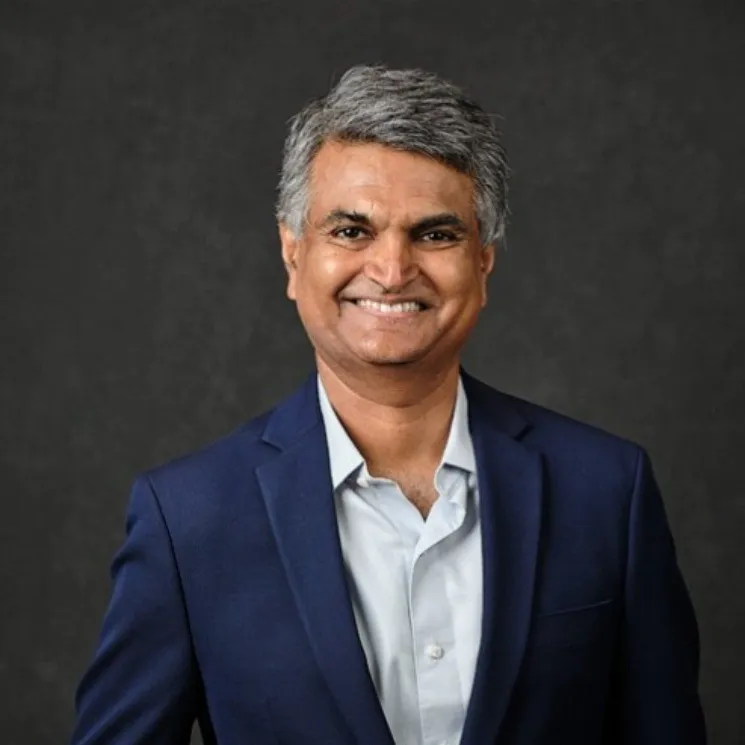
Nagaraja Srivatsan
Senior executive with over 30 years of experience driving digital transformation, AI, and analytics across global life sciences and healthcare. As CEO of endpoint Clinical, and former SVP & Chief Digital Officer at IQVIA R&D Solutions, Nagaraja champions data-driven modernization and eClinical innovation. He hosts the Life Sciences DNA podcast—exploring real-world AI applications in pharma—and previously launched strategic growth initiatives at EXL, Cognizant, and IQVIA. Recognized twice by PharmaVOICE as one of the “Top 100 Most Inspiring People” in life sciences
Recent Episodes
.jpg)