From AI Ambition to Clinical Impact: Reimagining AI Transformation in Life Sciences
In This Episode
In this episode of the Life Sciences DNA Podcast, Krishna Cheriath, Vice President and Head of Digital and AI for Biopharma Services at Thermo Fisher Scientific, joins Nagaraja Srivatsan to explore how life sciences organizations can turn AI ambition into measurable business and clinical impact. Krishna shares a pragmatic approach to AI transformation-from defining a few critical value imperatives and redesigning workflows to building AI fluency, empowering cross-functional teams, and navigating regulatory guardrails.
Defining the Right AI Value Imperatives
Krishna explains why organizations should focus on three to five critical objectives rather than chasing every AI opportunity. The emphasis remains on measurable outcomes that move the business forward.
Reimagining Workflows, Not Just Tasks
AI transformation requires changing how work gets done at the workflow level. Krishna highlights the importance of combining business-process expertise with AI capabilities to redesign workflows effectively.
Making AI Work in Regulated Environments
The conversation explores how organizations can respect regulatory principles while challenging traditional methods. Krishna shares why understanding the intent behind regulations can create opportunities for innovation without compromising outcomes.
Building AI Fluency Across the Workforce
AI adoption depends on more than technology and training. Krishna discusses individual responsibility, leadership storytelling, experimentation, and creating environments where employees can build practical AI fluency.
Designing for Flexibility, Scale, and Trust
From buy-versus-build decisions to adaptable AI architectures, data strategy, cost management, and evaluation, Krishna shares principles for building AI foundations that can evolve as the technology rapidly changes.
Transcript
Daniel Levine:
The Life Sciences DNA Podcast is sponsored by AgilisiumLabs, a collaborative space where Agilisium works with its clients toco-develop and incubate POCs, products, and solutions. To learn how AgilisiumLabs can use the power of its generative AI for life sciences analytics, visitthem at labs.agilisium.com. Sri, we've got Krishna Cheriath on the show today.For listeners who may not be familiar with him, who is he?
Nagaraja Srivatsan:
Danny, Krishna is vice president and head of digital andAI for biopharma services at Thermo Fisher Scientific. He leads the digitaltransformation initiatives designed to improve clinical research, operationalefficiency, and patient outcome. He brings more than 30 years of experience indata strategy and life sciences leadership, including prior roles at Zoetis andBristol Myers Squibb. Krishna also serves as the adjunct faculty at CarnegieMellon University and Rutgers Business School where he teaches digital, data,and analytic strategy.
Daniel Levine:
And for audience members who may not be familiar withThermo Fisher, can you explain who they are and what they do?
Nagaraja Srivatsan:
Thermo Fisher Scientific is a global life sciences andlaboratory services company with more than $45 billion in annual revenue. Thecompany supplies scientific instrumentation, reagents, consumables, software,diagnostics, and pharma services to customers across research, healthcare, andindustrial markets. Its work spans life sciences research, clinicaldiagnostics, analytical testing, and drug development and manufacturing.
Daniel Levine:
And what are you hoping to learn from Krishna today?
Nagaraja Srivatsan:
Krishna with his 30 years of experience is what I callsomebody who can practically implement AI. I'm really looking at how he hasgotten to bring the thought process to implement AI in clinical and clinicaldevelopment and how that journey is starting in a company like Thermo Fisher.
Daniel Levine:
Well, before we begin, I want to remind our audience thatif they want to stay up on the latest episodes of Life Sciences DNA, theyshould hit the subscribe button. If you enjoy the content, be sure to like theepisode and share your thoughts on the comments page. With that, let's welcomeKrishna to the show.
Nagaraja Srivatsan:
Krishna, it's wonderful to have you on the podcast. What Iwanted to get started was - you have had quite a journey in driving AI anddigital transformation. So prior to you coming to PPD, give me a little bit ofyour background and kind of that journey and some key takeaways before weexplore what you're doing currently.
Krishna Cheriath:
My journey through healthcare and AI has been veryinteresting and a fascinating journey by itself. Not all of it planned as mostinteresting journeys are. I was born into a family of physicians and I was theblack sheep in the family that went and did electrical engineering. Buthealthcare was in my DNA, so I found myself at the intersection of tech andhealthcare through the course of my career. I call myself a recoveringmanagement consultant. So in consulting, I must say that these days managementconsulting gets a bad rap, but a lot of foundational experiences around beingairlifted into the middle of a problem, being able to diagnose, make yourselfuseful, finding, getting a good quick sense of the stakeholders, the stated andunstated things, and then translating them to something that is tangiblesolution. A lot of times I find the roots of those learnings back in myconsulting days.
And then I found myself at Bristol-Myers Squibb primarilyfocused on technology. And it was a pure happenstance that I had just finishedmy project, was walking out of the elevator, trying to figure out what my nextgig is going to be when one of the influential leaders at Bristol Myers Squibbcame out and said, "Hey, we have this data analytics initiative that isfloundering. Do you want to get involved in it?" And that's how mycomplete pivot happened into data analytics, which led to AI transformation.First with Bristol Myers Squibb, I went on to become chief data officer, thenwent to Zoetis and Animal Health for about three and a half years to build thedata analytics and AI agenda from the ground up. And then found a veryintriguing opportunity to be at Thermo Fisher in which many ways I think of itas an ETF of biotech and biopharma with a chance to focus --
most of my focus prior to that from a data analytics, AIwas enterprise-wide with R&D as one of them. But to have an opportunity tofocus specifically around the R&D AI transformation and now extending thatinto manufacturing AI transformation has been a very interesting experience togo deeper into a domain and then understand the potential, the limits andchallenges of trying to make traction in this space. And then that aspect of itwas also shaped by my own personal journey around it with significanthealthcare challenges in my family. My wife went through an advanced breastcancer diagnosis and her recovery through that was made possible because of innovationsthat came into the market in the last 10 years. A lot of times in our work,this can be pretty distant from an actual impact because we are enabling stuff,but at the end of the day, the product that comes out is a medicine.
But to now be in a position where I can be a small part ofthe scientific innovations that will save a patient in the future or make adifference in somebody's life, I found a lot of meaning in that after havinggone through a personal journey through this as well. So I feel very blessed tobe in this position at a time when we have such a opportunity and challengewith the disruptive wave that is going on around us. And I wouldn't tradeplaces with any other spot.
Nagaraja Srivatsan:
So Krishna, fantastic. You said purpose and purpose drivesa lot of us. And you're a management consultant, so let's pick on yourmanagement consulting. You just got dropped into clinical operations andclinical development and the change. At the same time, you have a tsunami ofstuff happening with AI. And at the same time, you are a services companyserving multiple different sponsors. So you have a trifecta of opportunity andchallenge depending on which you want to do. So how do you start to break a bigproblem like that, which could be very daunting on where do you start? How doyou then break this big thing into smaller pieces and then start to begin thejourney? So let's start with the beginning. How do you begin a journey when thetask in front of you is daunting?
Krishna Cheriath:
Really great question. I think the number one thing is,especially for a transformation of this magnitude and the potential andchallenge, I've always been a big believer that you need to get the macro rightand the micro right. I think the way I think about it is when you think aboutthings that really make a difference, you need to be really centered aroundwhat the value goals are. There may be so many different range of things thatyou could focus on when it comes to the AI agenda, but you need to narrow down andprioritize to the three to five big value imperatives that is going to move theneedle. In many ways in that I think of myself as a venture capital partner. Ihave to have a good value thesis across these five funds that I want to launch.I need to have flexibility to have multiple shots and goal under each with theidea that some of them may fail, some of them will take off, but it's going tobe about how can I take these ideas to IPO and then scale.
So that's the macro side of it. But for something like AI,which is foundational, for it to deliver value, you need to have impact at anindividual and a workflow level. And this is where I guess most organizationsstruggle is we focus on the big programs and priorities, but if you don't makea difference around how work gets done and how things are done or what is donedifferently, you're not going to make an impact. So that is where the micropart comes in. So a lot of organizations equate that to education and fluency.Yes, they do have a role to play. It is way beyond that. It is about how youinvite people in who are at the nodes of execution. So in my world as CRA, forsomebody who is doing clinical data programming and biostats, somebody who'sdoing a pharmacovigilance analyst or a safety specialist and so on.
Each of their workflow context is different. If you can'tinfluence how their work changes or becomes different and they're invited intothe party where they feel they have an ownership over that change, you're notgoing to get value impact.
Nagaraja Srivatsan:
Krishna, it'd be good to explain the macro and the microportion of it. Starting with macro, there are thousands of prioritization. Howdo you get to the three to five and then build that portfolio prioritization?It'd be great to see what process you follow to get there.
Krishna Cheriath:
When you look at a range of opportunities from a clinicaltrial standpoint, we know what are the bigger areas of impact, whether it is,and for us it is what can we do to do smarter trial design? So that is valueimperative number one. I'm a big believer that unless we are able to change thetrajectory of trial design itself, we cannot impact downstream. A lot of thingscan be thought through upfront, and if we have a better design, we could leadto better execution. And a smarter digital protocol, I would consider as thebackbone of any advancements from an AI agent-based execution downstream. Sothat becomes value imperative one. Second, none of the progressions that wewant to achieve in terms of cycle time compression and getting innovations tothe market faster is achievable without making an impact from a patientenrollment standpoint. We can, yes, use AI for many different optimizations, etcetera, but if you don't impact patient enrollment, get those enrollments up towhere it needs to be.
You cannot make an impact outcome. And third, bulk of thework that we do is continuous data management and monitoring and thenconverting the data into insights and real-time interventions, et cetera. And thenwe have to get the regulatory submissions through. Putting that together,making sure that we are anticipating regulatory questions, we are making asrobust a package as possible and then anyway. If I think about that as the fourbig themes around this, that forms the macro bets that we need to make. Undereach of the themes, and I think in terms of multiple bets you want to makeunder each of those themes, and then some of them will pan out, some of themdon't. Some of them may be within your span of control as an organization. Someof them requires other ecosystem players and others. So that starts to becomeyour constraining factors around where you can directly influence and where youhave to be a participant to be able to exert indirect influence to shape anoutcome, especially patient enrollment comes to mind as so multidimensional.
So that's how I think about the macros area.
Nagaraja Srivatsan:
And that makes sense. In a clinical trial process, yourecruit better, get the site selection going, and then improve the dataapproach and submission. So very, very fair, big buckets. But again, in each ofthese, you have multiple stakeholders and operation workflow, as you said,because the workflows are very siloed.
Krishna Cheriath:
And so I would say, if I just abstract back to say, if I'mnot in clinical trials in a general terms, this is where I feel like unless youare a tech organization where technology or data is your product, most of us,the scope of and mission of the company doesn't alter dramatically because ofAI. So if you're a biopharmaceutical company, you are in the business ofdiscovering the next biggest innovation and bringing that medicine to themarket. So that stays constant. And how you do it and how you can achieve muchhigher returns on your investment and success becomes your imperative. So Ithink in terms of value stability and vision stability, and then flexibility interms of the techniques you use to do it. So that centering is very importantbecause a lot of times this digital can be a distraction.
So instead of a digital promise, it becomes a digitaldistraction. We chase all the different things, but we have to stay standard tosay--so for me, the measure of success is not whether an AI initiative wassuccessful, whether actually we could make a difference in terms of increasingthe patient enrollment rate or were we able to shorten the time it takes to adatabase log by even a day or two days? Those are measurable. Everything elseis just academic.
Nagaraja Srivatsan:
Sure, sure. And that's a good sense. And just as you bringin these big initiatives, one of the things is different teams and stakeholdersand you need to bring them together. Maybe that's how you start the micro levelbecause you got to get the individual cells working and then bring themtogether to make this impact. But I think one of the most interesting thingsyou said is make the impact on the workflow. And as you can imagine, theworkflow is different from a task. A CRO workflow or a CRA workflow can startfrom one side of recruitment to management to getting the data spat across allyour different initiatives. And so walk me through that because that seems tobe a very difficult part when people say re-engineering the workflow. How doyou go about starting and progressing there?
Krishna Cheriath:
I think the three challenges that I see in making animpact in workflow redesign is number one, there is not enough boundaryspanners. And boundary spanners are those people who are able to appreciate thebusiness end of the spectrum of what is the business process and how it isdone, why it is done, what is the context, what are regulatory and thenon-regulatory constraints and others. And the other side of this is the art ofthe possible from AI and new innovations like that. So there are not enoughpeople who are conversing in both ends of the spectrum. So what happens iseither you are constrained by your understanding of what AI can do, or you areconstrained by the lack of understanding of the reality of how workflows happenin real life. So that's the problem number one. So unless you solve for that,it is very hard to make a difference around the workflow re-imagination.
Second is innovation time. I think all of us are runningfull speed. If you look at folks who are in clinical trial operations and whohave day-to-day, they're underwater from the amount of work that they have todo doing the actual work in the current ways of doing things. For those peopleto have the capacity to step aside from their day-to-day and to reflect on whatcould we do differently? If I were to start this process today as a AI nativecompany, would I do it the same way?
People are not asking the questions not because they don'twant to, it is they just don't have any time to. The innovation time is a bigproblem. Third big challenge that I see is the willingness to change. And thatis, an individual may be willing to change, but how do you get the entireconnected nodes in organizations like mine where are there multiple parts toit? How do you get that entire string of pulls to switch color? And thosethree, if you don't attack, then it has become very hard. So some of our moresuccessful initiatives are where we had that right combination of people whounderstand how things are done, but are open to the idea of the art of thepossible. We were able to marry that with folks from an AI end of the spectrumwho know the AI space well, and invested time and energy to understand thereality of this.
So essentially you're not going to find that perfectcombination in an individual that is a unicorn, but an innovation pod thatconsists of these elements of these people, and then giving them the specificmandate and time to be able to carve out time from their day-to-day to do it.It was where we have made attraction. So this is definitely not rocket science,but I think what happens in the AI world is we are so quick to go down the pathof the AI tech, and we are leaving vast swaths of people behind. And acrossyour priority areas, you need to solve for it. And our success and failure,what I find, is directly proportional of how much empowered these pods feel andhow they're able to advance. And we have a very successful program in themedical writing AI space. And that happened not out of any other magic.
It is because a few wonderful people got together excitedabout the agenda. We were able to empower them, and we had the rightcombination of people there to make a difference. Same holds good for us is theCRA AI assistant that we have rolled out. It came together because of... Andthe people who talk about it and present that to leadership and externally areCRAs. This is why I'm excited about it. Here is what it makes difference myday-to-day. I can focus on these priority things that I need to focus on, etcetera. So I think that's the thing to master from overflow. And the more youcan do that, more we can empower these cross-functional means more we can besuccessful.
Nagaraja Srivatsan:
No, that makes a lot of sense. But what you said is thatthere are a few who are empowered and who can take that combination betweendomain and challenge of the new. But vast swaths of people, as you said, are inthat micro structure where you have to bring them along. Walk me through. Howdo you do that? Because you have thousands of people within the organization.How do you make them adopt AI in their individual lives? And how do you bringthem along in the journey?
Krishna Cheriath:
Yeah, I think that one of the things when I talk at townhalls internally is that we owe it to ourselves as individuals to be AI fluent.To me, this is almost as foundational as probably most of the audience will notremember when computers were first introduced back in the day. Every workflowthat we know of was fundamentally reshaped years ago. Somebody was telling methe other day that when she used to go to the bank and there was this bigledger book that somebody would open up and then talk about the debits andcredits and give you the slip around how much is that in the account. Thatlooks like such an antique way of doing things, but it was not that many yearsago. So what we are going through right now is one of those disruptive change,which is going to change the arc of every single way of doing things.
So first and foremost, there is an individualresponsibility and accountability to fluence it. So we have to invest in ourown personal fluency and education. That's something that I stress in globaltown halls to say you owe it to yourself and your family to be fluent in thistopic, number one. Second then is how do we have people who are goodstorytellers who can inspire people to take action? So this is not going to bedone through mandate. So if we talk about the CRA AI assistant journey examplethat I talked about, it has happened because we were able to tell a compellingvision around a group of critical knowledge workers who could use thiscapability to focus on the tasks that they want to focus on and where they canapply their human judgment and creativity. And that inspiration led to thedifference of them being part of it.
So then you need those - leadership is always aboutfollowership, so you really need to have the storytelling capability. Then thelast piece is almost like you need to set up the right structures for thesepeople to be successful. So whether it is if I want to try something, I need tohave an ability to go try something. And if I want to learn something that isan environment where I can learn without making it boring and dull. So all ofthose things becomes ingredients. So it's not a simple answer, but I start withindividual responsibility. For all the people who say, "What is thecompany doing in this space?" I would ask the question, "What are youdoing individually? If this is going to be critical for your job and yourcareer in the future, what are you doing to make sure that you're fluent wouldbe where I would start."
Nagaraja Srivatsan:
But it always, when you ask that, they would go aboutsaying, "Yes, I want to do it, but I don't have enough time. I need toallocate, and I don't have a playground. I don't know if this is safe."But you're spot on. The macro and micro theme is a very hard thing.
Krishna Cheriath:
It's a point of time. I'm reminded of this. I forget whichcultural heritage has the story. There is a story about time that we take a jarand then you put the big rocks that matter to you in that jar. Then you fill itup with the water or sand. It is going to flow to occupy the jar naturally. Soto me, I've always felt that time is always an excuse. I mean, if this is thatparticularly important for you, you will find time. It's not easy, but you willfind that. And I think we are in that moment where each one of us needs to befluent in this topic to the degree that if you're not doing some codingyourself using Claude, you are missing out on the potential and risk that yousee with it. And all of this, there's not a huge rocket science and a complexthing to do.
And I think that personal digital fluency is such animportant thing.
Nagaraja Srivatsan:
Yeah. And Krishna, one last topic on this micro. Despiteall of this, the ability to learn and all of that, you're going to have somepeople who are culturally astute to jumping and taking risks, some people whowon't. So tell me, what is that characteristic of an individual who, as yousaid, prioritizes the big rocks, has the time, but what do they need to go downthe journey? Because there are a different stroke for different people. But ifyou have the certain type of attitude on experimentation or trying it, failing,resilience, are there some features or cultural aspects you look for inindividuals now to saying, "Hey, in a band of 10, three people are morethis way. They're more likely to be down the path, more successful than thisseven."
Krishna Cheriath:
That's such a very interesting question, but historicallymy bias, and I'm sure that all of the folks who have worked in the tech,digital and AI innovation, our bias has been to go after the self-starters,people who are actually biased towards technology and they become the earlyadopters or the alpha audience or so on and so forth. What I've come to learnover the last three years working in AI transformation is, really I've learneda lot from digital skeptics as much as I've learned from those who arenaturally digitally inclined. And some of the digital skepticism has allowed meto think about what do we need to overcome to make a difference at the workflowtransformation level. So the first big lesson that I've learned over the lastthree years is don't go after the easy wins in terms of the people. Invite theskeptics into the room and their skepticism, voiced appropriately, can lead tosome good outcomes, because at the end of the day, what you're trying to do ismass adoption.
And in order to do mass adoption, you have to overcome theskepticism and you need to have the skeptics as a part of it. So that'ssomething. It's counterintuitive, but I've learned the hard way that that's a bigimportant piece. But people who are... I think that less important is the techfluency and interest to technology. But the first mindset and characteristic inan individual is that idea of not accepting current state and the belief thatsomething could be better. So that positive intent and optimism is probably theroot of it, because we can all easily become cynical about a lot of differentthings. But if I come in with the mindset saying that I think this can be donebetter and I'm not going to accept that the current way of doing things is howit should be, that one characteristic to me is the biggest one.
That's everything around are they technologically fluent?Do they have the right data? Do they have the right materials to work with?Those are all solvable. But this characteristic, if you don't have, it is veryhard to get to the point of innovation.
Nagaraja Srivatsan:
So Krishna, this is a little bit of a counterintuitivepoint. We are in a very regulated infrastructure and industry. And within regulations,what works is staying in the swim lanes, having strict SOPs and guardrails. Andso this natural intent of saying, can we do it better? It comes under alwayscontradictions around, no, you can't do it because this is what the regulatorswant. This what our SOPs say, this is what the audit is saying. And so it's alittle different from other organizations where you could say the ledgerexample is fantastic. In banking, of course, doing digital banking, I don'teven go to the bank to drop a check. I just take a photo today. I bring it intohere and saying as a CRA, I'll take a photo and then submit it. The firstthing, no, no, no. Privacy is there. Patient data, what can you do?
And so by the time you whittle down the skeptics, you'releft with, I can't do it. So how do you work on a regulated journey down thispath of change?
Krishna Cheriath:
100%. And I think in many ways I start with the... becausethis point became sharper in my mind when I was talking to two co-founders of ayoung tech startup who wants to disrupt the clinical trial space. They comefrom a tech background. And when I talked to them and they had this view offundamentally disrupting this with tech, I asked them a simple question: haveyou ever been to a clinical trial site? Have you talked to a patient? Have youtalked to somebody who is focused on enrolling the patient or somebody who'sinvestigated? And then you realize that some of the regulations are there for areason. So first thing I would accept, change the mindset around "we havea historic way of thinking about regulatory compliance as more blockers",but accept for sacrosanct - that is there. The original design of theseregulations is there to protect you and me and then make sure that what iscoming is benefiting the population at large without introducing undue risk.
So if you assume positive intent with the regulation, butthen you need to have a different mindset around the principles that we aretrying to uphold versus the methods we do. So what I mean by that is theoutcomes that we want from the regulations and compliance and all of that issacrosanct and we need that. But at the same time, how you achieve that? Can wehave an intelligent conversation around it? Recently, a new leader joined ourQA and compliance function, and he has been so great at looking at these thingsto say, "Here is what the principle of that is, and here is what we aretrying to achieve from an outcome standpoint so that we are standing up toregulatory and compliance scrutiny. But in order to do that, what isnon-negotiable and what is where we can have a different approach to it withoutcompromising the outcome?" And so that requires a little bit morepersistence and patience to dig deeper than just looking at this saying, "Oh,we can't do this.
Okay, let's now talk about what are we trying to achievethrough this kind of regulatory interpretation? And then, okay, if we keep thatprinciple, can we do it?" So it's not going to be easy. And I'll tell youone big lesson that I've learned through in a different context and not in theclinical trial space. I was the program leader for a CRM consolidation severalyears ago, and we had multiple CRM implementations and there were about 105customizations in this, and we were trying to move to much more of astandardized CRM off the software as service platform. And majority of thosecustomizations had the classic, "Oh, that is for compliance." Weasked and dug deep into each of those to say, "What is the rope principle?And then where is that documented policy?" And so on and so forth. At theend of that exercise, and now it took six and a half months to dive through allof this and get the different stakeholders.
Three customizations remained. Out of 105, we had three,and it taught me a lesson around not accepting at face value, making sure thatyou understand the principles behind it, and then working with a set ofstakeholders. And that's not going to be easy. So the journey of AItransformation in our space in R&D is not for the weary. And you need a lotof courage and bravery and persistence, but the rewards are pretty sizable.
Nagaraja Srivatsan:
No, absolutely. Krishna, given you have a technologybackground, I'm going to go down a little bit of a tech because we talked aboutpeople, we talked about the macro and the business alignment. We talked aboutthe change and how you bring in the right one. The front of technology rightnow, there are two parts to it which I wanted to explore. One is you havechoices. Everybody's saying, or do I go Claude, OpenAI, this? That's not theanswer, but people are asking, what architecture? Do I do it in the SaaSplatform? Do I do it outside the SaaS platform? How do I agenticallyorchestrate? If I do that, how do I put human in the middle because the AI willbecome much more? So, as you look at this complexity of technology, again,you've been very crisp, what are the three or four things architecturallysomebody has to start sacrosant down this journey?
What do I need to protect and where do I need to experiment?
Krishna Cheriath:
I think if I start, the number one point that we have tobe clear about is buy versus build. And so we are a services organization whichhistorically has looked at tech as an enabler, but not necessarily as adifferentiator. So our heritage and DNA is as of a buyer of tech and then usingit in our work versus building tech at scale. So now we are forced to changethat stripe to say in selected areas to really make a difference, we'll have tobe a builder of tech, but we cannot build that for 100% of our footprint ofneeds. So our ratio would be 20% to 30% is build. Rest is going to be buy yourpartner to do it. So that's number one: to say, why would you build it? And mythesis for that is we have some proprietary data, proprietary insights, andcertain competitive differentiated way of doing things.
And hence I need to protect it with building the techaround it is my starting assumption around the buy versus build question. Trusteverything, I have to be open to the idea. And sometimes there is white spacewhere you're forced to do it. The second thing, which you talked about, is weare at act one of a multi-act play when it comes to the agentic AI andmulti-agent orchestration kind of a model.
Somebody asked me the other day, what is your three-yearroadmap for agent development? I said, I don't even know what the heck is goingto happen one year from now. So what that means is unlike any time in the past,you have to have much more flexibility in your architectural and technologydirection because the market is shaping as we speak. So a few things that Iconsider is number one, you need to have enough architectural decoupling thatallows you to shift between foundational models and you have to anticipate thatyou have the closed models today. Tomorrow, I think open-weighted models andopen source models. If U.S. doesn't invest in it, I personally believe that wewill be at a disadvantage. So we need to have a good healthy balance betweenthe closed models and their open-weighted and open source models. So you needto have, "What is our architecture to be able to pivot and use, and thenumbers?"
That has to be part of our equation. When you think aboutthe agentic AI development, you have to make a couple of interim choices aroundwhat is the right kind of a harness that you're going to put where you can doAI agent development at scale. And then some no regret bets that you have tomake around how do you make your data available and at the right velocity andquality so that you can make it available across a wide variety of use cases.When I talk about that, I'm not talking about the classic data lake andcentralization, but you need to have a data strategy that goes along with it.So no easy answers, but that's the way I think.
Nagaraja Srivatsan:
No easy answer. Where people are struggling right now,Krishna, is that when you go from a buy perspective, suddenly contracts aregetting higher. Token costs are suddenly getting hit and people are justmultiplying contracts by 100%, 200%. So there is no assurance that what youget, and people are wanting you to lock into the long-term, but it goes againstyour fundamental principle, which is flexibility. So that's happening in thebuy side. In the build side, a bad architecture. I love when you go into Codexand they say, use the Neanderthal mode because you don't want to be flowery inthis language. You want to be very basic because you want to support your tokenand token cost and stuff like that. People are not understanding the concept ofasking a simple question around a multiple large repository and saying,"My God, I'm just going to burn this to ask two plus two.
I could do that in a different way." So in adoptionof AI, people have now started to use it. And now we're seeing theramifications of poor usage versus good usage. So walk me through yourthinking. How are you thinking as a CDIO? Because your CFO is going to have aheart attack every time you say, "Hey, I just multiply my token cost by somuch or what happened?"
Krishna Cheriath:
The total cost of ownership around it from the one-timecost of building this to scale and sustain is a problem. And some of thetelemetry that is needed for you to make good decisions along the way is stillbeing developed. So token maxing and token cost was not in anybody's vocabularysix months ago, but now you can't escape. We can't walk down the street withoutsomebody throwing that at you. And so that's the reality of it. And that'spartly my reflection as we are getting more and more from experimentation toadoption, and these are reflective of the fact that we are in that adoptiongame. And that's a good thing because only through that you'll find. But whatI'm reminded of, and I was in an architecture review with my team around someof the AI work that they're doing, is when I was reflecting on that discussionis if I go back 30 years ago when I started my career as a software engineer,what was true then and what is true now in terms of the basic practices aroundthe right way to design an application and reusability of maximizing theperformance and making sure that your design reflects the performance that itneeds to have in the real world when it is deployed.
Those principles don't go away. And what I find happening,because the speed at which AI development can happen with the coding assistantsand others, there is not enough time being spent around putting those designprinciples in place. So for example, everything does not need to be routed tothe most expensive models. You could do a lot with cheaper ways to doing this.There is also buffering you can do that allows you to, before hitting themodels, maybe you have the answers and so on. None of this is going to bepossible without you having an architectural design that allows you to supportit. And this is no different from back in the day when I was doing softwareprogramming and you have to make calls to modules if you can optimize it tocall only these expensive modules when you need to versus others.
Those are all principles that existed before. But how canwe make sure that in our AI design, we incorporate those? But I'll say that wewill learn more. We will stumble up before we go. But I think that is a goodthing because that tells me that the conversation has shifted fromexperimentation to now thinking about adoption and working. And this is in therecent journey through cloud. When the cloud first hit and everybody was movingfrom on-prem to cloud, nobody paid attention to what it takes to optimize thecloud costs. And then when the cloud costs started to burn a hole through everyCIO and CTO budget, then you started to put in place the cloud economic modelsand others. Now it is common practice. I'm not a pessimist when it comes to thecost equation. I welcome it because that tells me it is a leading indicator tothe fact that the conversation is shifting to adoption.
Nagaraja Srivatsan:
That's fantastic. I'm going to leave you with one lastquestion, which is a very important part of... We always say as AI is coming inclinical development, we have human in the loop and all of that, but evenbefore the human in the loop, it's this whole notion of AI evaluation. When youbuild it out in deterministic algorithms, we build out, then test it out. Butin AI, you need to know how you are going to test it before you could build it,otherwise you won't even know how to guardrail it. And so tell me within thecontext of evaluating AI, whether it's AI evaluations, which is another AIdoing it or humans, what is the strategy? Is that too nascent a thinking? Arepeople starting to deploy it at scale? Where is that going? Because that'sgoing to be so critical to trust and confidence and audit and everything wetalked about in the regulatory context.
Krishna Cheriath:
Yeah. And I think that I categorize into a set of thingswhere traditional evaluation techniques can hold good, where you have finite,very quantitative answers to the question, where you can have the checks andbalances to be able to say, yep, right, wrong, it is operating withinguardrails. And then where there's a whole range of subjective answers wherethere is a range and probabilistic ranges in which, and then attaching theprobability of - it is a very evolving field, especially in the use of thosekind of answers in your day-to-day. So I would start one in the easy zone ofwhere you have the finite answers. We are able to build confidence through thatand then use the AI where... And I had an interesting conversation with a leaderwho was talking about saying that, "Hey, AI makes mistakes." And surethey do, but don't humans make mistakes?
How many of us operate in perfect 100% accuracy all thetime? In the decisions we make and the judgment calls that we are making, weare always susceptible to that.
But thinking of technology in that way, in almost like ahumanistic behavioral expectation way is brand new. And so I don't know how farwe can push the boundary in the regulatory compliance spaces early. That isgoing to be a journey. But even you don't have to go that far, but even thebasic evaluation techniques, ability to test through a human and a human AIcombo for a subset builds confidence and then get started. I think this fieldis going to evolve rapidly around how to get... And then whenever I getdisheartened by this, I'm always reminded about the Waymo example. I was one ofthose ones who was hesitant to enter a Waymo. And then after going through aWaymo experience, I was a changed man. And I said, "If I can trust acompletely autonomous car with my life, and I see that in many ways it isperforming about humans because it's observing 100% of the data points it canobserve.
How many of us when we drive are observing 100% of thedata points around us? Second, it is wired to be safety by design. So it isalways making the most conservative choice given a range of choices while wesee an amber light and flow through to beat the red light. So I think when Ithink about all of those, I feel like we will get to points where we willaccept as common practice that autonomous execution could be better thanaverage of many different human executions as well, but we are ways away fromthat.
Nagaraja Srivatsan:
So we could continue to talk for a long time. This hasbeen an amazing conversation. Before we stop, any key takeaways? I know youtalked about the macro, micro picture and such, but if there were a few, coupleof takeaways for the audience as they go through the AI journey in a regulatedenvironment like clinical, what would you tell them?
Krishna Cheriath:
I think number one, accept that the guardrails that wehave in place is there for a reason. So it is easy to dismiss all of them andbe disheartened by it -- don't. But then look at what are the principles thatwe're trying to adhere and how can we get to the same principles and outcomes,but maybe differently and maybe better. Second is that to advance innovation,it takes a village. So if you don't get a combination of skills workingtogether, a combination of perspectives working together between tech-fluent tobusiness process-fluent and others, you'll not be able to achieve success. Sohow much can you empower cross-functional teams is going to be a key factor.And the third at the end of the day is make sure that you have enough skepticsin the room. I think I've learned the hard way that we can easily go after theearly adopters and celebrate those successes, but mass adoption equalsovercoming the skeptical voices.
Nagaraja Srivatsan:
Yeah.
Daniel Levine:
No,
Nagaraja Srivatsan:
This has been fantastic. Really appreciate it. Thanks forall the wisdom and really a very enjoyable conversation. Thank you, Krishna.Appreciate that.
Krishna Cheriath:
Thank you so much.
Daniel Levine:
That was a great conversation, Sri. What did you think?
Nagaraja Srivatsan:
I think from what Krishna did was really give us a veryimportant playbook, which we've been learning from several of our podcastguests. The first part of it, he separated the macro picture from the micro picture.What does that mean, Macro? What is important for the organization. Definethree to five critical objectives with KPIs to make sure that you areaddressing the big rocks. By the micro picture, how do you bring the teamsalong? And he really talked about really looking at the ecosystem of people,allowing them to experiment, play with AI, build that skill so that you canapply that skill to the right problem to get the output. So that was afantastic way of thinking. The second part he said, when you look at thosethree to five initiatives, think about the workflow. He always said workflow isthe integral part and you need to redesign the workflow.
Most people take a hammer, AI, to a process or a task andthen say, oh my God, what happened? He's very thoughtful. He takes thestrategic imperatives, maps it to a workflow, re-imagines the workflow from anAI first perspective, and then starts to build it out. So I think we learned alot in terms of how you should be approaching a complex transformation like AIand how you should be bringing that into a regulated industry like clinicaldevelopment.
Daniel Levine:
So when you talk about the micro and the macro, how do youthink these fit in terms of showing results to corporate leadership that arewriting checks?
Nagaraja Srivatsan:
That's the beauty of it. He said that it's not about AIresults, but business results. If patient recruitment is the most important,then how many patients are you recruiting? It would be a good measure. Then allthe different AI initiatives are measured by influencing that objective. Youmay do the best AI program and you didn't recruit enough patients. Then that isnot a successful initiative. So he has tied not the technology to the success,but the business success to the technology, which is a very critical part andcomponent of success in this marketplace.
Daniel Levine:
He also talked about the need for people to become AIfluent. How much of that responsibility sits with the individual versus theorganization? How should organizations think about this and how shouldindividuals think about educating themselves?
Nagaraja Srivatsan:
What I really liked was Krishna pulled a little bit of aJohn F. Kennedy speech on all of us. Ask not what the organization does foryou, but what do you do for yourself and the organization? I think that was agreat metaphor because what he's saying is AI education and educating oneselfis an individual priority. We live in a transformed world and you have to takecare of using and implementing AI in your life. I think that's the first part.But just because you are interested, you still need to provide support. And sohe says as an organization, giving you time to experiment, which was verycritical, giving you sandboxes to play with, giving technology and tools foryou to experiment are as important. So he really put a good framework where theindividual has to take accountability for transforming themselves, and theorganization gives the infrastructure to help them go down that journey.
Daniel Levine:
So it's interesting because one of the things he talkedabout that I believe we've heard echoed through many of these conversations isthat need to bring together both the AI expertise and the domain expertise. Andwhen he offered examples of successes, I think he talked about a medicalwriting team or a CRA team. In both cases, the corporation empowered theseteams to act, but these are people who had motivation and interest as well asthe understanding of the workflows. How could companies get that mix of AIfluency and domain expertise?
Nagaraja Srivatsan:
I think he said the critical part of success in anyprogram is to bring cross-functional teams. It's almost like game set matchover. If you don't get the right mix of cross-functional leadership of domainand AI expertise and an infrastructure to challenge each of them or tochallenge the status quo, as he said, you are then going to have a failedprocess. Because if you had a technology saying, I can then transform what thebusiness is doing, that's a technology-led initiative. It'll fail. Becausethere's a business who doesn't understand the AI impact, then you're justtrimming the edges and not really transforming what you can and doing. So hesaid the success is to build a cross-functional team. And when you build across-functional team, you need to bring in the domain experts who areinnovative and excited about AI and the AI experts who are conservative aboutwhat those changes mean from a regulatory standpoint.
And I think that's a very fine mix, and I think that'svery critical to any successful AI program. If you don't get that teamchemistry together, you are going to have dynamics which are off-kilter andthat's going to lead to an unsuccessful program.
Daniel Levine:
One other thing he mentioned was he had come to appreciatethe role of skeptics and their involvement. Did that surprise you?
Nagaraja Srivatsan:
No, actually more and more you're in the regulatory spaceand there's several change management and best practices written. And one ofthem is this, to bring the skeptics early on in the process. The reason is verysimple. They not only tell you why they wouldn't adopt it, they also tell youwhat the impediments are and the challenges are, and those then become problemsto solve for. When you don't bring the skeptics along, you'd implement it witha happy case, and then you go in, the skeptics are not going to use it. And soknowing objections upfront, really understanding what is the genesis of that,as he said, is it just a behavioral genesis or it's truly something which youcare about? And then to be able to address them are all very, very importantfactors.
Daniel Levine:
Conversation with a lot to think about. It was anotherworthwhile episode. Sri, thanks so much for your time.
Nagaraja Srivatsan:
No, thank you, Danny. This is fantastic. Really appreciateKrishna coming in and sharing his wisdom with us.
Daniel Levine:
Thanks again to our sponsor, Agilisium Labs. Life SciencesDNA is a bimonthly podcast produced by the Levine Media Group with productionsupport from Fullview Media. Be sure to follow us on your preferred podcastplatform. Music for this podcast has provided courtesy of the Jonah LevineCollective. We'd love to hear from you. Pop us a note at danny@levinemediagroup.com.For life sciences DNA, I'm Daniel Levine. Thanks for joining us.
Our Host
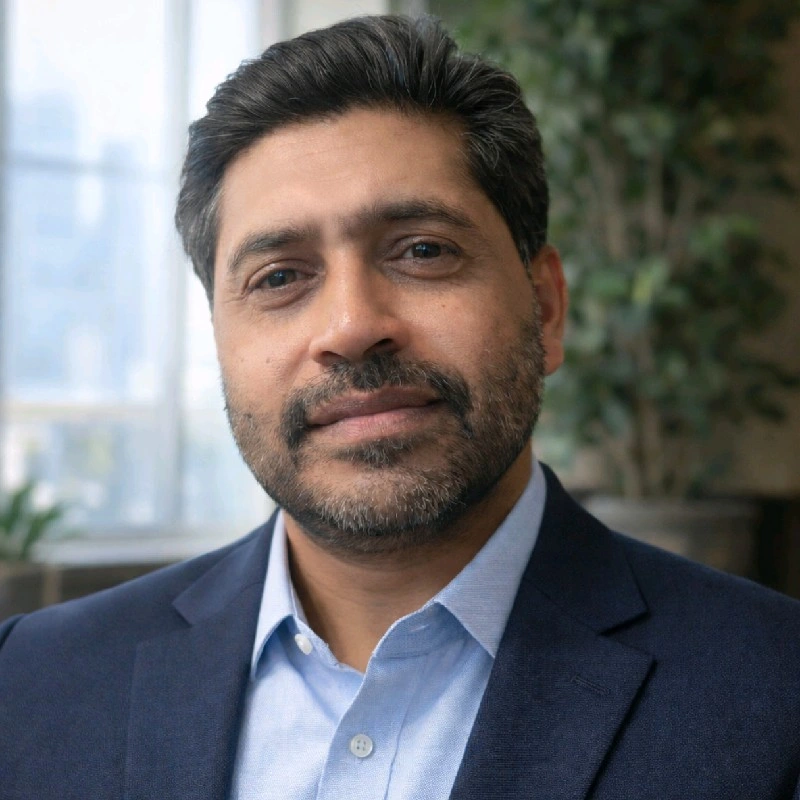
Krishna Cheriath
Krishna Cheriath is Vice President and Head of Digital and AI for Biopharma Services at Thermo Fisher Scientific. With more than 30 years of experience across data strategy, analytics, technology, and life sciences leadership, he focuses on digital and AI transformation across clinical research and biopharma services. He previously held leadership roles at Bristol Myers Squibb and Zoetis and also teaches digital, data, and analytics strategy as adjunct faculty at Carnegie Mellon University and Rutgers Business School.
Our Speaker
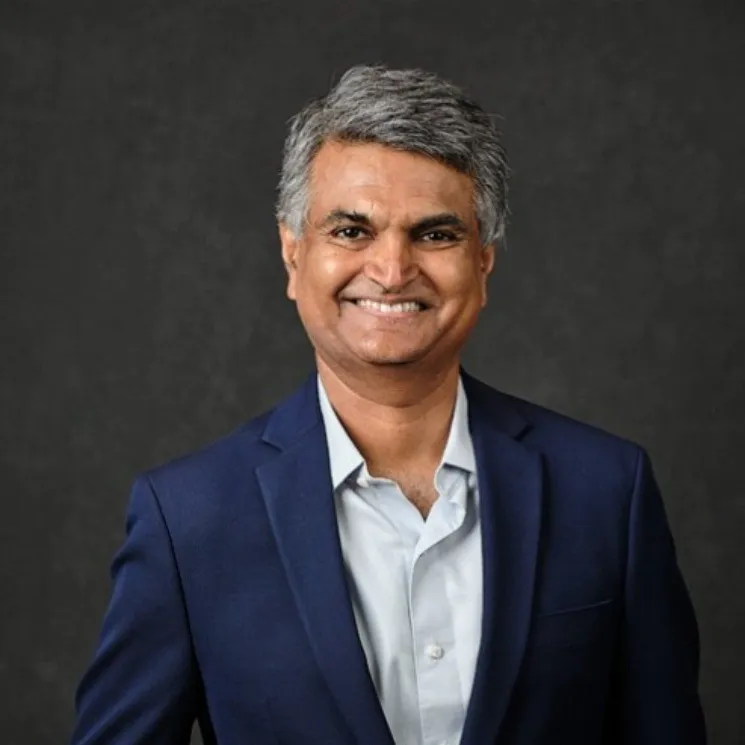
Nagaraja Srivatsan
Senior executive with over 30 years of experience driving digital transformation, AI, and analytics across global life sciences and healthcare. As CEO of endpoint Clinical, and former SVP & Chief Digital Officer at IQVIA R&D Solutions, Nagaraja champions data-driven modernization and eClinical innovation. He hosts the Life Sciences DNA podcast—exploring real-world AI applications in pharma—and previously launched strategic growth initiatives at EXL, Cognizant, and IQVIA. Recognized twice by PharmaVOICE as one of the “Top 100 Most Inspiring People” in life sciences
Recent Episodes