Building the Foundations for AI-Driven Transformation in Life Sciences
In This Episode
How can life sciences organizations turn AI enthusiasm into measurable business impact? In this episode of the Life Sciences DNA Podcast, Brinda Banerjee, Chief Information Officer at Stemline Therapeutics, joins Nagaraja Srivatsan to discuss how to introduce AI into a regulated biopharmaceutical environment while keeping business priorities at the center. Brinda shares practical insights on building trusted data foundations, establishing governance, evaluating build-versus-buy decisions, and partnering closely with business teams to redesign workflows. The conversation explores why successful AI transformation depends as much on people, processes, and change management as it does on technology.
Start With Business Value, Not Technology
Discover why AI initiatives should begin with business priorities and measurable outcomes. Brinda explains how aligning technology investments with productivity, operational improvements, and patient impact helps organizations identify the right opportunities.
Build Trusted Data and Governance Foundations
Explore why data management, contextual governance, security, and appropriate data access are essential to enterprise AI adoption. Brinda discusses how organizations can build these foundations incrementally without delaying business progress.
Navigate the Build-versus-Buy Decision
Learn why easier access to AI development tools does not mean every solution should be built in-house. Brinda shares how organizations can evaluate business needs, existing enterprise platforms, implementation effort, testing, validation, and security before making technology decisions.
Rethink Workflows Through Business and Technology Collaboration
Discover how bringing business experts and technology leaders together can improve AI solutions. Brinda discusses a product-oriented approach that encourages rapid feedback, iterative development, and solutions grounded in real business processes.
Make Change Management Part of the AI Strategy
Explore why stakeholder buy-in, clear communication, and early collaboration are critical to adoption. Brinda explains how engaging business and quality teams from the beginning can help organizations experiment responsibly and establish repeatable approaches to AI transformation.
Transcript
Daniel (00:00):
The Life Sciences DNA Podcast is sponsored by AgilisiumLabs, a collaborative space where Agilisium works with its clients toco-develop and incubate POCs, products, and solutions. To learn how AgilisiumLabs can use the power of its generative AI for life sciences analytics, visitthem at labs.agilisium.com. Sri, we've got Brinda Banerjee on the show today. Whois Brinda?
Sri (00:30):
Brinda Banerjee is the chief information officer atStemline Therapeutics. In that role, she leads the company's technology anddata strategy, helping connect digital initiatives, analytics, and operationalexecution in support of its work.
Daniel (00:43):
For people not familiar with Stemline, what is it?
Sri (00:46):
Stemline Therapeutics is an oncology focusedbiopharmaceutical company and part of the Menarini Group, a globalpharmaceutical and diagnostic company. Stemline markets therapies for seriouscancers and is advancing a pipeline of innovative oncology treatments for areasof high unmet need.
Daniel (01:05):
And what are you hoping to learn from Brinda today?
Sri (01:09):
I'm really looking forward to discussing how a new CIO istrying to bring the AI agenda within an organization like Stemline. I also wantto explore how she's thinking about the underlying foundations of data,governance, security, and change management, and that AI can help teams makebetter decisions, operate more effectively, and ultimately support thedevelopment and delivery of medicines for patients.
Daniel (01:36):
Before we begin, I want to remind our audience that theycan keep up with the latest episodes of Life Sciences DNA by hitting thesubscribe button. If you enjoy the content, be sure to hit the like button andlet us know your thoughts in the comments. And don't forget, you can listen onthe go by downloading the audio only version of the show from your preferredpodcast platform. With that, let's welcome Brinda to the show.
Sri (02:03):
Brinda, it's fantastic to have you on the show. Why don'tyou give us a little bit of introduction prior to you coming to this role onyour digital and AI journey?
Brinda (02:14):
Absolutely. Thank you so much, Sri, for having me. I'm reallyexcited to be on here with you. I started out my career, it was myfather's--I'm grateful to his foresight in steering me towards electronicsengineering--and then I fell into software engineering right at the beginningof my career. So I started out my journey working actually on a project for theNational Health Services in the UK. So the focus there was also data right fromthe very beginning. It was about bringing together nine million patients' dataso that we could have the first open patient administration system. And Ilearned a lot on that very first opportunity. When we moved to the US, Istarted working in the life sciences industry right from the beginning, largepharma and also mid-sized pharmas: Pfizer, Biogen, Genmab; my first opportunityas CIO with Tris and now with Menarini Stemline.
(03:15):
So really fortunate to have had this experience where Igot to understand the pharma value chain end-to-end and how digital and dataand now AI really makes a difference where the mission is so important and thefocus is on bringing drugs to market.
Sri (03:35):
Yeah. So Brinda, you have big shoes to fill and as youstart to come into a new role; you are already looking at, okay, there'salready certain efforts going on. How do you start this AI journey? Where doyou start? You've been about six months in this role or maybe longer. So walkus through that. What did day one look like and how does day three months looklike? How do you harpoon this particular beast of AI?
Brinda (04:07):
Yeah, the whale.
Sri (04:08):
And the whale.
Brinda (04:09):
Well, yes, absolutely. I think that's the big milliondollar question. How do we get ahead of it? How do we make it work for us? Anda lot of learnings in the initial days and a lot of great work already happeningthroughout the company. What I stepped into was finding that people werealready really excited, very welcoming. The typical challenges of trying topitch solutions and drive adoption is not, I would say, there, primarilybecause I think the whole industry is quite... Everybody gets that we're onthis verge of this transformation for the industry itself. And so for me, it'sbeen a lot about really learning and understanding what's been happening,what's important to the business, because this is not really about AI. It'sstill as always about how technology can have a measurable impact and reallyhelp with getting that drug onto the market, improving patients' lives, etcetera, as always, as you know.
(05:21):
So it's very much been about trying to understand wherethe focus should be. And surprisingly, it's also about basics, things like howwe manage our data, how we govern our data, and how would we even validate manyof these solutions, et cetera. The typical concerns around when should we buy,when should we build, I'm encountering all of those as you would expect.
Sri (05:50):
So let's start. Is there some big use cases you startwith? As you said, you aligned to the priorities, getting drugs to market,commercialization or other parts of it. Where do you start prioritizing theseuse cases? And maybe you could walk me through one of what you thought was avery good use case and how you went about doing it.
Brinda (06:12):
I did find that there's an appetite to learn andunderstand what this could do for people and how things could be improved. Sothe focus has been, I've been trying to really steer people towards measurablevalue and where we can find some impact in the terms of things that thebusiness could understand and which makes sense. Things like where can we seethe productivity gains? And the challenge or complication I believe is--what weare facing is--when we look at it end to end, it often requires us to rethinkthe business process, how to conduct work and how to really take advantage.Some things are very simple where you have an assistant that can summarizethings for you, help you understand documents and dense documents and get tosome succinct ways in which to explain points. I think I see a lot of uptick inthat type of adoption, but it's been a lot about the intake process of tryingto understand use cases and trying to help the business decide priorities andwhere to really focus.
(07:36):
And then, once we've rejected use cases as well, which I thinkis good, it's not bad, but this is an industry very heavily regulated, but itis one where documents run the whole industry. So as I expected, I think that'swhere we found some good uptake, things like medical writing, things likecreating summarizations and things of that nature. Getting our governanceframeworks in place is still something that we are kind of working through,which is the natural evolution I think of as we undertake this journey.
Sri (08:24):
So let's pick a use case. You've picked, let's say medicalwriting or summarization. Is that a partnership with the business? Are youstarting to rethink the workflow or is it incremental usage? Is it a strong ROIculture or it's experiment and learn? Because there are different ways in whichyou can start to solve for this problem. So I just wanted to see, is it atop-down thinking or a bottom-up or a combination?
Brinda (08:51):
It is definitely a partnership, definitely a combinationof thinking and a lot of support across the organization for the need to learnand be absolutely sure of what we want to do. So yes, definitely a lot ofexperimentation in the beginning and still as we proceed. But yeah, definitelyalso a very close partnership with the business. I would say this is not asmuch as about technology as it is about how we will use it, and it's thebusiness functions that really bring that SME expertise to the table. From anIT or from a technology standpoint, I see my role as somebody that can, me andmy team of course, create those trusted platforms, create the environment whereit's very secure, make sure that the data is available when it's needed and itis curated and the use is governed, the usage of that data is governed.
(09:55):
So we've been in parallel with the business focusing onthose pieces. But with medical writing, for instance, it's what does taketypically a lot of time and effort in collating or gathering citations,materials or details from various teams. There is a strong possibility thatsome of that could be automated, a lot of it could be automated, but it'sdefinitely another philosophy of ours. We're not building these autonomousagents by any means. This is very much still a human in the loop type of adesign that we have adopted, which I think is very common and standard. It iswhat you would see everywhere, I think. So our goal with this is to get to aviable or feasible first draft, let's say.
Sri (10:53):
Fantastic. Let's double click on that trusted platformbecause that's kind of up, as you said, the IT's construct. So is it one, youbet on a few vendors? Is it a data lake? What are you bringing in? Is itgovernance framework? Again, you would've come into a world where there's adiverse set of technologies and tools, and so how did you go about putting thatarchitecture roadmap for a trusted platform?
Brinda (11:21):
So it's, as you would expect, definitely a combination oftechnologies and approaches depending on business functions. When we take astep back and think about AI adoption throughout the enterprise, there's alsomany of our vendor partners who are providing us with the SaaS systems that nowhave embedded AI, and we definitely don't want to lose that opportunity to beable to leverage features and functionality that come in the roadmap in some ofthose platforms. So that's also a big piece of the puzzle. But yes,underpinning anything that we want to do around automation, around analytics,advanced analytics is your data platform. So certainly that's a big piece ofour focus, how we can, again, partner with the right thought leaders as well asfolks that are really experienced in this space in trying to bring together allthe data, the enterprise data in the right manner and with the appropriategovernance.
(12:38):
And again, with the governance, we quickly pivoted fromtechnical stewardship, technical governance, that's definitely there andneeded, but more than anything, it's the context and the usage. The decision isaround whether or not it is appropriate to use this data in this context. Sothat's, I think, the next evolution of governance frameworks that we arelooking at. And so very much focused on making those things work. So yousaid...
Sri (13:16):
Two things, Brinda, which is very interesting, and I wantto explore both. So just going down this technical platform, so you're workingthrough a data pipeline, data aggregation, harmonization, standardization, soyou have a trusted data source. Is that one for each functional area, one for clinical,one for regulatory, one for manufacturing, one for commercial? And are theredesign and patterns common across the board? That's first question, and thenI'll come to my next one.
Brinda (13:47):
Certainly the pipelines are by function and by differentsources because with our vendors that are the sources of the data. So you haveyour CROs, you have your labs, but you also have your internal systems, theCRMs, the ERPs, the CTMS, et cetera. So bringing everything together, what I'vefound is we're not trying to boil the ocean, we are trying to make sure that,again, we let the business priority lead and decide the steps and how to buildout a plan that is manageable and that where we see the progress because theworst thing we could do is to say to the business, oh, we need a lake andthat's the big shiny thing. Everything goes in and magically you can use it, butyou need to wait for nine months while we build our pipelines. That's not goingto go very well. So we are taking a very approach where we can iterativelybuild out the capabilities and treat data as a very strategic asset.
(14:59):
And to your other question, how we are handling thedifferent functions, it is definitely each function drives their own priorityand we're trying to balance all those deferring priorities often, but it's theright thing to do.
Sri (15:22):
Yeah. And you had said it before that it's not justbringing the data, but to have the right evaluation of, is it the right data,right context? So are you building evaluation skills within your team in IT oryou're leaning to the business side to evaluate that because as you said, youdo technical data and they have to do the business context and validation?
Brinda (15:45):
Yeah, it's a very much a partnership. In different cases,it's different levels, I would say, as you would expect. But yeah, I think it'sa very much a business ownership that we are trying to inculcate thatcapability or that discipline of really understanding all the assets and beingable to categorize them by risk, by impact. And that drives a lot of thingsthroughout our ecosystem, not just the data solution or the automation, butalso the retention policies, the protection policies, the security policies,the privacy. So I think everybody sees the value of the time that they wouldspend with IT. But at the same time, what has [been] my experience working inthese companies through the years, if we throw tools at it and ask the businessto do their piece, call them business data stewards and business data owners,it just feels very heavy and something that they're not always supercomfortable with because it's not the language that they're used to.
(17:02):
So that's where I see we really need to step up from an ITstandpoint and act as true partners for the business and really help navigatethese areas because it's so important.
Sri (17:18):
Absolutely. So you said you're going and building theright data foundation, the governance and stuff, but you also brought a veryimportant point that each of the different systems of records and the SaaSplatforms you're using are also bringing in a lot of the AI efforts and stuff.[Brinda: Yes] This has been a big challenge for many CIOs that "do I usethe Einstein from Salesforce to do this particular use case? Do I use Claude todo this? Do I do it in a custom way? How do I string along Copilot withEinstein?" And then all of these things add up and one gets very confusedas to where and how you should be selecting. It seems like you went throughthat journey. Walk us through it. How do you select a SaaS AI capability versusa generic workflow capability?
Brinda (18:08):
Yeah, that's a great topic for our discussion because Ithink it's so very critical and underpins a lot of the decisions that one makeson a regular basis. There's a lot of vendors that we hear of every day solvingdifferent problems, coming up with AI solutions. And first I have to wonderwhether "what is deterministic, what is probabilistic, what really is the underlyingtechnology here?" But the big SaaS systems that basically everybody uses,the CRM, the ERPs, et cetera, I think that's where we look for tried and testedinnovations, but things keep evolving and rapidly. So in my opinion, it's not astatic landscape. It's going to keep evolving and the roles will change and theSaaS systems that have done the same thing for years will have to figure outhow to interoperate and play in this type of an ecosystem. But in the meantime,I think it's an easy way for us to adopt features.
(19:21):
We still have our responsibility from a compliance, froman oversight perspective, but definitely a path towards adoption and leveragingsome technology that helps. In terms of making the decision on whether to buildor buy, the challenge is that code is so easy now. It's not as much of abarrier as it used to be in terms of skills, in terms of being able to createsomething that looks and works, looks viable and could work, but you still havethe same challenges as you do for any software. You have to validate it, youhave to test it, you have to bring it into the ecosystem, you have to train yourusers. So code being cheap doesn't mean that we should build everything. So I'mdefinitely still using the build versus buy principles to determine--to weigheach decision and decide what is right for the business and for the company.
(20:25):
And it's not one size fits all either. It's not like we'regoing to do this or in the past enterprise architecture would say it's alwaysbuy first and build next. I think that line is becoming a bit fuzzy becausemore things are now doable or possible. So taking the time to really assess andtreat each decision based on the business need.
Sri (20:52):
So if I were to restate what you said, hey, for largeenterprise platforms, speed is important and so you would use AI features andthose to accelerate workflow because they are systems of record and they couldbe made happen. In specific other non-large enterprise use cases, you have tomake a decision whether you buy a particular platform or you build it becausecode is now easily available. So your buy versus build is a little morenuanced. But either way, you're saying you're going to look at the outcomeswhich you want to deliver from a business because they're the stewards and thensay what would be the best value for you? And from an enterprise architecture,it could be different strokes for different user communities, but it'll be thebest tool for their community because they're then using the best transactionsystem, the best AI, and then the best outcome for that. Is that a fair wayto...
Brinda (21:49):
That's a great summary. That's great summary. I'd just addone more thing is that at the end of the day, when I look at the ecosystem,certain things are non-negotiable. The way we secure our data, the way wesecure access to our systems, whether they're systems of record or dashboardsor whatever they are so that the business uses. And so those are always there.So any decision we make from a technology standpoint still has to go throughthose barriers--not barriers--but those measures. Yeah, governance measures.And those are non-negotiables, I would add that. But yeah, I think youarticulated that--really well summarized.
Sri (22:33):
We came back to data and data governance, but you said avery important part that we don't want to use the word business stewardship,but having people access to the right data within the right context, with theright experience. So that puts a burden around not just "it's Sri who hasa role in pharmacovigilance and I'm doing stuff, but what context do I do thisand what access can I have and what views?" So walk me through that.That's very nuanced because we were very easy in IT to put technical barrierslike "Sri can have access to this table, Brinda has access to everything,somebody else has access," so it's very easy to doing it. But now whatyou're talking about is more business context partitioning, which may spanacross multiple tables, data sets, systems. How are you enforcing it? It'sreally a fascinating area to start deploying and delivering on.
Brinda (23:30):
Agreed. And it's complex. I'm not saying that it's doneand dusted and we know what we need to do, but it's something that we areexperimenting with and making sure that... I think it begins with a governanceframework that is thought through and has the right participation at the rightlevels from across the company. So we have legal representation, we havecompliance representation. So not just the business teams, but also thecustodians of those areas so that we can all kind of look at it and make thosewithout becoming a very bloated or heavy process. How can we stay lightweightbut make sure that the right folks have had a chance to consider and decide? Soit does begin with that. And then things can be obviously built or broughttogether to answer a particular question, but you do that with the confidencethat you can, you're allowed.
(24:40):
So if it's a third party agreement, for example, we havefor data that we are purchasing, let's say that's in our contract, what we canor cannot use this data for, who we can share it with, et cetera. So prettystraight cut-forward and simple. But then what happens when the decision doesimpact something else? How do we make sure that it's still appropriate? Sothose types of decisions become super important. But fundamentals still, thefact that we can have that fine-grained control is very important becausethat's what will drive everything.
Sri (25:24):
Yeah. So taking a step back, this seems to be a set of newskill sets even for the IT department. As you said, you're learning as you go,but then now you're building a team. Walk me through that. How do you assessskills and capabilities [when] you're new into the organization, and then whatare the skill sets needed to be successful in this new future?
Brinda (25:46):
Yeah, definitely. I mean, skills, upskilling, so importantbecause people have to constantly keep learning because it's new informationevery day. So definitely look for people that stay very curious, that are veryexcited about learning and making a difference. But also fundamentally the waywe build solutions, I want to rethink that because we went from waterfall to agile,and we said life sciences really cannot be the fully agile, and we should adopta small-A agile and creative wherever we could be, et cetera. But it seems tome that for the true value to come out for when you're using AI, it is reallythe business process knowledge, the SME knowledge that would make a differencebecause you could have the most talented engineer on your team and they wouldbe at a standstill because they don't understand the business process. So theydon't really know what moves the needle, let's put it that way.
(27:01):
So from an outsider looking in, we can have someassumptions, even the process of medical writing, we can think to ourselves,oh, a CSR has these sections. Obviously it's about going and getting thecontent and then our LLM can draft something that they can review and it shouldcut down a lot of time because they're not starting from scratch. Andtheoretically that's true, but if you talk to the medical writer and the teamof medical writers, then we would learn a lot more about their process and hownuanced it is and how they collaborate and how they make their decisions andhow they work. And that could make the ultimate end product so much moreeffective, taking the time to understand that, but not in a very intuitive way,without taking many, many weeks and days to shut ourselves up and learn theirwhole process; learn how to become a medical writer without doing that,learning how to partner in a lightweight manner.
(27:56):
So I'm more and more thinking that the product methodologywhere we have product owners who are working very closely with the business,that could really be applicable here. And we've always talked about how forthese types of products, which are digital or AI or IT products, it's not justa business owner or a product owner, you'd have to have your IT or engineerowner also with you. So it's almost like a two in a box kind of a concept whocome up with the product strategy, the roadmap, and together decide how to goabout what does a good MVP look like and how do we deliver that? How do wequickly get something in front of the team so that we can iterate? So those aresome...
Sri (28:47):
Fascinating stuff, right? So what you're saying is, hey,SDLC [Software Development Life Cycle] work, waterfall, then we went to agile,you need to have a product mindset, no question about it. You had a businessowner and a tech owner come together and start building it out. One of thethings I've heard across multiple groups is how do you put together a cross-functionalteam? Because before it was business does requirements, IT does development,business does validation, and then they adopt. And right now that process iscompletely much more agile, not the agile methodology, but more agile. And sowhile business, what IT produces immediately feedback in almost the designprocess is much more. So is it a conventional product team or you going to thebusiness and creating these cross-functional teams and saying, "Hey, thisis the product team. There's no separation between tech and business. We're allhere to solve the business problem." Where are you in that evolution andthinking?
Brinda (29:48):
Yeah, it's very much, I don't think we set out to createset in stone sort of product teams. Self-organizing is a good term. Dependingon what is needed for that particular solution, taking a step back and doingthat planning and pulling together the right stakeholders, which is all, again,quite fundamental. It's what we've always done, but
(30:17):
the difference is really in the speed, I think, and thespeed at which you're iterating, the speed at which you're getting things infront of folks to try out. But yeah, product teams that are not set in stone isthe best and obviously small, not too huge. So that's another interesting,something to think through, I have found is, how do you organize that? And youhave some team members that are obviously persistent who want to keep track ofthe ecosystem, how it's building, developing, but others that could come in andout based on what was being built.
Sri (31:02):
And that's an interesting concept. Almost like you havepermanent members and then other members coming in and out and contributing,but they're also having a view of the work product so that they can continue togive you feedback and iterate out. So as you said, it's that agile productmethodology approach. How easy is it to implement something like that in a neworganization which is used to, as you said, validated, regulated. Do you lovethe SDLC? Agile, as you said, is a small agile, we do agile and then stop anddo SDLC. And now you're creating a new way of working.You said of course it'ssponsorship of the business, picking the right area. But how is it on theground level? How are these teams getting formed? How are they workingtogether? What are some best practices you found?
Brinda (31:55):
I've found, especially in a new company, we need to formthose trusted relations really quickly with quality, with the business stakeholders.Yes, but some teams such as the quality team, this is very key for partneringwith them because they're the ones that are understanding how the FDAregulations are evolving, how companies are doing computer systems assurancenow instead of validation. So partnering with the quality teams to suggestchanges to SOPs. So it's almost like having a lot of different tracks thateventually come together to fruition to bring things forward. It's not going tohappen overnight or on day one, but what can we do to pilot to understand aparticular problem and how it can be solved while also talking to QA about,okay, how does the SOP need to change if we wanted to use AI here or if wedidn't want to use AI or how do we navigate that?
(33:09):
So I think it's always going to require all the expertsaround the table when there's such a large type of a transformation here.
Sri (33:21):
So with that, just a tongue-in-cheek question, now thatyou have worked in this new process, if you had a do-over, is that anything youwould do over knowing all what you know today?
Brinda (33:34):
Yes, so many things if I had a chance to go back. Butyeah, so biggest learnings, it's always about the change management. So when anidea has a lot of buy-in, it is so much easier than if you're trying to, youfeel or you see that it's the right thing to do, but nobody understands or youdon't have the buy-in, it's not going to work. So that's the biggest thing thatI always focus on is to think about the change management from the verybeginning. And that means from the communications and the planning perspective,but also really problem statement, what exactly are we trying to solve? Andalso that all important, what's in it for you and why you should be involvedand repeat that with everybody, every one of the stakeholders that are neededaround the table and in the room. And then you have a foundation. But youcannot also, I always find the trick is how do you keep things moving andwithout making it very sequential, "I have to do this before I can dothat," but what can I do in parallel to learn and keep things ready sothat when I have this other dependency taken care of or clear, then I can moveto that next step.
(35:02):
So that type of an approach.
Sri (35:07):
And if you were to look coming the next six months, whatwould be your biggest accomplishment like saying, "Hey, I set out to dothis and this is what," what would those big rocks be which you would'vemoved?
Brinda (35:20):
I think six months feels almost too short. It'll be gonelike this, but it'll have to be the same, the things that we started talkingabout. Where is that measurable impact to the business and can we do somethingmeasurable for impact which has an impact in improving the lives of thesepatients? It is always that. That's the yardtstick against we are measuring.But for me, I think it's in this, and throughout the team, it's about reallygetting to grips with how we are going to operate in this environment and whereare we going to double down and bring everybody along on the journey. So whenwe look back a year from now or six months from now, we're able to say that wedelivered a few such solutions to the business, but along the way we also madeit clear how we are going to repeat this, how we're going to keep doing thisover and over again for the different parts of the business.
(36:30):
I think that would be very important because it's easy toget lost in something that's the question of the day, but I think the lastingimprovement is so that the organization understands and can do this again andagain.
Sri (36:48):
And Brinda, do you have all the tools to create thatimpact first just to assess the baseline of what you're changing and then toassess the impact and then to articulate it? Is there good frameworks and toolsfor you?
Brinda (37:01):
Of course, there are great starting points. Those are alsoalways evolving because we learn new things and we want to adopt what we arelearning and adapt. And every organization does things a little bitdifferently. And so it's important to preserve and enhance the company culturebecause these things all impact that, how we are collaborating, how we arepartnering, how we are communicating and how we are making decisions. So Ithink we have some starting points, of course, frameworks, industry wide frameworks,but then the trick is, or the key is, really focusing on what works.
Sri (37:44):
Sure. So Brinda, I know we're coming to the end of ourtime. What would you give as advice to some of the listeners as they embark onthe journey? Maybe if there's two or three key points you wanted to share, It'dbe lovely to hear from you.
Brinda (37:59):
Absolutely. So like we said, focus on the value, whatimpact and what's the value that we are creating. Understand that there aresome of the foundational elements that don't immediately sound as exciting, butare really very critical to the whole effort, such as getting our hands arounddata and organizing ourselves. But also the fact that the impact is within the businessprocess and the better we understand or the closer we partner with thebusiness, the more effective it's going to be or quicker the adoption will be.So the unglamorous, if I may use that, products or solutions are equally asimportant, might turn out to be the ones that people really appreciate. Sothose that can actually ship some, maybe it's in the enabling functions,automations that really made a difference to how things were getting done, thework was getting done, will have equally an important impact is my opinion.
Sri (39:14):
Brinda, thank you so much, especially your advice on howyou start in a new organization and how you go about really addressing this bigproblem. Fantastic insights. Thank you again for your time today.
Brinda (39:27):
Thank you so much, Sri. Really great chatting with you. Ithink there's a lot to learn just from talking with you, and so I reallyappreciate the opportunity. Thank you. Really had a good time.
Sri (39:38):
Yeah, thank you.
Daniel (39:42):
Sri, this was interesting. We touched on a lot of familiarthemes, but in the context of someone who was coming into an organization toreally help integrate AI, what did you think of what Brinda had to say?
Sri (39:57):
She gave us a little bit of a good roadmap on how youstart. I loved it that you start with the business and business impact becausetechnology for technology's sake doesn't help. And she also talked about how ifyou just went in with saying, "I have a shiny object," people may useit or not, but then you're not able to articulate the value. So I think the keystarting point was always, "Hey, what's the business priority? How do westart?" And then she really then started by saying, "Okay, I couldstart here, but there are certain fundamental things which we have to do interms of data governance and really establish what she calls foundationalaspects of it." Because without the foundations, again, you could do allof the business, but it won't deliver the business impact. So it was a reallygood way to understand what will make an impact, but then also to look andfigure out what is it that you need to build that trusted infrastructure sothat then you can start to plan and build specific use cases which deliver thatimpact.
Daniel (40:57):
So she focused on the importance of measurable value andfinding where AI can have an impact, but how obvious or difficult is that forsomeone coming into an organization?
Sri (41:10):
I think it's a pretty difficult one if you don't have thepartnerships with the business. And she emphasized that this is not IT comingout with a business plan or ROI saying, "Hey, you do this and this path tosuccess." It's really actually going in with each of the business ownersand saying, "What is it that you want to do? How can you do it? And how doyou enable that value differentiation to happen?" So it's a verythoughtful way of saying, "Okay, hey, don't lead the cart before thehorse. Make sure that you're coming in, building those partnerships,understanding where the value is, of course, taking care of your shop andtrusted data and governance. Now you have a good infrastructure to startcommunicating around, okay, how do I then deliver value for you?"
Daniel (41:56):
And in that regard, she talked about the need to rethinkbusiness processes and how work is conducted, but letting the business side lead,can make it seduced by technology and let that drive uses?
Sri (42:11):
If you lead by technology, it's the hammer chasing thenail. So what she said is initially we had SDLC where the business told you therequirements and you built the product. Then you had agile where the businesstold you the product requirements and you had tech build it, but it was inthese scrum cycles where you kept showing what the product is built. Right now,we're in a really fast and speedy way of it that she said she's going into aproduct mindset. A product mindset has two in a box, a person from technology,a business owner, then driving what needs to be done from a product standpoint,but this constant visibility to this transient team to show the product andwhat it is doing and what value it is delivering. So it's really an innovativeapproach to how do you take an abstract concept and put structure towards that.
Daniel (43:02):
One of the things she said that really stood out to me waswhen you asked about buy verse build, and she said code is the easy part now,but you still have the same challenges of implementing any software validation,training and so forth. She talked about the need to assess on a case by casebasis. Has this become a more complicated decision today now that coding isrelatively easy?
Sri (43:33):
Making coding easy helps you automate stuff which youwouldn't have done at a speed in which you can get it done. But with that said,you still need to know why you're automating it out, what business impact it'sdriving, how reliable and quality it is, and what is the evaluation of itssuccess. And so people always think that coding was the bottleneck. Coding isno longer the bottleneck, but you still need to do all the different otherprocesses to ensure that you have a robust and impactable system which you'reimplementing. That's the most important part.
Daniel (44:10):
Really enjoyed the conversation. Sri, thanks as always.
Sri (44:14):
Thank you, Danny. Appreciate it.
Daniel (44:18):
Thanks again to our sponsor, Agilisium Labs. Life SciencesDNA is a bimonthly podcast produced by the Levine Media Group with productionsupport by Full View Media. Be sure to follow us on your preferred podcastplatform. Music for this podcast is provided courtesy of the Joan LevineCollective. We'd love to hear from you. Pop us a note atdanny@lavinemediagroup.com for Life Sciences DNA. I'm Daniel Levine. Thanks forjoining us.
Our Host
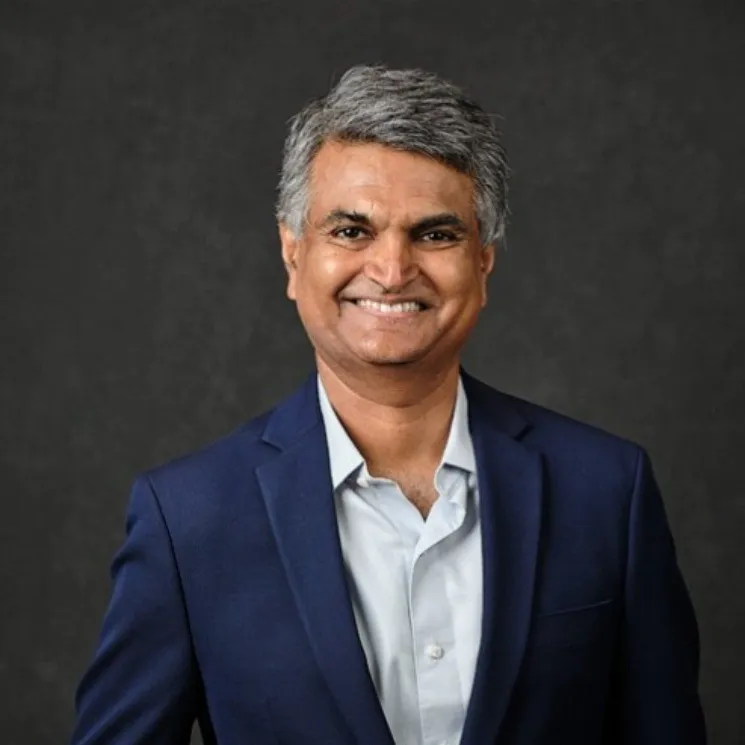
Nagaraja Srivatsan
Senior executive with over 30 years of experience driving digital transformation, AI, and analytics across global life sciences and healthcare. As CEO of endpoint Clinical, and former SVP & Chief Digital Officer at IQVIA R&D Solutions, Nagaraja champions data-driven modernization and eClinical innovation. He hosts the Life Sciences DNA podcast—exploring real-world AI applications in pharma—and previously launched strategic growth initiatives at EXL, Cognizant, and IQVIA. Recognized twice by PharmaVOICE as one of the “Top 100 Most Inspiring People” in life sciences
Our Speaker
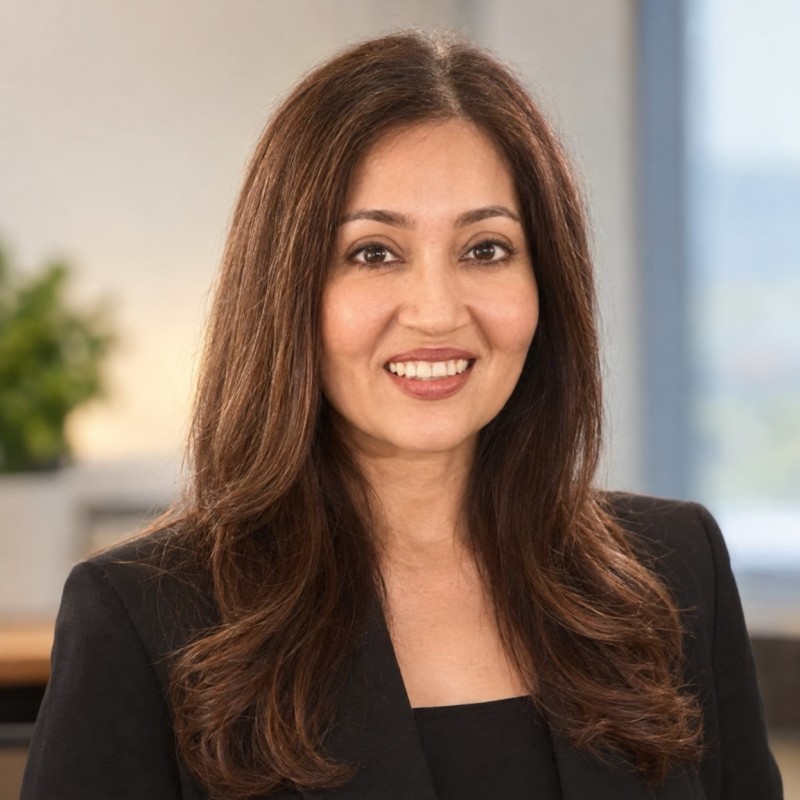
Brinda Banerjee
Brinda Banerjee is the Chief Information Officer at Stemline Therapeutics, where she leads technology and data strategy in support of the company's business priorities. Her career spans software engineering, healthcare data initiatives, and leadership roles across the life sciences industry, including experience at Pfizer, Biogen, Genmab, and Tris Pharma. She brings an end-to-end perspective on how digital, data, and AI capabilities can support the development and delivery of medicines.
Recent Episodes
.jpg)