Scaling AI Beyond Pilots: Turning Data Into Business Value
In This Episode
How do life sciences organizations move AI from promising experiments to scalable business impact? In this episode of the Life Sciences DNA Podcast, Mark Raman, Chief Data and AI Officer and Chief Information Officer for Research and Development at Alcon, joins Nagaraja Srivatsan to share practical lessons from deploying AI across business functions. Mark discusses aligning AI with corporate priorities, building reusable platforms, managing change, and making informed build-versus-buy decisions. Through real-world examples, he explains how organizations can use AI to improve operational efficiency, strengthen commercial effectiveness, and create measurable business value.
Align AI With Business Outcomes
Discover why successful AI transformation starts with executive sponsorship and clear business priorities. Mark explains how organizations can move beyond cost optimization to initiatives that support revenue growth, commercial effectiveness, and long-term business performance.
Turn Generative AI Into Commercial Value
Explore how Alcon used generative AI to create promotional content from existing digital assets. By reducing agency iterations and improving first-pass medical and legal review rates, the initiative helped expand access to promotional capabilities across more brands.
Build Platforms That Enable Scalable AI Adoption
Learn how a shared AI platform can support multiple business-focused products rather than requiring teams to adopt technology for its own sake. Mark discusses how a platform-and-product approach can simplify adoption and connect AI initiatives to tangible value.
Rethink Build-versus-Buy Decisions
Discover Mark’s guiding principles: reuse before buy, buy before build, and build when it creates a genuine competitive advantage at an acceptable unit cost. He also explores how rapidly evolving AI capabilities are changing traditional enterprise technology decisions.
Lead Through Change, Experimentation, and Learning
Explore why executive sponsorship, stakeholder engagement, and continuous learning are essential to scaling AI. Mark shares lessons on managing expectations, empowering internal champions, upskilling employees, and learning from initiatives that do not deliver the expected value.
Transcript
Danny (00:00):
The Life Sciences DNA Podcast is sponsored by AgilisiumLabs, a collaborative space where Agilisium works with its clients toco-develop and incubate POCs, products, and solutions. To learn how AgilisiumLabs can use the power of its generative AI for life sciences analytics, visitthem at labs.agilisium.com. Sri, we've got Mark Raman on the show today. Who isMark?
Sri (00:30):
Mark is Alcon's chief data and AI officer and chiefinformation officer for research and development. His work brings together AI,data, and technology. So he's well positioned to talk about how thesecapabilities move from promising ideas to practical applications inside a lifesciences company.
Danny (00:48):
And for listeners who aren't familiar with Alcon, what isit?
Sri (00:52):
Alcon is an eyecare company with two main businesses,surgical products and vision care. It makes equipment and implantable lensesfor eye surgery as well as contact lenses and products for conditions such asdry eye. Its work ranges from helping people manage their everyday vision needsto giving surgeons tools to treat eye conditions.
Danny (01:15):
And what are you hoping to learn from Mark today?
Sri (01:18):
I want to understand what it takes to really make AIuseful beyond a pilot. Mark has shared lessons about deploying generative AI atscale, and I'd like to explore what that looks like in a practical situationlike Alcon. His team decides on which problems are worth tackling, and he thenlooks at data and other safeguards to be in play to make sure that AI deliversthe business value which is needed by the company and the stakeholder he'sserving. Ultimately, I'm hoping we can get past the hype and understand what itreally takes to turn AI into something people can trust and use, but [also]deploy and scale.
Danny (02:01):
Before we begin, I want to remind our listeners if theywant to stay up on the latest episodes of the Life Sciences DNA, to be sure tohit the subscribe button. If you enjoy the show, hit the like button and let usknow your thoughts in the comments section and be sure to listen to us on thego with an audio only version you can get from your preferred podcast platform.With that, let's welcome Mark to the show.
Sri (02:28):
Mark, it's great having you on the show. It's wonderful.Mark, tell me, you have a really wonderful background. So tell me your journeyon digital and AI before you join Alcon and then we could go down to whatyou're doing here.
Mark (02:45):
Sounds great. So thank you for having me on the show.We've known each other for a long time and really nice to see you in thisparticular forum. Yeah, I mean, the digital transformation journey probablystarted in the 2014, around that time where I was at Merck Pharmaceuticals andwe were doing well as a company, but then the C-suite and the board realizedthat we need to transform while we're in a position of strength. So we reallystarted with, "Hey, let's pick a market which is really progressive andsee what digital transformation actually means." And we started thatjourney. France happened to be the market and based on the success of what wewere able to do across all functions in France, we were able to scale thatacross Europe. And then obviously for any pharma, the US market is the biggestmarket. And we kind of exported that playbook, if you will, and scaled itacross America, especially in the US market now.
(03:44):
Along all of this was data was becoming the asset and waybefore McKinsey even published the article about data is the new oil, werealized that, and analytics and AI went on that journey with us as well. Soit's been a good 12 odd years of transforming every aspect of the business,making sure that the value's actually getting realized as well.
Sri (04:06):
No, that's a great background. As you started to come intothis new role, it's a new company for you. How did you start peeling the onionas they call it? Because you're coming in, you've done this thing successfullyfor the last 12 years, you have a playbook, but then every place is a new one.There's different parts of expectation. So walk me through what was theexpectation and then how was your early days in your journey in this part?
Mark (04:32):
Yeah, I think it started prior to me joining the companybecause ultimately as much as they're scoping you out, you're scoping thecompanies out as well, how committed was the board and the C-suite in whatthey're hiring you for? I would almost say it is a critical success factor forany transformational change that you're going to do. And as we were having theconversation about me coming onto this outfit, I had a conversation with theC-suite and a couple of board members and they were like, look, we realize wehave to do this and they were committed. So I think that became a prerequisitebecause you can try to do a lot of things bottom up-street and you know this,it only gets so far without that top down sponsorship. And then you take thetop down mandate and then you do the messaging around it.
(05:30):
And ultimately execution does happen in the trenches, buthaving that top down mandate really, really helped.
Sri (05:37):
And this has been a thematic of all my conversations. Itstarts with that top down mandate and pick two or three key outcomes which canmove the needle. So tell me what kind of was the mandate to shape? Was itrevenue? Was it operations efficiency? Was it cost? Was it scale? How did youstart to align? What is the top mandate to what you have to do within yourfunction?
Mark (06:04):
Ultimately the KPIs that matter are the top line, thebottom line, and the strength of the portfolio in advancing the pipeline ormaking sure that the inline products that are already in the market or inlineservices are actually generating revenue. So when you looked at that, when Istarted, it was around four and a half years ago with Alcon, a lot of themandate was on the cost efficiency side, the bottom line play. But then as westarted digging into it, we were like, okay, we're starting to get someoptimization on the bottom line plays, but top line is what really should bemattering. And so we really pivoted towards, okay, salesforce effectiveness,marketing effectiveness and whatnot. And we started over-indexing oninvestments that will drive top line growth. And if you look at the company,we've been doing well. I think past four and a half, five years we had 20%growth on the top line and it's still emerging to be a good well-leveragedP&L with the bottom line not growing exactly the way the top line has been.
Sri (07:09):
So four and a half years started with bottom lineinitiatives and then now pivoting to top line, but in the meantime catapultedto the change in the market with AI coming in and as you said. So how do youstarted this journey? This pre ChatGPT? So walk me through that. What was thefirst step you had to do? Then how did you come? And then in the wake of this completechange, how did you keep up with what's going on?
Mark (07:39):
Four and a half years ago, it was a traditional AI,predictive AI type place. So we were looking at on the manufacturing side justto pick a couple of use cases, operational equipment efficiency, one percentagepoint increase in that would roughly translate into millions of dollars for us.And then you take that composite metric and decompose it. We had yieldvariations across similar lines, intraplant and interplant. So we were goingafter that from a cost optimization perspective using traditional AI methods,time series and classification and whatnot. And then automatic cosmeticinspection, like manufacturing optimization was another play. Clinical,obviously mega, this is your domain, so I'll be preaching to the choir here,but obviously the cost basis is very, very high even for us on the med device side.So we were going after what can we do in terms of site selection, optimization,enrollment.
(08:38):
All of this was going on. And then we looked at, as wewere pivoting from the bottom line, we were getting good results there. As wewere pivoting from the bottom line to top line, the next best engagement, nextbest action play for the sales force to drive salesforce effectiveness was alsousing predictive algorithms. So all that was going well and success generallybreeds more success in terms of the C-suite's appetite to invest more in AI.And that's right around the time the ChatGPT explosion happened. And we jumpedin very, very early. In fact, Alcon was in the first movers program withMicrosoft, so the first 100 companies to go and bet on OpenAI and Azure OpenAI.And we got invited and it was us and from our domain, Epic was there. There wasa few others that had adopted early. And I'll tell you the reason what I had todo this was convince the board, I'm like, "I don't know what the value is.
(09:39):
It was an interesting conversation, but I know this thingis here to stay and it's going to disrupt the way we work. And the pitch that Imade to the board was, "I don't know what I don't know, but if I don'thave the institutional knowledge, I won't know what I'm buying." And theinstitutional knowledge was really the key driver to say, "Hey, we've gotto learn this thing in a hurry because it is going to stick around and it's notgoing anywhere." And like I said, then we launched a bunch of products andwe'll get into the details of that, but we jumped in early, Azure, OpenAI,Microsoft was the deal. And then now fast-forward, we're dealing with AWS.We're in partnership with AWS, we're in partnership with Microsoft, and nowwe're in partnership with Anthropic as well directly.
Sri (10:28):
Perfect. And walk me through, because you made a bet thatwe need to understand and experience this new way, which is again, the secondlesson we've learned from everybody is that if you don't try it, you can'tlearn it. If you don't learn it, you cannot harness it and you can harness itfor good or bad, but you have to try it. There's no way to be in the bystander.You have to try it. But as you started to try it, it must have been quite a bitof a change management experience where some are early adopters and some arenaysayers and this is not going to work. So how did you deal with that widevariety of people and human change?
Mark (11:08):
The good news was we had a certain level of street credalready. So luckily I was already here a year and a half to two and the salesforce liked what we'd done, manufacturing liked what we'd done. So when we werepitching the idea, people were like, okay, these guys know what they're talkingabout. And the other, I think a critical enabler was we had used a platform andproduct play across all of the units. So when I went back and told myconstituents and stakeholders, look, we're going to build this platform, we'llcall it Alcon GPT, and we're going to build products on top of it. So first usecase, everybody was doing optimization of enterprise search. So we also did thesame thing with AskHR. Another obvious use case was can we reduce agency spendby creating a content creation engine on top of Alcon GPT so we can createthat?
(12:04):
And so since we used a platform and product play, it kindof segmented the target audience to say, Hey, these guys are creating a productfor me and a product for me. It wasn't like I had to sell the platform to a lotof people. I was actually selling products that are built on top of theplatform and that made the change management relatively easier. And all of thisis anchored in value. And I think one of the things... so we had a few productsthat we're building on top of the platform and we had a few, let's say a fewsuccesses and a few duds as well.
Sri (12:41):
Sure. And you have to always learn from it and be able tokind of... So as we go down this path, so you actually, again, honed in on thethird principle, which is, hey, sell value, don't sell the hammer, sell thevalue of outcome of that. So let's go down, maybe pick a couple of use casesand just maybe dive deep into what was the business, what was the before, whatwas the after, and what kind of bottlenecks or challenges you faced to get tothe outcomes? It'd be good to hear from you your journey. Journey is veryimportant.
Mark (13:20):
I'll start with one success story and one failure story,which is always a good contrast to the paint. So ad agency spend across all ofour brands was extremely high. And then once the copy gets created for any ofour products that we're promoting, the medical and legal review process rightfirst time was around 50%. So high agency spend, low right first time throughmedical, legal review. And so if you took those two parameters and we saidwe're going to optimize those, it actually is a direct contributor to thebottom line. So the way the typical process flow was, hey, take a total productprofile that really describes our product, make sure it's scientifically valid,send it to the agencies, and you go back and forth eight times before they getthe copy right and the image is right, and that's all billing, so they're goingto charge you for all of that.
(14:19):
And then once it comes in, we would route it through themedical and legal review, and if it's only 50% right, that's half the money outthe window. So we said, okay, what can we do? So instead of just sending themour product profile, given all the digital assets we already owned, especiallyif the product is just an extension of an existing product or a differentmodality of an existing product, we had most of the content and we used GenAIto create the first copy and the first set of images, and then we sent it overto the ad agency. So the number of iterations that you still would go throughwith them became drastically less. So significant dollars is falling in thebottom line. And then because we were so anchored in our digital assets andpre-approved modular content, the medical, legal review is actually up to 80,85% now first time.
(15:13):
So that is a really good success story. And one sidebenefit, Sri, that we did not anticipate was all of those brands that did nothave a promotional budget because they just say line extensions or lifecyclemanagement-wise, they're already there, we're not going to invest a ton ofmoney in promoting them-- they actually started using the platform and thatproduct to start promoting again because there is no agency spend per se. Sonow we were targeting around 12 brands that would use the product. It's around60 brands are using the thing now. And they're like, "Hey, thing'savailable. Why don't we just use it?" And then there's no promotionalbudget. I mean, they pay the token consumption, but apart from that, it'snominal for them.
Sri (15:59):
So this is your classic digital asset management [DAM],right? We did this before in your past life. It's come a long way since justputting it as an asset library. Tell me what's new with, is the new shiny toolswith AI helping asset storage, asset search? Is it matching and changing it,like you said, morphing it from one market to the other using publishedcontent? So there must have been a lot more you could get use out of it than aclassic DAM, which we used to build before, right?
Mark (16:31):
Exactly. So you pull the assets out of the DAM, you put itin, and then you're writing creative copy and creating creative images. Andlook, as Nana Banana didn't exist when you were starting this, right? So wejust said, hey, because we made a bet with Azure and OpenAI, the models werecoming out through the platform. So Azure's platform was exposing more and moremodels to us. So for us to tweak the latest and greatest, it was relativelyeasy. But the creative content writing was basically, we didn't have anin-house creative agency that helped our brands. We have creative inside thecompany for internal comms, but not for external promotion. So we were able tobasically say, "Hey, we know the assets we already own." So goodexample is there's a product called Panoptix and we're going to do PanOptixPro. It's just a modality change and it's a superior product.
(17:32):
We know what the clinical efficacy is going to be. We knowwhat the actual unique selling proposition of the new line is. A lot of thecontent is essentially based on PanOptix. So we were able to generate thedifferentiated product capability using assets using generative AI, which wewere not able to do before because even for that, we would send everything tothe agency, they would do it. And we also knew the agencies themselves areusing GenAI to write the copy. So why them? They're not going to have to passthat back to me. So we just did it ourselves.
Sri (18:08):
That's actually a really nice thing. You don't have aninternal agency. You went from 12 products to 60, you gave them scale andcapabilities, but walk me through some gotchas. Was it suddenly your tokencosts shot up, maybe you didn't do content caching, therefore you're reusingstuff again and again, your Nana Banana was giving the same thing as youwould've expected versus the differentiation. Walk me through some hard lessonsyou learned.
Mark (18:40):
From a change management perspective, I think theyexpected magic. They, as in the brand marketers, are like, "Hey, why isn'tthis thing just giving me the perfect copy first time around?" Well, itdoesn't work like that. And their expectations, because of I guess the hypethat surrounded GenAI in particular, they were like, "You should just getit right." I'm like, "Well, it won't because the content was yoursoriginally written and you can't go and make claims that are not backed upscientifically by the clinical guys." And so two aspects: they expectedcopy to be perfect, images to be perfect, and also claims that they wanted tomake essentially being aligned with what clinical or medical affairs will allowyou to do. They were expecting everything to be solved by this engine, and wewere like, "No, no, that won't happen." So though there was a lot ofuptake, the expectation management was kind of tricky because they expectedeverything to be perfect first time around.
(19:48):
And I'm talking GPT, four days when launched it. And nowwith Opus, I'm sure it may just work like magic, but back then it was nowhereclose to as good as it is now. But I think that expectation was there, but thenwe just said, look, it's okay. You're still achieving the bottom line numbers,but it may not be perfect. So instead of eight iterations with the agency,you're going to do four.
Sri (20:14):
Four. Yeah.
Mark (20:15):
Yeah. And it won't be one. And so I think that'sbasically... Expectations were just sky-high because of all the hype that waswere.
Sri (20:25):
Mark, one of the things I'm realizing when people do thisis even though you're doing multiple iterations, you as an organization arelearning behavior, learning feedback. Was that consciously how you stored? Didyou build skill files? Did you have organizational context in this DAM that youwere able to re-leverage? Because as you said, GPT-4, according to some people,are now mainframe and Opus and Tavus, that's how fast the pace of things are...So walk me through that. What could you learn and iterate? Because that's alsoan important lesson, that as you iterate, if you just did it as a iteration,then you lose it. But if you iterate and learn and store the learning, then youcan keep on building on top of that, right?
Mark (21:15):
That's a brilliant question because the change champions,and I'm not using that generic term, everybody uses it, but the people thatcame up with the idea, they essentially were my advocates for this entirething. And they were willing to codify their knowledge and say, "Hey,here's how US brand marketer for this product, here's how I used to do things.Here's how I am doing things with this new thing." So that codification oftheir inherent tacit knowledge really, really helped. And then they became thechampions of, "Look, look at what I'm able to do now because I can just doso much more with essentially the same amount of time." And then thatcodification really helped when the next brand manager came on and the next onecame on. And if I reflect on when I talked about Merck and France as the leadmarket, this goes, I think, without saying, you need to pick up and makefriends and partners of the most progressive people in your organization.
(22:18):
So the managing director of France was probably one of theguys that he said, "I'm going to bet one of my businesses on this digitaltransformation." He did it. And similarly that we found a brand managerand a marketing person within that brand [who] said, "Okay, you know what?I've tried the old ways. It's generally not working for me. Let me make a beton this, and I will codify what I do on a daily basis." I think as wefast-forward, as all these conversations about AI in my job, that's theexemplar behavior that I think we started to reward saying, "Hey, thisperson, X, Y, Z is actually the leader of the future because they're not afraidto embrace AI and make it their partner in every sense of the word."
Sri (23:04):
No, it makes a lot of sense. Just pivoting on, is thereany other, like the dot use case, what you tried and what failed?
Mark (23:13):
Enterprise search was the broad umbrella, and we startedwith the HR domain because as you know, HR documents are in Workday andServiceNow and SharePoint and everywhere. I'm like, "Hey, this is ano-brainer use case. Let's go build this AskHR RAG model." And itgenerally worked. We had uptake around 400 people on an average weekly basiswere using the product, and we got through the hallucination and all of thatstuff, and we were able to tweak it. And then along came Microsoft and Copilot,and guess what? It just worked. So as long as you had the connectors toWorkday, it was just better. And then, so we had a product review. I had myadvisory board and say, "Guys, look, do you still need this? Because Idon't want to spend an extra... The marginal dollar spent on developing what webuilt is probably not worth it because Copilot is just generally working out ofthe box, and why don't we divert our energy in making that better?" So wemade a conscious choice to kill this product.
(24:15):
Obviously, product managers was not happy, but I'm like,"Look, at the end of the day, it's a bad business." So we ended upkilling that AskHR product. I mean, it lived its utility, I think, for 18months or so. And then after that, we just said, "Look, we're going topivot over now." The branding that it established, we kept it. So theCopilot implementation, it's still called AskHR. We just switched the engineunderneath it, and it's just generally working that way. I think I go back to,remember, Casio Calculators, their business model is launch a product, lifecycle of 18 months, you kill it, and you move on. I think we're quickly gettingthere. If you can't drive product utilization and value within the first eightto 10 weeks, you're going to miss the boat, right?
Sri (25:10):
Mark, but you came up with a very important concept, thiswhole thing of buy versus build, and this was a classic area of, "Hey, Icould buy it rather than build it because it's coming out of the box." Butthere's several people who are thinking, "I need to build it because Ihave more ownership," or there's a whole, I call it extreme buy, "Oh,I buy this from Salesforce, this from SAP, this from this." And so it iswhat I call process-wise optimal, but not enterprise-wise optimal because theworkflow is not working, it's still in the same silo. So walk me through thatbuy versus build. How does a CIO like you decide which path to take, what's aquick win versus a long-term enterprise value?
Mark (25:54):
Yeah, we anchor on a few first principles that I'veactually published to the organization. Those are reuse before buy, buy beforebuild, and build if it gives you true competitive advantage at a unit pricethat's acceptable. And if, building is a good example: if it's truly a corecompetency, then you're automating a workflow, you might want to look atbuilding. And the unit cost thing is important because CRM, Salesforce, is it acore competency? Yeah, your customer relationship is, but can you go build asolution as robust at the cost of your software subscription to Salesforce? Andthen I think what you need to do is look at the TCO angle over five years,because if you go into all in on a Veeva or a Salesforce or CRM, you have tolook at total cost of ownership over five years. Now, all of this rang truestream, if I'm being honest, up until the Claude phenomenon.
(26:57):
Now we're actually starting to rethink, are there portionsof Salesforce, like the reporting side, like Salesforce Tableau as an example.Can I not use Tableau because of what Claude gives me or even Azure OpenAI orAWS Bedrock gives me? So we're starting to rethink that because the uniteconomics of reporting is starting to drastically go down because I don'tprobably need to pay that level of money for Tableau. Now, Tableau's notstanding still, but it actually gives us another dimension on the build versusbuy conversation because building is actually more viable because of vibecoding and the ability of Claude to do certain things for us, which then raisesthis other whole thing of do I have the talent base to do it becomes the otherbig question.
Sri (27:51):
Yeah, which we'll definitely want to explore the talentbase. But before we jump there between buying versus build, when the SaaS came,if we went from CapEx to OPEX and the CFO got a sticker shock because everymonth and every year he got an OPEX spend which hit his gross margins. Nowwe're going into token economics where now you're going from SaaS, which isactually something the CFO can put to a complete variable where if you don'tcontrol it, suddenly you're getting a $2,000 bill per day because somebodythought that they should put your full content library towards Claude to make athing for answering a simple email or a question. So walk me through that. Imean, that must be a very challenging way of trying to build predictabilitywhile you're still giving empowerment and optimization going on in the market,right?
Mark (28:41):
I think the C-suite conversation is: I've shortened theplanning horizon and if somebody comes and gives me a three-year ops plan, I'mlike, look, it's flat, but the components underneath it are going to change. Ican't tell you exactly where what is because if you just look at tokenomics astoken costs are going down at the same time your usage is going up and theconversations have been, if I keep my OPEX flat and I redo the jigsaw puzzleunderneath it, and if you look at any CIO, they're going to look at technologyspend as a percentage of sales or the technology spend per employee, and I'mjust going to say as long as we're growing mid single digits for the most part,that's the commitment we've made to the street. So if I keep it flat, I'm stillleveraged and that's kind of the angle we're playing.
(29:35):
But underneath it, Sri, if I'm being completely honest,I'm not committing to "here's my software spend, here's my tokenspend" because of the things like Tableau, as a good example, becausewe're seriously looking at what is the value add, and it may not be a binarychoice because Tableau as it evolves may still have its uses, whereas I cansupplement it with natural language querying against my data lake and go onwith it as well. So that's generally the conversation we've been having andit's stuck so far, but I can't tell you exactly "this is going to be myClaude spend versus..." because, what was it a month and a half ago,Benioff and Anthropic announced CloudForce. I don't even know what that meansand I can't make a bet on it or against it at this point.
Sri (30:24):
Yeah. And we could go down that path a lot. I mean,they're going headless where I mean the whole value of UI is going away whenyou have agents talking to each other. Why do you need seven screens and 10dropdowns and 30 search bars when agents work in XML, API and go down directly?But coming back to the conversation on talent, walk me through. This must havebeen: Who do you hire? Where do you hire from? What kind of skills are youbuilding? What are you promoting for and what are you promoting against withinthe organization?
Mark (31:05):
It's a very difficult question to answer and the generalsentiment has been traditional data scientists, and I mean that in the truestsense of the word, mathematical background, people that are critical thinkers,analysts in the truest sense of the word, I do look for that set of corecompetencies. And then you go software, it's that intellectual curiosity andability to learn. So if I'm looking at a candidate, now the interviews arepretty simple. I'm like, how many agents have you used where? If you're not onClaude using your own personal money, I don't even know why I want to look atyou. It's been that intellectual curiosity, but the data science field, andeven in software, I look for software engineers who built products and then whoare now using GitHub Copilot or whatnot to enhance their code. I look at theircode repos, everything that... The hiring scenario has been anchored oncritical thinking and intellectual curiosity and have they exhibited adoptioneither in their personal lives or in their previous professional lives?
(32:16):
That seems to be a generic template of what you should belooking for as opposed to domain expertise, which still matters. But if you goand hire these and they're willing to learn, I think you can adopt it. Nowhaving said all that, pharma life sciences experience and the TXP experiencegenerally helps for at least my company, but I think that's where I'm lookingat. And the mid-level versus senior versus junior, I'm really betting on theearly talent pipeline quite a lot. And middle management, we're doing organicupskilling. I think we've trained around 7,500 people on varying aspects ofCopilot and AI. We've got online courses that are available. We bought anenterprise license, so anybody that wants training can get training. So we areupskilling the entire organization as well.
Sri (33:12):
Yeah, that's fantastic. I know we could go on and on,Mark, this has been just an exciting conversation. Before we end, give me a fewtakeaways which you can let listeners as they are going through this journey ofscaling AI, what would be two or three pointers you would ask them to do?
Mark (33:32):
I think I started with the C-suite, bring your boardalong, educate your board, don't assume they know. They're actually hungry forknowledge. So we took our board through an external education session. Ipersonally, along with a couple of my colleagues, trained the C-suite on allthe things that we felt they need to know to run the business. And there's acontinuing education thing and it's not a once a year check the box typeexercise. Every opportunity you get, you need to educate them because that justmakes your job that much easier. And the more they understand they'll make theright decisions. So it's probably the number one thing. And then the secondthing is, again, anchoring on the people, organically upskill your people, makesure that they have exposure to the right things and communicate like you'venever communicated before. And the third thing I would say is truly stayhumble.
(34:30):
When you don't know, it's okay to say you don't know andthen go find out from the org because your credibility is kind of on the line.I think this day and age, nobody has all the answers and pretending to know isprobably more dangerous than admitting that you don't and going and finding outand saying, "Here's my best interpretation of what I think willhappen." And as a leader, I think the humility factor is literally everyday I get humbled. I wake up and I'm like, "I don't know anything aboutthis. Seven days ago Jev came out and I'm like," Oh my goodness, thiscould fundamentally change the way decisions are made. "And yeah, it'sastonishing. It's exciting at the same time.
Sri (35:15):
There's Jev, there's now Dots, there's things coming up.The pace of change literally every weekend you just think you're caught up andyou have best practices and then next week something new is coming,fundamentally changing. And I think that intellectual curiosity, which you saidis important because that's constantly, you got to reinvent yourself and becomfortable in doing that, as you said, knowing you don't know many things.
Mark (35:40):
I'll add one last thing. Leverage your network of peers.You and I connect all the time. I'm talking to a lot of my peers. I just cameback from a VC sponsored event on the West Coast and one, it does a couple ofthings. It validates where you are when you're connecting with your peers, butyou learn so much from the struggles they're going through independent of industry.And so I think now, more so than ever, networking is paramount because we'reall trying to figure it out.
Sri (36:10):
And that's one of the reasons why we are doing this showis to bring people along the journey and share best practices and everyone hasa different starting point and an ending point. Some have the support of theboard, some don't. But you're spot on. What you've said resonates so much withwhat we've been learning from experts. So Mark, thank you so much. Reallyappreciate it.
Mark (36:36):
Thank you for the opportunity. Always a pleasure talkingto you. Thank you.
Danny (36:44):
Well, it was an interesting conversation, Sri,particularly around subtle issues of change management. What did you think?
Sri (36:53):
I think Mark reinforces many of the playbooks we've beenhearing on the show. The first is he says, start with company priorities andmake sure that the C-suite is with you. And that's so critical because then youcan align all your AI initiatives to what makes the biggest impact, whetherit's top line or bottom line. You also have a language for expressing what thatvalue is. The second part which he said is it's about how do you bring peoplealong? And he was very smart to pick up the progressive people in theorganization and take their knowledge and codify it. What he did was two parts.One is to get a champion who understands the business and two, for them to bean evangelist for what he's doing. And that led to some very good andsignificant success. The third most part of it is how do you keep up with thepace of change?
(37:50):
There's so many things changing. He started with classicAI and now with generative AI, including from GPT-4 to today. And as things areprogressing, he and his team are constantly innovating on how do you do it? Notchanging what you need to do, but aligning the how to the what.
Danny (38:10):
He talked about a shift from his initial focus, which waslooking at the technology to help the bottom line to bring more efficiency to agreater focus on driving growth and the top line. Is that typical?
Sri (38:29):
I think most CFOs who fund the technology are verycomfortable with the approach of cost savings and saving costs. And so startingwith bottom line optimization gives you credibility. But if you look at animpact vector, saving and growing are two different muscles. Saving, you cancontinue to optimize, but growth requires you to take chances and do thingswhich are innovative and then constantly assess the success and failures ofthose efforts. And so as he built credibility in the optimization phase, hethen got the lingua franca to make the growth phase happen better for himself.So I think it's the natural progression of journey for most CDAIOs where theystart to save dollars and then start to grow. But again, it depends on theorganizational priority.
Danny (39:22):
You mentioned the need to bring along the C-suite. Hetalked about initially having to bring the board along. Alcon was an earlyadopter of OpenAI and he had to pitch the board that there was importantinstitutional knowledge to be gained by being an early adopter, recognitionthat the technology was transformative, that it was here to stay, but hecouldn't say much more than that. It would seem like an honest but tough sellto a board. Is that the case or does a board have to be of a certain mind?
Sri (39:58):
No, I think a progressive board is one which helps youlearn whether you have a success or failure. And to learn you have to try andto try you have to experiment. And he talked about it. The culture or thetalent of tomorrow is one who's curious, experimentational, and trying to dothings. Even in his own projects, he had successes and failures and you have tohave the ability to be resilient, to pivot and not hold everything toyourselves. And so bringing the board along and saying that the journey is asimportant as the results is a great pitch, but it's not easy. And it'ssomething which takes a lot of articulation on why and what you will learn fromthe journey. And he was able to do that and he's been very successful inimplementing many of those projects.
Danny (40:49):
Yeah, there was a real interesting example he talkedabout. Alcon has very high ad agency spends across its brands and there aremany of them and the company will get draft copy that has to undergo medical,legal review. And there's this back and forth, which is costly for a company todo of reviews and revisions. This was a successful implementation, but one ofthe things he said was expectations were sky high. How important is it tomanage expectations?
Sri (41:23):
It's very important because everybody thinks AI is apanacea. You read their notice and say, why doesn't it do it? It's so brilliantand so good. And it does. 80 to 90% of the time it wows and razzes and dazzlesyou, but the 10% of the time it doesn't, you need to have the good guardrailsto detect when it is flailing and how you can support it. And so he was spot onto saying, "Hey, I needed to bring down the expectation to say, is thisgood enough? And can you live with some of the issues which then you can solvefor as you move forward?" So he was a very practical person, but you haveto get the buy-in for sure.
Danny (42:02):
Well, you had mentioned when he talked about makingfriends and partners of the most progressive people in the company, to me, thisgoes beyond just typical change management, but really needing to thinkstrategically. How important is it in a complex organization to do that?
Sri (42:21):
It's very important. Stakeholder management is one of themost critical parts of your success and failure, and I'm seeing that all thetime. Many times stakeholders align just to these senior management and not tothe people in the operation side. Are they aligned too much from grounds-up tothe people and not articulate value to the C-suite? Managing each of yourstakeholders with what's valuable, how do you enable them, how do you engagethem, is going to be very, very important in scaling AI in the future.
Danny (42:49):
Well, it was a great conversation. Sri, thanks as always.
Sri (42:53):
Thank you, Danny. This is perfect. Appreciate it. Takecare.
Danny (43:00):
Thanks again to our sponsor, Agilisium Labs. Life SciencesDNA is a bimonthly podcast produced by the Levine Media Group with productionsupport of Full View Media. Be sure to follow us on your preferred podcastplatform. Music for this podcast is provided courtesy of the Jonah LevineCollective. We'd love to hear from you. Pop us a note atdanny@levinemediagroup.com. For Life Sciences DNA, I'm Daniel Levine. Thanksfor joining us.
Our Host
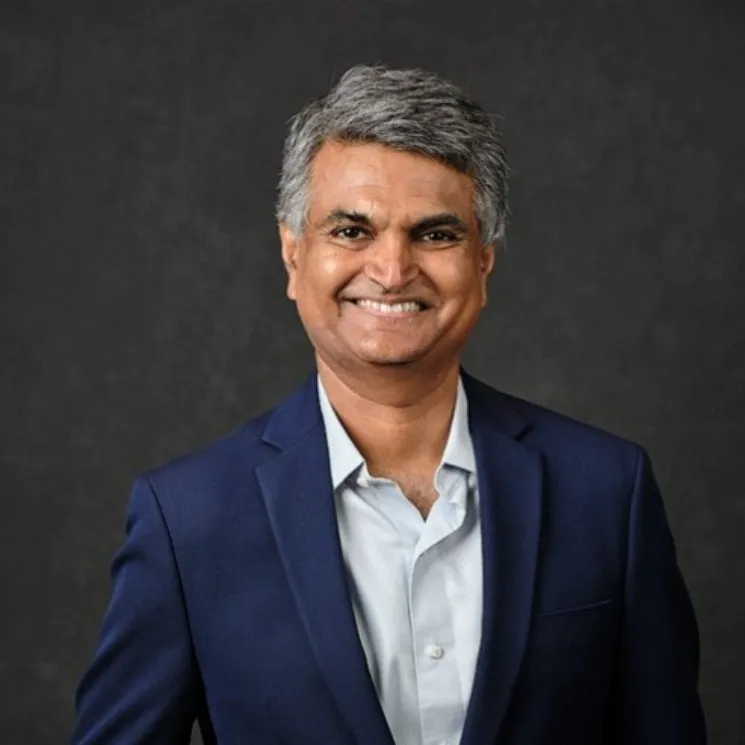
Nagaraja Srivatsan
Senior executive with over 30 years of experience driving digital transformation, AI, and analytics across global life sciences and healthcare. As CEO of endpoint Clinical, and former SVP & Chief Digital Officer at IQVIA R&D Solutions, Nagaraja champions data-driven modernization and eClinical innovation. He hosts the Life Sciences DNA podcast—exploring real-world AI applications in pharma—and previously launched strategic growth initiatives at EXL, Cognizant, and IQVIA. Recognized twice by PharmaVOICE as one of the “Top 100 Most Inspiring People” in life sciences
Our Speaker

Marc Raman
Marc Raman is Alcon’s Chief Data and AI Officer and Chief Information Officer for Research and Development. His work brings together data, AI, and technology to advance business outcomes. With extensive experience in digital transformation, he has helped scale initiatives across business functions and markets, applying AI to operational optimization, commercial effectiveness, and enterprise innovation.
Recent Episodes