Enterprise Ontology Management in Life Sciences: One Shared Language Across the Value Chain
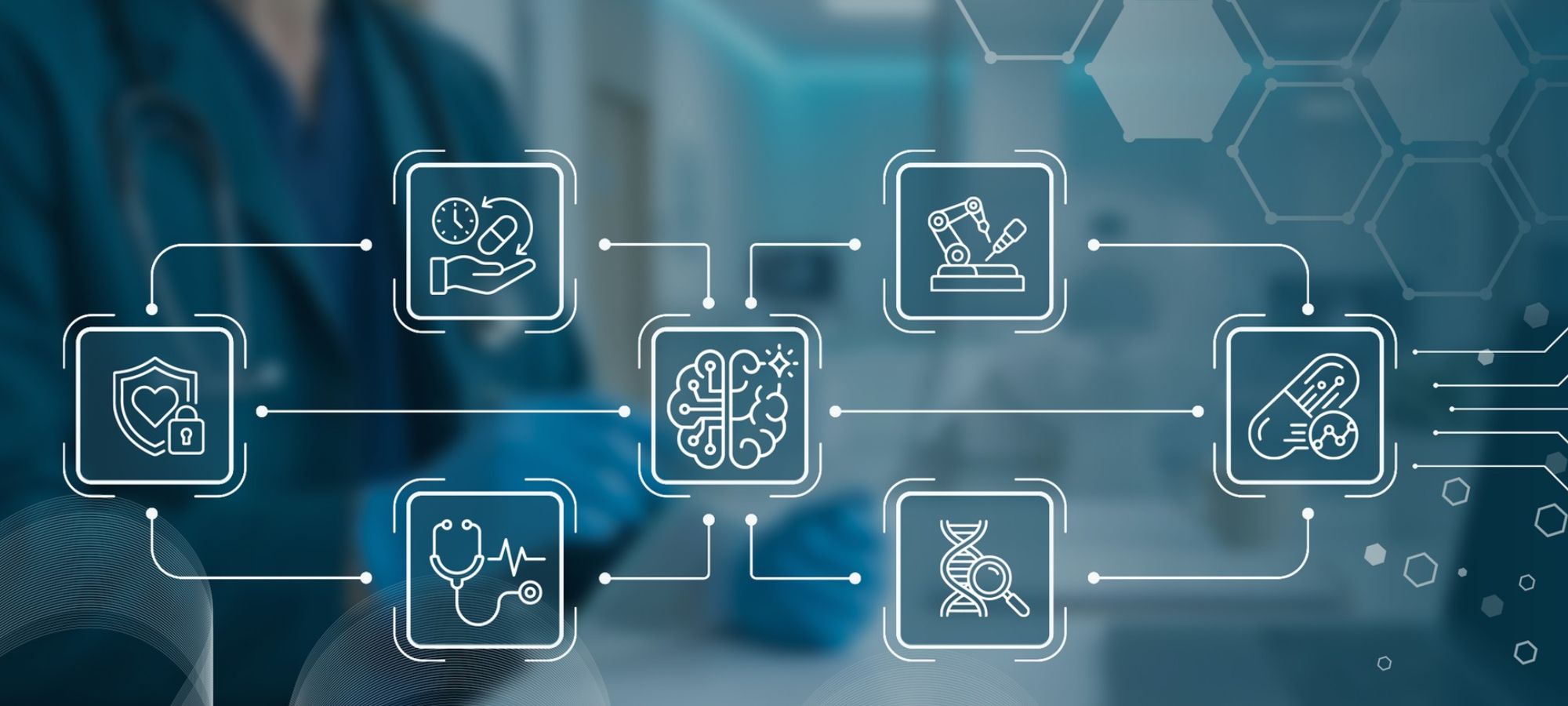
An enterprise ontology management platform gives life sciences organizations a governed, shared meaning for their data, so that research, clinical, commercial, medical and access teams, and the AI tools they rely on, all speak the same language.
Ask a research scientist, a clinical data manager, a brand analyst and a payer strategist what a “patient,” a “product” or a “provider” is, and you will get four slightly different answers. Each answer makes sense inside its own function. Together, they explain why so much data and AI effort in pharma goes into reconciling definitions instead of using them.
Most large pharmaceutical and biotech organizations do not have a data shortage. They have lakehouses, electronic lab notebooks, clinical data systems, CRMs, claims feeds, document repositories and a growing list of AI pilots. What they often lack is something less visible and far more important: a shared, governed understanding of what all of that data actually means.
That gap is where an enterprise ontology management platform comes in. It does not replace the systems you already run. It gives them a common language, and it keeps that language accurate as the business changes.
Why Life Sciences Data Still Does Not Connect
The problem is not that data is missing. It is that the same thing is described in a dozen different ways, and the connections between things are rarely written down anywhere a system can read.
A single medication can appear under a brand name, a generic name, an internal compound code and a coded value in a claims feed. A disease can be recorded in a protocol, a registry, a safety database and a scientific paper using different terms and different levels of detail. A physician can appear in the CRM, in an investigator list, in a speaker program record and in an external reference file, each with its own specialty label and affiliation.
Teams cope by building translations. Spreadsheets of synonyms. Point-to-point mappings written for one project and forgotten after it ends. Custom scripts that only their author understands. These workarounds keep individual projects moving, but they do not scale, and they rarely get reused.
The consequences show up everywhere. Analysts spend more time reconciling than analyzing. Reports from different functions disagree because the underlying definitions do. Knowledge that took years to build sits in documents that no system can connect to data. And every new data source starts another round of manual mapping.
Why Shared Meaning Matters Even More in the Age of AI
Generative AI and AI agents have raised the stakes. A model can write fluent SQL against a table with a cryptic name without knowing what the column inside it means. It can summarize a document without knowing how the terms in it relate to the data your teams use every day. The result is an answer that sounds confident and may not be consistent, explainable or safe to act on.
AI needs context. It needs to know what a concept is, how it relates to other concepts, which data represents it and who has approved that definition. Without that foundation, every AI pilot has to build its own context from scratch, and trust becomes hard to earn and easy to lose.
This is why leading organizations are looking beyond individual AI tools to the semantic foundation underneath them.
What Is an Enterprise Ontology, and Why Does It Need a Platform?
An ontology is a formal, shared model of the concepts that matter to a business and the relationships between them. A drug treats a disease. A physician is affiliated with an organization. A study measures an endpoint. A product belongs to a therapeutic area. When these concepts and relationships are defined once and governed carefully, every system and every person can refer to them consistently.
It helps to separate three layers that work together:
- A business glossary holds plain-language definitions that people can read and agree on.
- An ontology adds the relationships and structure between concepts, often anchored to public standards.
- A semantic model binds those concepts, such as entities and metrics, to the actual tables and sources where the data lives.
Building these is only half the challenge. Keeping them alive is the other half. Definitions change. Standards release new versions. New products, studies and data sources arrive. Ontologies built as one-off projects tend to go stale, because nobody owns their lifecycle. That is why enterprise ontology work needs a platform: something that can generate, align, review, approve, version, publish and operate this knowledge as an ongoing capability.
What the Enterprise Ontology Management Platform Does
Agilisium’s Enterprise Ontology Management Platform is a unified platform to generate, manage and operationalize ontologies, business semantics and context for the life sciences industry. Put simply, it turns data and documents into governed business meaning that analytics and AI can use. Its capabilities fall into five connected areas.
Business knowledge and ontology management
The platform manages business glossaries and domain models for clinical, research and commercial use, and it brings in the public ontologies the industry already relies on. For clinical development, these include CDISC Controlled Terminology, the NCI Thesaurus, MONDO, HPO, LOINC and UCUM, along with MedDRA and SNOMED CT where the customer holds a license. For research, they include Gene Ontology, ChEBI, Protein Ontology, Sequence Ontology, EFO, the BioAssay Ontology, OBI, UBERON and the Cell Ontology. For commercial and medical teams, they include the NUCC provider taxonomy, CMS NPPES, RxNorm, NCIt therapeutic areas, NAICS, FHIR and geography standards.
On top of these sits the Agilisium Pharma Commercial Pack, with more than 3,000 curated business terms covering HCPs, HCOs, products, territories, engagement and omnichannel, market access and payer concepts, and commercial metrics and KPIs. Teams start from pharma-ready content instead of a blank page.
Intelligent ontology and semantic engineering
Building ontologies by hand is slow. The platform follows a Generate, Align, Curate flow. It ingests and profiles enterprise sources, including documents such as PDF, DOCX and TXT files, databases such as Databricks, web content and enterprise applications. AI-assisted agentic generation proposes concepts and structure, alignment and validation connect them to public ontologies and to your data, and human experts curate the result before it is published.
The outcome is a set of semantic models, with entities, metrics and relationships, bound to enterprise data through source mappings and ready to be published to the platforms where people work.
Governance and lifecycle management
Semantic assets are only useful if people trust them. The platform includes review and approval workflows, versioning and change management, and lineage and audit. Access controls include authentication, role-based access, segregation of duties and consumer scoping, so the right teams can see and use the right assets. That gives data, compliance and quality leaders a clear answer to a simple question: who defined this, who approved it and what changed?
Ontology-driven AI and analytics
Once meaning is governed, it can be put to work. Ask AI lets business users search and ask questions in their own language. The platform grounds each question in the ontology, generates SQL and graph queries, executes them, fuses the results and returns a governed response. The same governed context can be provided to AI agents, so their answers are anchored in your definitions rather than guesses.
Enterprise integration and ecosystem
The platform is built to work with the environment you already have. It integrates with Databricks, including SQL Warehouse and Unity Catalog, and supports other data platforms. APIs and Model Context Protocol (MCP) access let external agents and applications consume ontology context, and semantic models and mappings can be published to the systems that need them, including BI and analytics tools.
How the Pieces Fit Together
Behind the scenes, the platform is organized in layers that work together. An experience layer gives people a web application for the glossary and ontologies, a curation workspace, Ask AI and governance tools. A semantic services layer handles hybrid SQL and graph query orchestration, search, concept lookup and ontology grounding. An ontology engineering layer covers agentic generation, alignment and validation, curation and review, and editing and releases. A knowledge layer holds the ontology graph, business glossary, semantic models, data bindings and provenance. A data and integration layer connects to the knowledge graph, Databricks, external connectors and the policy enforcement that governs access.
The practical meaning for a business leader is straightforward: meaning is created once, governed centrally and consumed everywhere, without asking every team to rebuild it.
One Platform, Five Value Chains
The same foundation serves very different teams. What changes is the vocabulary each team uses, the standards that matter most and the problem that hurts first. Here is how the platform’s capabilities apply across the life sciences value chain.
Research and development
Discovery teams combine evidence on genes, proteins, pathways, diseases and compounds from internal experiments, public databases and reports from earlier programs. Each source names things differently, and the relationships between them are stitched together by hand for every project.
By aligning internal terms to public research ontologies and binding concepts to the underlying data, the platform can give scientists a unified research vocabulary and a connected view across omics, assay and experimental data. Concepts from past program documents can be curated and reused, so hard-won knowledge is easier to find when the next target or pathway comes up. The benefits include cross-study analysis and faster knowledge reuse.
Clinical development and clinical operations
A protocol describes eligibility criteria, endpoints, lab tests and units. The data that comes back arrives from EDC systems, central labs, ePRO tools and CRO feeds, each with its own terminology. Mapping all of it into a common structure is repeated at the start of nearly every study.
With CDISC Controlled Terminology, LOINC, UCUM and related standards integrated, and with AI-assisted alignment reviewed by data experts, mappings can be built as governed assets rather than one-off scripts. The platform supports faster study setup and data integration, better patient cohort identification and improved data quality and compliance, with versioning and audit trails that clinical quality teams can point to.
Commercial operations
Commercial teams plan and measure around HCPs, HCOs, products, therapeutic areas and territories. The same customer appears in CRM, claims, specialty pharmacy and event systems, and the same KPI is calculated differently across dashboards.
The Pharma Commercial Pack and public standards such as NUCC, NPPES, RxNorm and NCIt give teams a consistent starting vocabulary. Semantic models define entities and metrics once, so every team uses the same definition. The platform supports consistent HCP and HCO definitions, reliable product and therapeutic mappings, trusted commercial metrics and better omnichannel insights, and it gives commercial AI tools a governed layer to answer from.
Medical affairs
Medical teams build relationships with experts and institutions, answer scientific questions and generate evidence. Their information is spread across CRM records, publications, advisory records and scientific documents, and their definitions need to line up with clinical and commercial teams without crossing compliance boundaries.
The platform’s shared HCP and HCO concepts and its disease and therapeutic area ontologies give medical teams a common model of stakeholders and science. Ontology generation from documents, with expert curation, can help turn scientific content into connected concepts. Consumer scoping and role-based access can be used to control which teams use which shared assets.
Market access
Access teams track payers, plans, formularies, contracts and regional coverage across several vendors, each of which organizes the payer landscape differently. Product, payer and metric definitions often differ between access, sales and finance.
The payer concepts in the Commercial Pack, along with RxNorm, NAICS and geography standards, give access teams a shared vocabulary to align vendor and partner data to. Governed metric definitions with versioning make changes visible, and Ask AI can answer cross-source questions on the same definitions that every other team uses.
Where the Value Chains Connect
The real power of a shared ontology is not inside any single function. It is at the handoffs between them.
Disease and phenotype concepts defined in discovery are the same ones used to define eligibility in the clinic. Adverse events, outcomes and indications captured in clinical development are the same ones medical teams use to plan evidence. HCP, product and therapeutic area concepts used by medical teams are the ones commercial teams use to plan engagement. Payer, product and metric concepts used in commercial analytics are the ones access teams use to judge coverage and uptake.
When each function builds its own vocabulary, every handoff becomes a translation exercise. When they share one, semantic assets are built once, governed once and reused across every function and every AI initiative.
What Organizations Can Expect
The benefits of a governed semantic foundation are less about one dramatic result and more about removing friction that teams have learned to live with:
- A common language across functions, systems and AI tools.
- Faster data onboarding, because new sources are aligned to an existing model instead of being mapped from scratch.
- Trusted AI and analytics, because answers are grounded in approved definitions with provenance behind them.
- Less rework and manual mapping, because mappings become reusable assets.
- Reusability across use cases, so each new analytics or AI initiative starts from what already exists.
AI Proposes, Experts Decide
It is tempting to hope that AI can build an enterprise ontology on its own. In a regulated industry, that is not the right goal. The platform uses AI to do the heavy lifting of generation and alignment, and it keeps people in control of what gets published.
AI-generated proposals are reviewed and curated by domain experts in a dedicated workspace. Changes pass through approval and versioning. Lineage and audit record who proposed, reviewed and approved each definition. This human-in-the-loop model plays to the strengths of both: AI works at a speed and scale no team can match, and experts bring the judgment, context and accountability that these definitions require.
Addressing the Challenges of Adoption
A semantic foundation is a business capability as much as a technology one, and it helps to plan for that honestly.
Ownership comes first. Definitions need business owners who can agree on them and approve changes. Scope matters too. The most successful efforts start with one high-friction use case and expand, rather than trying to model the whole enterprise at once. Source data quality still counts, because an ontology makes data meaning explicit but does not fix data that is incomplete. Integration needs thoughtful planning so that semantic assets reach the platforms where teams already work. And change management matters, because shared definitions only help if teams adopt them.
A Practical Way to Start
Most organizations do not need a multi-year program to see value. A practical path looks like this:
- Pick one painful use case, such as vendor data onboarding, a disputed KPI or a stalled GenAI pilot.
- Start from domain-ready content, using public ontologies and pharma knowledge packs rather than a blank page.
- Generate, align and curate with AI assistance and expert review, bringing in the documents and data that matter for that use case.
- Govern and publish, with approval, versioning and access controls, to the platforms your teams already use.
- Reuse and extend the same assets into the next use case and the next function.
How Agilisium Is Enabling This Transformation
At Agilisium, the Enterprise Ontology Management Platform is built specifically for life sciences, with four principles at its core.
- Pharma domain expertise. Pre-built business knowledge packs and domain-specific modeling for clinical, research and commercial use cases mean teams begin with content that already speaks their language.
- An integrated ontology and semantic platform. The platform covers the full path from glossary and ontology generation to semantic models and AI context, instead of leaving teams to stitch separate tools together.
- AI-ready and governed. Ontology-grounded search and Q&A come with built-in governance, provenance and access controls.
- Faster time to value. Reusable assets, accelerators and connectors for Databricks and other enterprise platforms help teams move from first use case to broader adoption. Agilisium’s Databricks expertise supports that integration.
The Future of Life Sciences Data Is Shared Meaning
Life sciences organizations have spent years collecting more data and adopting more tools. The next gains will come from connecting what they already have, and from making sure that every person and every AI agent working with that data understands it the same way.
The organizations that build a governed semantic foundation now will find that each new analytics project, each new data source and each new AI use case starts from a stronger position than the last. Those that do not will keep paying the translation tax on every project.
The question for life sciences leaders is no longer whether shared business meaning belongs in the data and AI strategy. It is how quickly it can be put to work.