

AI in Life Sciences: Driving Value Across the Entire Value Chain

Picture this. A researcher revisits a compound ignored for over a decade. An AI system flags it as a potential treatment for a rare disease. Within weeks, it is back in trials.
This is not the future. This is the impact of AI in life sciences today.
The industry has always been complex. Developing a single drug can take over a decade and billions in investment, with no guarantee of success. Rising costs, regulatory pressure, and evolving patient expectations are forcing pharma and biotech companies to rethink how they operate.
This is where AI in life sciences is making a real difference. It is not just improving efficiency. It is redefining how the entire value chain works.
Drug Discovery: Faster, Smarter Decisions
Traditional drug discovery is slow and expensive. Scientists test thousands of compounds with uncertain outcomes.
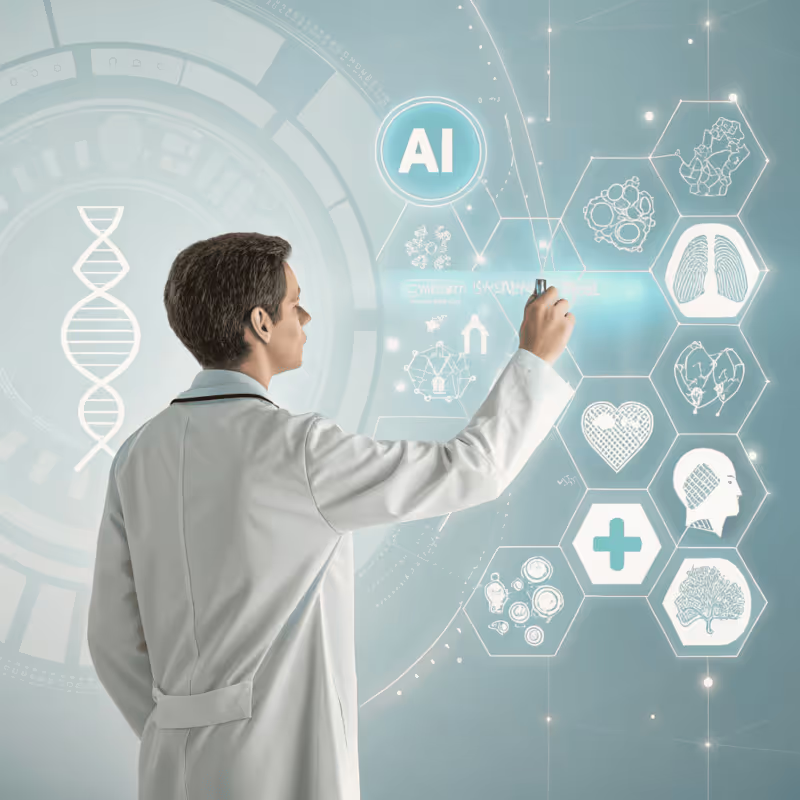
With AI in life sciences, the process starts differently. Machine learning models analyze genomic data, protein structures, and past research to predict which molecules are most likely to succeed.
What once took years now takes months. More importantly, it opens doors for rare disease research, where smaller datasets once limited innovation. Today, generative AI in pharma is enabling faster and more targeted discoveries.
Clinical Trials: Better Outcomes, Less Delay
Clinical trials often face delays due to patient recruitment challenges.
AI in life sciences solves this by identifying eligible patients through electronic health records, claims data, and genomic insights. This improves enrollment speed and trial efficiency.
AI also enables real-time monitoring and adaptive trial designs. Safety risks can be identified earlier, improving both outcomes and patient safety.
Regulatory Affairs: From Manual to Intelligent
Regulatory processes are complex and time-intensive.
With AI in life sciences, teams can automate documentation, identify gaps in submissions, and track global regulatory updates.
What used to take weeks can now be done faster and more accurately. AI turns regulatory work into a more strategic and insight-driven function.
Manufacturing and Supply Chain: Building Resilience
The pandemic highlighted the fragility of pharma supply chains.
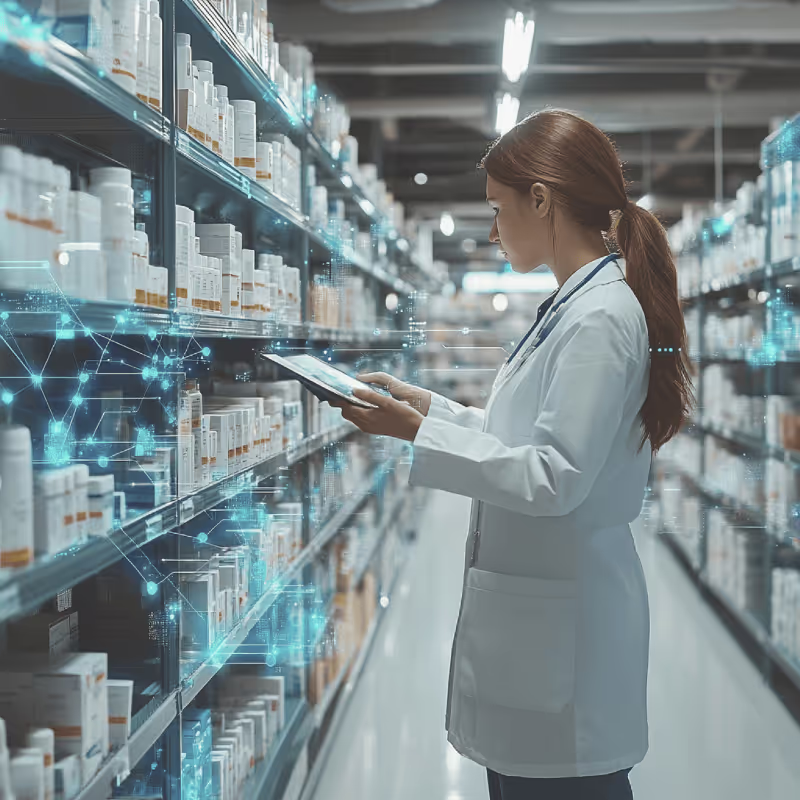
Today, AI in life sciences helps predict demand using real-world data, reducing stockouts and waste. In manufacturing, AI improves quality control and enables predictive maintenance.
The result is better efficiency, lower costs, and more reliable supply for patients.
Commercial and Patient Engagement: More Personalized
Commercial teams are using AI in pharma to improve targeting and engagement. AI models guide field teams on which doctors to engage, when, and with what message.
At the patient level, AI improves adherence by identifying individuals at risk of dropping off treatment and enabling timely interventions.
This creates a more connected and personalized healthcare experience.
The Bigger Picture
The real value of AI in life sciences lies in integration. When data flows across discovery, trials, manufacturing, and commercial functions, companies create a continuous learning loop.
This is how leading organizations are building intelligent, data-driven enterprises.
How Agilisium Enables AI in Life Sciences
At Agilisium, we help organizations unlock the full potential of AI in life sciences by connecting data, technology, and domain expertise. We unify fragmented data across research, clinical, manufacturing, and commercial functions to build a strong foundation for AI.
Our solutions address real business challenges, from improving trial recruitment to optimizing supply chains and enhancing patient engagement. Beyond pilots, we focus on scaling AI in pharma across the enterprise with compliance and reliability.
The result is faster decisions, reduced costs, and measurable impact across the life sciences value chain.
.jpg)
.jpg)
.webp)
.webp)
.webp)
.webp)
.webp)
.webp)











%20(7).avif)



















%20(5).avif)
.avif)


