Why Clinical Teams Are Moving Toward AI-Powered Protocol Digitization
The Challenge
A global clinical operations team managing late-phase studies was losing weeks at the start of every study — and again at every amendment. Protocol digitization was entirely manual, downstream systems were rebuilt from scratch each time, and CDISC conformance issues were only caught late, when they were hardest to fix.
Key Challenges Included:
- Manual Digitization - Weeks of effort per study to convert unstructured protocols into structured study definitions — error-prone, non-reusable, and fully dependent on individual effort.
- Amendment Rework With No Impact Tracking - Every amendment triggered a full re-review. There was no way to identify which downstream systems — EDC, RBQM, ICF — were actually affected without reading the entire document.
- Late CDISC Conformance Validation happened after significant build work was already complete — creating audit and submission risk that was expensive to remediate.
- Non-Scalable Study Builds EDC shells, RBQM configurations, and visit schedules were reconstructed from scratch every time — even for studies with near-identical protocol structures.
Our Solution
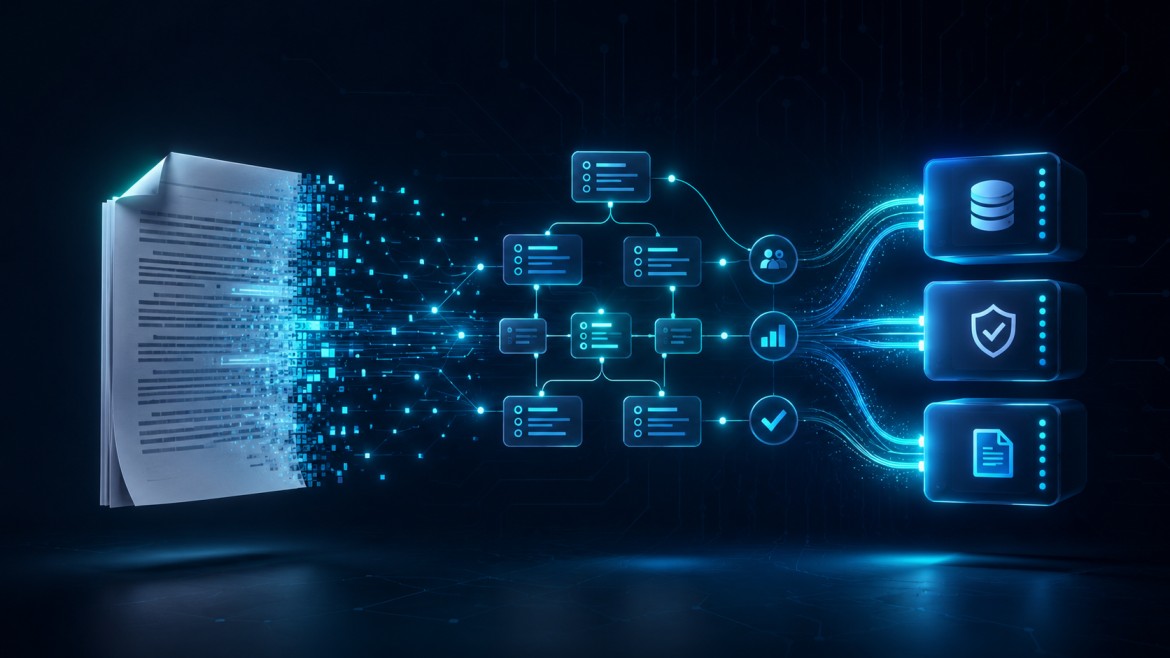
An AI-Powered Protocol Intelligence Engine for USDM-Compliant Study Definitions
AI-Driven Protocol Intelligence
Automated ingestion, classification, and parsing of protocol documents — study design, arms, endpoints, visits, and schedules extracted without manual tagging.
USDM Object Builder with Conformance Validation
Fully compliant, machine-readable CDISC USDM study definitions generated automatically — with CORE rule validation running during build, not after.
Amendment Intelligence Engine
Protocol changes detected automatically with downstream impact scoped to affected sections only — teams acted on a change summary, not a full re-review.
Late CDISC Conformance
Validation happened after significant build work was already complete — creating audit and submission risk that was expensive to remediate.
Non-Scalable Study Builds
EDC shells, RBQM configurations, and visit schedules were reconstructed from scratch every time — even for studies with near-identical protocol structures
.gif)

The Outcomes

Digitization as a System Process, Not a Manual Project
Ingestion, extraction, and validation handled automatically — SMEs focus on exceptions, not routine conversion.
Amendments That Scope Themselves
Impact identified automatically — teams work through a targeted change list, not a full protocol re-review.
Conformance Built In, Not Bolted On
CDISC validation runs during build — issues caught when they are cheapest to fix, not after submission work has already begun.

One Protocol, All Systems Aligned
The structured USDM definition drives EDC, RBQM, IRT, ICF, and visit schedules — one source of truth, no redundant rebuilds.
Similar Case Studies