Redefining Biomarkers for Immune-Mediated Disease with AI
In This Episode
In this episode of Life Sciences DNA, Dr. Amar Drawid speaks with Dr. Ronel Veksler, Co-Founder and CEO of PromiseBio, about how advances in proteomics, post-translational modifications, and AI are reshaping our understanding of autoimmune diseases. The discussion explores how data-driven insights at the protein level could unlock the next era of precision medicine.
- Beyond the Genome: Unlocking Protein-Level Insights
Dr. Veksler explains how static genomic information can’t fully capture the dynamic biology of disease and why studying post-anslational modification (PTMs) — the chemical changes that occur after proteins are formed—offers a deeper window into health and pathology. - The Rise of Epiproteomics
He describes how integrating proteomic and multi-omic data allows researchers to detect dozens of types of PTMs, revealing patterns that help distinguish between disease subtypes and predict therapeutic responses. - AI Meets Proteomics
By harnessing large-scale mass spectrometry data and cloud-based computation, AI models can now identify molecular “fingerprints” that illuminate disease mechanisms and improve diagnosis and treatment selection. - Precision Medicine for Autoimmune Disorders
From rheumatoid arthritis to Crohn’s disease, the conversation highlights how proteomic profiling can help physicians identify which patients will respond best to specific therapies—reducing trial and error and accelerating effective care. - A Data-Driven Future for Medicine
The episode closes with a look ahead: how advances in proteomic technology, computational power, and AI are converging to transform the future of diagnostics, drug development, and clinical decision-making.
Transcript
PromiseBio and Ronel Veksler
Daniel Levine (00:00)
The Life Sciences DNA podcast is sponsored by Agilisium Labs, a collaborative space where Agilisium works with its clients to co-develop and incubate POCs, products, and solutions. To learn how Agilisium Labs can use the power of its generative AI for life sciences analytics, visit them at labs.agilisium.com. Amar, we've got Ronel Veksler on the show today. Who is Ronel?
Amar Drawid
Ronel is a co-founder and CEO of PromiseBio. He holds an MD-PhD from Ben Gurion University and a bachelor's degree in electrical engineering from the Technion. After practicing ⁓ medicine for several years, Ronel joined C2i Genomics, where he served as the senior director of product before co-founding PromiseBio.
Daniel Levine
And what is PromiseBio?
Amar Drawid
PromiseBio has developed an advanced AI-driven system that integrates proteomics and multiomics data, focusing on post-translational modifications to identify unique biomarkers and disease pathways. Its platform technology is enabling early, precise diagnosis and personalized treatment strategies with applications in a range of autoimmune conditions. At the end of 2024, the company raised $8.3 million seed round with backing from Pfizer and AstraZeneca.
Daniel Levine
And what are you hoping to hear from him about today?
Amar Drawid
I expect Ronel will say that PromiseBio is focused on bringing precision medicine to autoimmune diseases. I would like to understand how it's doing that and how it's using post-translational modifications of proteins to be able to answer a lot of these questions. I'd also like to understand his business model.
Daniel Levine
Before we begin, I want to remind our audience that they can stay up on the latest episodes of Life Sciences DNA by hitting the subscribe button. If you enjoy the content, be sure to hit the like button and let us know your thoughts in the comments section. And don't forget to listen to us on the go by downloading an audio only version of the show from your preferred podcast platform. With that, let's welcome Ronel to the show.
Amar Drawid
Ronel, thanks for joining us today. Let's start with some terminology. Can you please tell us the term post-translational modification? What does that mean?
Ronel Veksler (02:22)
Yeah. So first, Amar, thank you for inviting me. So post-translational modifications means changes, hence the modifications, that happens to protein after they are created, so post-translational. Translation is the process of turning or the process of moving from the RNA to proteins. So post-translational modifications are changes that happen to proteins after they are created. It can be all sorts of modifications. Starting from, we can look at it like small micro switches that attach to proteins after they're created and can dictate and regulate what we have of proteins, where, and when all the way from activation of proteins to degradation. There are dozens of types. Some of them are really known, like perhaps some of the people in the audience were familiar with phosphorylation, glycosylation, and ubiquitination, and there's a plethora of types.
Amar Drawid (03:24)
And so this information of changing that protein, that is not encoded in the genome, right? And that's the interesting thing about it is people tend to think that, well, all the information about us that is in the genome, but this information is not, correct?
Ronel Veksler (03:39)
Yes, correct. We can look at the central dogma of biology, so all the way from DNA to what really happens in our body in stages. So DNA is the hard-coded, except for mutations, of course, but hard-coded blueprints. And we can look at the DNA level and understand what could happen in our body. And then we go one step further. We look at RNA and we can identify what might or most probably will happen in our body in terms of proteins that will be created. And then if we want to see what actually happens in our body, that's where we should look at the protein level. All the way to protein level, that's actually already included or encoded at the DNA level. What's not encoded, as you just mentioned, are all the dynamic processes and changes that act as to protein after that.
Amar Drawid (04:37)
Yeah, and I've heard the term epigenomics, epigenetics, but never heard the term epiproteomics. So can you please tell us what that means?
Ronel Veksler (04:47)
Yeah, of course. So just like epigenomics means looking at a layer of genomics data or genomic data, but beyond what's the ATCG headers. Just the same way when we are talking about epi-proteomics, we're talking about data related to proteins, but beyond looking at the sequence of the amino acids. So we can look at, for example, proteoforms. So for example, we can discuss proteins in different forms that circulate in our body and function in a completely different way. We can look at post-inflational modifications on proteins and these kind of changes.
Amar Drawid (05:31)
And so what role do these post-translational modifications play in autoimmune diseases?
Ronel Veksler (05:38)
Maybe a step back. We know for decades that PTMs, Post Translational Modifications in short, and the abbreviation of Post Translational Modifications, we know that they play a critical role in disease biology for decades. And I'll give quick examples from three different disease areas. So first, since the 70s, we've been using HbA1c as the most reliable biomarker for glucose level balance in patients with diabetes. Now HbA1c is actually the protein hemoglobin that went through a modification called glycation. The second example is in autoimmune and specifically in rheumatoid arthritis, where for the past 35 years or so, we've been using anti-CCP or ACPA which stands for anti-citrullinated protein antibodies, which are antibodies that our body creates against modified peptides, with specific type of modification called citrullination. And that biomarker ACPA or anti-CCP is one of the key clinically used biomarkers that allows physicians to understand, auto-characterize and define the subgroups patients with rheumatoid arthritis. And then finally, not directly related to autoimmune, but super interestingly, just this year, for the first time, the diagnostic criteria of Alzheimer's disease was updated to include a blood biomarker called P-tau. Now the P stands for phosphorylated. The tau is the name of the protein. So, for the first time we can, using a blood test, diagnose Alzheimer's. And this diagnosis is possible because we're looking at a modified protein. So, these are three examples of why PTMs are critical for clinical usage of biomarkers. Going back to your question, we know that post-translational modification play a key role in disease biology and pathogenesis in a variety of diseases. There are two classical ones, but maybe the first one I'll elaborate on is in RA, rheumatoid arthritis, where we know that citrullination, but also other types of modifications like carbamylated proteins are very prominent when we look at, for example, blood samples and other tissues of patients with rheumatoid arthritis. So we know it plays a critical role, but up until recently, we didn't have the tools to allow us to research and investigate the role of PTMs on a broad scale.
Amar Drawid (08:46)
Okay. So, as we're looking at precision medicine and autoimmune diseases, I've been working in the oncology field and the greatest move toward precision medicine is in cancer. And because a lot of the cancers are caused by a mutation in one gene or a few genes, so when you identify that, you can create drugs to counter that. And my understanding is that a lot of the autoimmune diseases are caused by a lot of genes. So what you're working around, and you talked about the diagnosis, right? Is that the precision medicine approaches that you're talking about for autoimmune diseases, are they related to the genomics that we do in cancer? Or is that something separate? Is this something more for diagnosis or so? So can you talk a bit about that?
Ronel Veksler (09:35)
So first, perhaps let's define the term precision medicine, right? Because over the years, it changed from tailored medicine to personalized medicine. Now it's precision-based approaches or precision medicine, the jargon changes, but the basic principle stayed the same, which is we would like in an ideal future to be able to identify the right treatment for the right patient at the right time. These are the three components. Now, when we look at these multifactorial complex chronic diseases like immune-mediated diseases or autoimmune, some of them are really common like rheumatoid arthritis, Crohn's, colitis, lupus. These are all under the spectrum of inflammatory, immune-mediated, autoinflammatory, autoimmune, these kind of different definitions. The common denominator is that these diseases are characterized by their dynamic nature. So you can look at people who have, for example, ulcerative colitis or rheumatoid arthritis. Disease level activity will fluctuate over the years, right? Moreover, not only over the variability is not only over time, but also between patients. So you can find two patients with the same title or the same diagnosis, but with an entirely different profile of response to treatment and symptoms and so on. Look, we want to solve this challenge, right? So we have multidimensional challenge because it's, these diseases change over time, they change between patients. So how can we ever think about, you know, identifying the right treatment for the right patient at the right time? Add to that the challenge, the clinical day-to-day challenge where the physicians today have no tools available to identify which person would respond to a specific medication. The number of options just keeps increasing. So that's really a huge problem. So, the way to think about how we can solve that because we are in 2025, this is a data problem. We need to analyze the right biological data using the right analytical tools. So, if we mention that these diseases are dynamic by nature, we need to look at the most dynamic part of biological data. That is not, that's not in the DNA. This is in proteins. Proteins are the building blocks and engines in our body. Everything happens through proteins. The vast majority of medications act on proteins, So proteins are the key. That's where we should look at. Even then, we discovered also, others of course, is that looking at the level of protein abundance alone, meaning how much of each protein is in a blood sample, for example, looking at that level only is not enough. We need to find the bridge between the protein abundance and the function or the disease phenotype. That bridge is exactly the epiproteome or the post-translation modifications. And that's where we can meet.
Amar Drawid (13:30)
Okay, so then are you able to then measure the quantity of the different modifications that happen to a specific protein?
Ronel Veksler (13:39)
If we look at our platform that we developed originally by my two brilliant co-founders at the Weizmann Institute in Israel, published in Nature Biotech and validated there as well, the core innovation or the first step of innovation was around the ability to look at dozens of post-translational modifications from standard mass spectrometry data. So one of the challenges in the field was that in order to study PTMs or post-translational modifications, you had to go through a very labor-intensive process in the chemical side of sample processing. That really limits the number you can study in each experiment. What we were able to do is move the crux of the problem, the lab side, to the computational side. So we have a cloud-based, super scalable, where we now take the data that is the raw mass spec output, digital files that are gigabytes of data. We can extract the information that is there, right? Because the biological signal is there. We can extract and decipher what were the post-translational modifications on the proteins within that sample. So that's the first layer of innovation. Then imagine that for each sample, we have this huge amount of data. We have all the proteins that were identified there, but also the PTMs that we found there on a very high resolution. That's what we have for a single sample. Once we collect vast amount of data, including deeply annotated clinical data for each patient, we can identify the molecular subgroups or molecular fingerprints that can now separate responders from non-responders to any specific medications. So that's the idea.
Amar Drawid (15:47)
just looking at their DNA sequencing or their RNA sequencing profile. You're looking at their post-translation modification profile to check if... Okay, so then you can do a lot of things there, right? So you can try to see if a specific patient will respond to a drug, but also if there is a response, these could also be some leading indicators of the response as well.
Ronel Veksler (16:15)
Correct. This is a fundamental ability to now look at new level or new layer, or previously overlooked layer of biological data. So imagine you mentioned genomics a lot and genomics really was the kind of of the enabler precision medicine, version one in oncology. When you look at, and you look at what happened in what I'll call the enabler version one, and genomics, we went from eras where we had to do PCR for single genes to a whole genome sequencing in under $100, right? Which is incredible and now opens the door to all these advancements. We are now doing a similar jump in looking at proteomic data and specifically in epiproteomic data. So instead of being limited to look at one or two or three post-translational modifications, we can now look at dozens, some in infancy. So that's really the next step, two or three.
Amar Drawid (17:28)
And how many different types of post-translational modifications can you detect using your algorithm?
Ronel Veksler (17:36)
Yeah, so we are now at over 60. That's really unprecedented. When we started the company, as we published in Nature Biotech, it was half of that. We've since then doubled the amount that we detect. Going back to your previous question, now you have this fundamental ability to look at the most downstream layer of biology. And then we can look at several potential applications. So, the holy grail of precision medicine, which is, say a patient with a specific disease, come to their doctor who recommends a blood test. We do the blood test and can identify the patient should take medication A, B or C, but not D or E because they would not respond to that medication. Another application would be, as you mentioned, earlier indications of disease progression, or earlier indication of later complications. These are also potential use cases. We work with pharmaceutical companies. We are also finding that looking at this epiproteomic data allows us to answer some of their questions that is related to drug R &D decision-making. All the way from looking at potentially new targets, new subgroups, identification of new population subgroups. So identifying who are the subgroups that are more likely to respond to the drugs they are developing. Also going back to more basic science questions to illuminate some of the known and unknown disease pathways. Because we know a lot about the known and unknown and also logical pathways, but there is so much to learn once we add that new layer of regulation.
Amar Drawid (19:42)
Yeah. so mass spec data has been there for decades now, right? So what was the breakthrough that enabled you and your colleagues to identify these post-translational modifications?
Ronel Veksler (19:59)
I think we are in a special time in history because there's a convergence of two macro trends. One is the rise of proteomics. So we've seen for the past ⁓ couple of years that the robustness and high throughput abilities of mass spec based proteomics has been improving dramatically over the past few years. And as a result, the signal to noise rate of whatever we are looking at is higher. But the second mark for trend, which is not less important, is the computational resources we now have to analyze these complex data. So starting with cloud computing, that now allows us to move from, you know, working on one CPU to now working on the cloud and using thousands of CPUs combining of course AI because now we have so much data generated from each sample that the only way to decipher is to look at it, to look at the entirety of the, or the entire landscape of the modified proteins and the unmodified - the entire epiproteome, analyzing using the most advanced AI and machine learning.
Amar Drawid (21:32)
And so when you're looking at the variables here, you have 25,000, 30,000 proteins and 60 modifications for each of those. So you multiply that and that's a pretty big number of variables.
Ronel Veksler (21:46)
Yeah, so it's not only multiplication, it's actually exponentially increasing because many of the amino acids along the protein may undergo modification, right?
Amar Drawid (21:59)
Or any of the combination of modification.
Ronel Veksler (22:01)
Yeah, actually exponentially increased. That's a great point because that was a big challenge in terms of statistical analysis, because you have now so much more data points and the risk of overfitting and under sampling is what we used to call the curse of dimensionality in machine learning. That's a real problem. So we have developed clever ways to overcome that.
Amar Drawid (22:31)
Okay. And as you said, the curse of dimensionality, we have way too many variables compared to the number of samples. So, my question is despite that, are you able to identify fingerprints, right? Or signature of specific diseases and to what extent is that feasible?
Ronel Veksler (22:54)
The short answer is that of course we can do that. We've done it. And then the important question is how do we validate it? So there are several types of validations that we're doing. So first we're using several cohorts. So let's say we train our models on one cohort, we test it on a second independent cohort. A second type of validation is identifying repeating findings in different tissue types. So for example, if we're looking at a specific indication, let's say rheumatoid arthritis, for example, and we find some immune related signatures in the blood. And then we identify some common denominator in the joint as well, whether it's synovial tissue or synovial fluid, we can then increase our level of confidence, right? Because we have repeating findings. And then another way that we validate is by looking at different diseases that share common pathological mechanisms. So for example, we've analyzed various kidney diseases. We've analyzed various immune mediated diseases in different categories. We see that there are some findings that are just popping up all the time. So it really increases the confidence that, you know, what we find is real and not just by luck. And perhaps going one step, a one step back, we also did a fundamental validation for our core platform. So we used peptides that were modified, run them through mass spectrometer to make sure that our readings match what we put into the machine. So that's a very, you know, low-level validation of our platform that was published in our manuscript in Nature Biotech as well.
Amar Drawid (25:09)
Great. So how many patients samples do you have?
Ronel Veksler (25:14)
I would say the number is increasing - it's in the thousands across different diseases, different tissue types. And we are constantly increasing that number. Some of our data comes from partnerships we're doing with academic research institutes, with foundations and some pharma companies as well.
Amar Drawid (25:39)
And why did you choose autoimmune diseases? Is that easy to find the fingerprint or is that easy to get large samples, let's say for rheumatoid arthritis or some other reasons.
Ronel Veksler (25:49)
The short answer to both of your suggestions is definitely not. It's not easy to find a fingerprint. There are some companies that tried and failed and it's harder to find samples, especially compared to data in oncology. There's a lot of data of oncology out there. So that's not why we went to autoimmune. The idea is from two reasons. ⁓ When I practiced medicine, I saw from firsthand experience how patients with immune mediated diseases are being treated based on this trial and error approach. It's very evident that it doesn't make sense anymore. It doesn't make sense that we have no way to guide the treatment decision-making. So that's from that side. Also, before working on Promise, I worked at a company in the field of precision management for oncology. So, I saw what the field looks like in oncology and what potential impact we can drive there.
And then...Assaf and Yifat, my co-founders, were looking to develop a company out of their research, out of the work they've done in the Weizmann Institute. It was a perfect match because I knew the problem. They had a perfect solution and already had some first proof of concept that it works in some immune mediated diseases and we can separate groups that were disparate. And then when you look from a broad perspective, there are... almost no companies that are developing precision medicine solutions for immune-mediated diseases. We had the right fit in terms of technology to the problem. It's a huge opportunity. We're talking about dozens of millions of patients across the globe causing an immense economic burden. It's really detrimental to the patients, their caregivers, the payers, and also to pharma companies, because if you look at the success rate, we're not there. Up to 70 % of the patients in some cases do not achieve clinical remission. And just staying in this endless cycle of trial and error, that doesn't make sense. So, combining, connecting all these dots led us to focus there.
Amar Drawid (28:28)
And so then with all these different therapies, you have anti-TNF and a lot of the other therapies. Are you doing a systematic mapping of patients who are treated with this, how their signature looks like and stuff? What is the approach that you're taking to figure out the different fingerprints, let's say, for rheumatoid arthritis?
Ronel Veksler (28:49)
So, we are actually building the largest data lake of its kind, focusing on data that has deep clinical annotation. When I say deep clinical annotation, it means that we know for each sample what was the medication the patient were treated with, what was the outcome, what was the demographic information about these patients and so on, together with the molecular fingerprint. That comse from the different sources I mentioned earlier, but we also started on proprietary prospective collection of where we are following patients with rheumatoid arthritis and then later on patients with inflammatory bowel disease. We follow them before they start new advanced therapies. And then, after they are being treated several months, up to a year, and evaluating them along the way and collecting samples. And by that, we are really connecting the molecular information with the clinical information, which will allow us to read exactly.
Amar Drawid (30:04)
So, Promise is an acronym. Can you tell us what that actually means?
Ronel Veksler (30:10)
Originally our manuscript used Promise, which stands for Protein Modification Integrated Search Engine. When we, tried to come up with the name for the company, it was just, we couldn't find a better name. It was a perfect name. So, we used Promise.
Amar Drawid (30:32)
Okay, and then you talk about immune diseases and you have a lot of focus there. What are some of the other diseases you think would benefit the most from this approach?
Ronel Veksler (30:44)
I would say that, and I said so earlier, this is really a fundamental approach to look at biological layer that was overlooked so far, at least on a broad level. So, it's really applicable to all diseases. And specifically, the Nature Biotech manuscript was focusing on applications in oncology, in the identification of a modified neoantigen in cancer. So that has direct implication, for example, in the development of personalized cancer vaccines. It also has several potential use cases in oncology. Also other, I'll say other chronic diseases. We've been working on chronic kidney diseases and we've identified molecular signatories that were only visible when we looked at the PTM level. So that's in chronic kidney diseases. We also see great potential in neuro-related areas. Neurodegeneration has been showing - the entire field has been showing increasing interest in PTMs, especially following the adoption of P-tau as a clinical biomarker. So, the short answer is we can help in almost all disease areas, but we focus on immune mediated first because that's very big on net need and we're able to already demonstrate the real value there.
Amar Drawid (32:42)
So you have different sources of revenue. What's the business model of the company?
Ronel Veksler (32:48)
As I mentioned, the core technology that allows us to now look at the proteomic data and then identify molecular subgroups and so on, the same platform is allowing pharma companies to answer some of their questions around drug R &D. And that's the reason that AstraZeneca and Pfizer joined as early strategic investors. So we are working with several companies and biotechs across different indications and different use cases. And that's main revenue generating business at the moment. And then with time, when we look at all these incoming sources of data, and we generate our own proprietary insights, we are then going to develop the holy grail of precision medicine, which is tests to allow treatment guidance for immune mediated diseases.
Amar Drawid (33:54)
So, are you thinking about companion diagnostics?
Ronel Veksler (33:58)
So, companion diagnostic is a specific FDA defined term of product, right? It means that there is a specific test tied to the approval of prescribing a specific medication. So far companion diagnostics have been used only in oncology, whether this will be the case outside of oncology. I think that's a great question. I'm not sure what's the timeline on that, but even not on that level of companion diagnostics, imagine the physician gets a report indicating that the patient in front of them should not receive the first or second line biological treatments because they are not likely to respond to them. By that, that will allow them to start a different class of medication and that would save, you know, increase the chance of successful treatment, tightening the time significantly and not less important, there's the main challenges with this trial and error approach when the wrong treatment is prescribed and administered, and when the patient does not respond, there is accumulating damage to the tissue in our body, some of that is irreversible. So, if we can help identify the right treatment earlier, that doesn't only have a short effect on a patient, but also long-term benefit because we can hopefully reduce or solve that irreversible damage.
Amar Drawid (36:03)
Yeah. So you foresee this being also in clinical practice where then the physician is doing this, using this for diagnosis and then choosing what therapy.
Ronel Veksler (36:15)
That's the idea.
Amar Drawid (36:17)
Yeah, so there's a big use in the clinical practice and there's also for pharma companies as they're developing in the R &D, which could be the drugs that could be working or not, they can use this as well. Okay, and it could potentially, I mean, I'm thinking maybe like companion diagnostics, maybe let's say you have a drug for autoimmune diseases and let's say for specific signature. That works, then they could then say, okay, well, if we use it as a CDX, companion diagnostic, and if the patient goes through this and they have the signature, use my drug, right? Something along that line could be possible.
Ronel Veksler (36:59)
That's also a possibility.
Amar Drawid (37:02)
Okay. So how do you see this overall, the use of proteomics, right, how do you see that increasing? And then the post-translational modification, as you said; it is fundamental. It is fundamental aspect of our biology. There has not been much activity in that because the technology wasn't there. Technology wasn't there to to get the right data or technology wasn't there to compute either, right? So as we're moving ahead, let's say five years down the road, what do you see in the future?
Ronel Veksler (37:36)
I think the most important building block is data. Data drives everything. It drives the potential to develop machinery models. It drives the ability to generate evidence. So data is really at the heart of our efforts, but also at the heart of what we believe will be the next kind of leap in proteomic advancement. If you go back to genomics, you know, the same story - once genomics was super robust, reproducible, high throughput, everyone started to generate vast amount of data. And that was, you know, it created this kind of network effect of now people can look at this data, analyze, identify new opportunities, and so on. So, I think proteomics in that sense will go the same way. And then the question is what does this data look like? This is comprised of two elements: one is the actual quality of the data. I said earlier, we see tremendous advancements in the way mass spec proteomics data has been generating or has been advancing in the past couple of years for sample processing to make this a step of the process robust to better machines with better resolutions, with faster acquisitions time, acquisition times, better signal to noise ratio. So, these improvements all along data creation chain leading to a state where mass spec can be utilized broadly in clinical settings.
Amar Drawid (39:50)
Okay. And you're a physician who has been treating a lot of the patientsand we've talked about the advent of precision medicine for a long time. How do you see that now with post-translation modifications, that's one area, but like, how do you see precision medicine changing over the next few years? And is that going to then really be able to meet the unmet needs that patients have?
Ronel Veksler (40:20)
Precision medicine is to some extent, it's a privilege. And what do I mean by that? Imagine we would only have, you know, one medication for a specific disease. You don't need precision medicine, right? You only have one option. But as the number of therapeutic options increase, if there is a tolerance for the trial and error approach, then a precision-based approach is required. I think we're at that point because we've been seeing, especially in immune-mediated diseases, we've been seeing that the number of options keeps growing, but we have no way to identify which patient or to match the right patient with the right drug. I think precision-based approaches are not a - I said it's a privilege, but now it becomes a necessity because it's not sustainable to continue like that. I think that this necessity is what drives precision medicine because the concept of precision medicine has been with us for, I don't know, at least 15-20 years that I recall, right? But now we're at a point where the need is here. The need is real, it gets worse. But now we also have the means to kind of fulfill this vision. So, I'm very bullish on that.
Amar Drawid (42:11)
Dr. Ronel Veksler, co-founder and CEO of PromiseBio. Ronel, thank you very much for your time today.
Ronel Veksler (42:19)
Thank you so much, Amar. It's been a pleasure.
Daniel Levine (42:23)
Amar, that was a fascinating discussion. What did you think?
Amar Drawid
It was good to see a lot of the progress that's being made in the proteomics and in post-translational modifications. When I was doing a lot of genomics 15, 20 years ago, proteomics was there, but then there were limitations in technology, there were limitations in computation of those and in machine learning to get the insights and I'm very happy to say, ⁓ to learn from Ronel about the all this progress that has happened both in the technology but also in in the computational power and because of that the problems that we thought were pretty hard and didn't really get into 20 years ago now they are becoming front and center where we are able to get a lot of this data and able to then understand the disease biology much better than we can just from genomics or transcriptomics. Yeah, it's interesting to see Promise use AI to bring precision medicine to autoimmune decisions.
Daniel Levine
Ronel made reference to this, but many of these conditions still use the same arsenal of drugs and fewer are tailored for a specific autoimmune condition and physicians still take a hit and miss approach to treatment or a step approach. What's the potential to improve treatment outcomes with the application of AI as Promise is doing?
Amar Drawid
See, I asked him the question about the oncology, right? And why autoimmune diseases? And as I think about it, it makes sense. See, oncology, because there could be like one or two, one or multiple, a few genes that could be modifying causing the disease. A lot of times you test for those and then based on that you get a specific medication. Whereas in autoimmune disease, because it's multigenic, there is not a test like that, like a genetic test that can tell you, okay, based on this test, take this medication versus that. So, what Ronel is doing is really looking at the overall epiproteomics fingerprint of a patient. And that then will be able to make that decision for the physicians that you're not going to be able to do by just doing one genetic test because his fingerprint, that's including the entire proteome and the epiproteome. So, I understand the reason why he is working on the autoimmune diseases here.
Daniel Levine
It's early days for this technology, but how do you see tools like this getting integrated into clinical care and helping guide physicians to treatment decisions?
Amar Drawid
I think it's very applicable in the in the clinical practice. The question is, how does it get integrated there? Right? Because it's ⁓ the doctors have a lot of their systems that they're using. Probably it gets integrated into the system that they're using, let's say into the EMR system that they have or so where they are able to see these recommendations. I mean, it's the same problem that we have talked about in other podcasts as well, right? If there is some recommendation that we're getting from AI to treat a disease in a specific way, the way it gets integrated, I think this is going to be like, we have to have that kind of a system, enabled system in clinical practice. And then this could be one aspect of that that gets integrated there.
Daniel Levine
Well, what do you think it will ultimately take to get enough data and validation for these types of systems to overcome regulatory hurdles and get physician adoption?
Amar Drawid
It's definitely going to need a lot of data and a lot of validation. It'd be interesting to see some of this that needs to get the approval, right, for some kind of diagnostic approval or so for the physicians to believe it, for them to believe the data and then put it in clinical practice. The problem I talked about is, okay, well, yeah, let's say it is approved. The physicians, how will they use it?
Daniel Levine
Do you think it's ultimately payers who are going to drive this if they see that it's going to save the money? I think there'll be pressure from the physicians as well because the physician would like to know how best to treat their patients. And as you said, in a lot of these autoimmune diseases, there are a lot of drugs that are available and it's trial and error. If the physicians could get the right tool to make that decision, they will drive it. Of course, now the insurers need to buy into it and they're...For them, it's going to be the value proposition, right? Based on this, if you can provide the right medication for the patients, not only is it much better for the patients, but it is going to save money for the insurers because you're getting directly to the best drug that is out there for them. So it will be financially beneficial for insurers as well.
Daniel Levine
Well, it was great to hear from Ronel. It's an exciting technology. Amar, thanks as always.
Daniel Levine
Thank you, Danny.
Daniel Levine (47:44)
Thanks again to our sponsor, Agilisium Labs. Life Sciences DNA is a bi-monthly podcast produced by the Levine Media Group with production support from Fullview Media. Be sure to follow us on your preferred podcast platform. Music for this podcast is provided courtesy of the Jonah Levine Collective. We'd love to hear from you. Pop us a note at danny at levinemediagroup.com. Life Sciences DNA, I'm Daniel Levine.
Thanks for joining us.
Our Host

Dr. Amar Drawid
Dr. Amar Drawid, an industry veteran who has worked in data science leadership with top biopharmaceutical companies. He explores the evolving use of AI and data science with innovators working to reshape all aspects of the biopharmaceutical industry from the way new therapeutics are discovered to how they are marketed.
Our Speaker
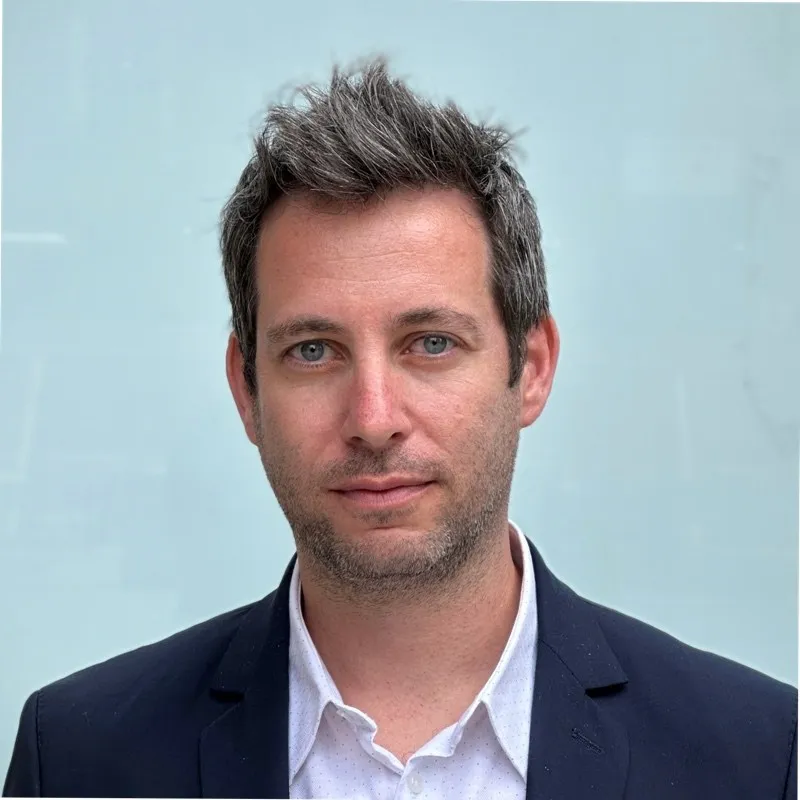
Dr. Ronel Veksler
Dr. Veksler holds an MD-PhD from Ben Gurion University. A physician and technologist, he has worked at the intersection of clinical practice, data science, and product innovation to advance precision medicine for complex immune-mediated diseases.
Recent Episodes
.jpg)